Chinese Cleaver vs Chef Knife: Which Do You Actually Need?
A Chinese cleaver and a Western chef knife do different jobs. Here is what each is for, what to pay, and the mistake that makes the comparison confusing.
A Chinese cleaver costs $15 to $40 at any Chinese grocery, and most of them cut better than a $120 chef knife that has never been sharpened. That is the whole argument in one sentence, and it is also why the comparison gets confusing. The two tools are not rival versions of the same thing. They are different instruments with different geometry, different weight, and different jobs. If you cook mostly Western food, a chef knife is the right primary tool. If you cook mostly Chinese food, a cleaver will do more of your work. Most serious home cooks end up with both, and the cleaver is usually the cheaper half of the pair.
What is a Chinese cleaver, and is it actually a cleaver?
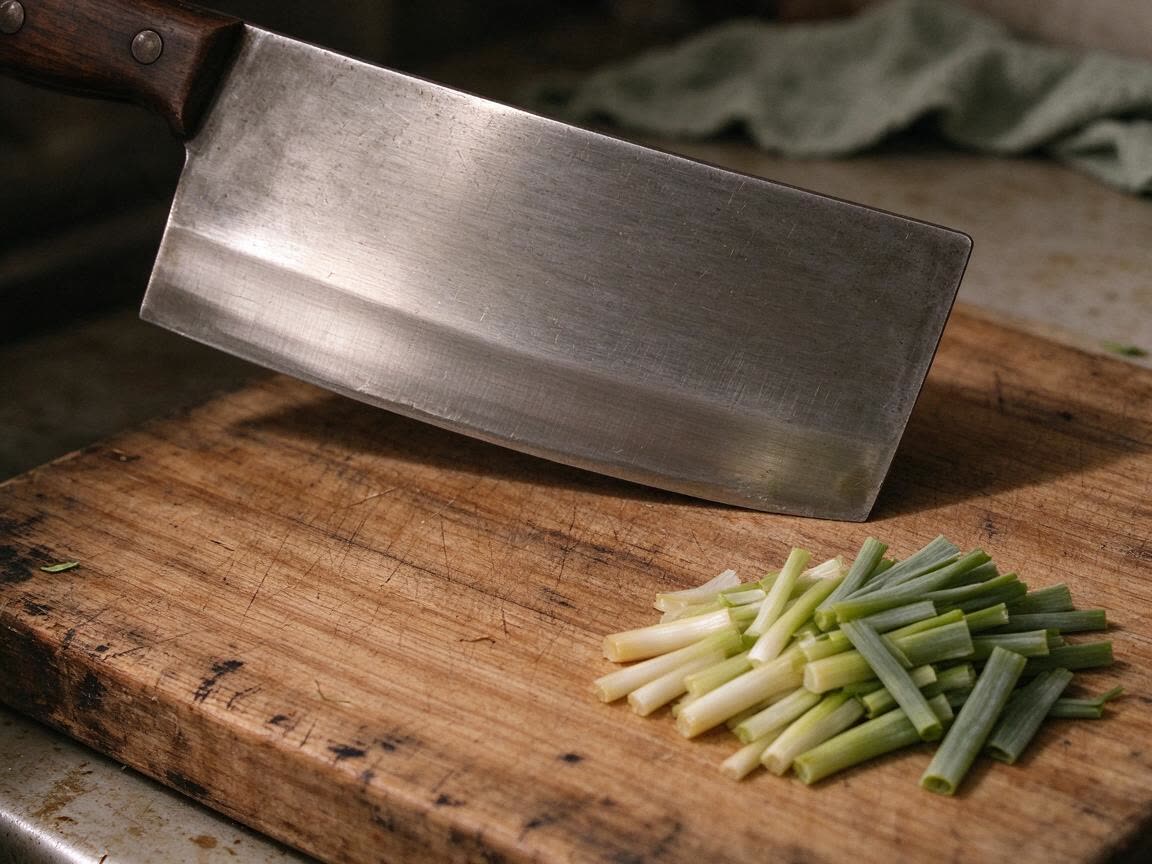
The Chinese term is cai dao, literally vegetable knife. The big rectangular blade you see in restaurant kitchens is a slicing knife, not a chopping axe. It is thin behind the edge, often 2 to 3 mm at the spine, and it is meant to be used with a push-cut or a light rock, not a heavy overhead swing. The weight comes from the tall blade, which gives you a straight, stable cutting edge and a broad face you can use to scoop and carry what you just cut.
A Western cleaver, the bone-crushing kind, is thick and heavy and made for going through joints. A Chinese slicing cleaver is a different animal. There are heavier versions sold as bone choppers, usually marked by a thicker spine and a heavier head, but the default supermarket cleaver in a Chinese kitchen is the thin slicer. If you buy one cleaver, buy the slicer.
The blade shape matters for technique. The tall flat face lets you keep the knife tip on the board and walk the edge through a pile of scallions without lifting. It also gives you a bench scraper built into the tool, which is why so many Chinese home cooks never reach for a separate one.
How does it differ from a Western chef knife?
A chef knife, whether German or French style, is built around a curved belly and a pointed tip. It rocks, it curves through herbs, and the tip does detail work. It is a generalist shaped for a cuisine that does a lot of rocking and a lot of tip work.
A Chinese cleaver is built around a straight edge and a tall flat face. It does not rock well. It excels at straight push-cuts, at thin slicing, at smashing garlic with the flat, and at moving food from board to wok. The edge geometry is usually a shallow convex grind, and many Chinese cleavers are carbon steel, which takes a keener edge than most stainless and rusts if you leave it wet.
| Chinese cleaver (slicer) | Western chef knife | |
|---|---|---|
| Price | $15 to $40 | $40 to $150 |
| Edge | Straight, thin | Curved belly, pointed tip |
| Best at | Thin slicing, push-cuts, scooping | Rocking, tip work, general prep |
| Steel | Often carbon | Usually stainless |
| Weight | 250 to 400 g | 150 to 250 g |
The practical difference is not which is better. It is which motion your cooking asks for. Stir-fries want uniform thin slices fast, and a cleaver does that with less wrist work. Western braises and roasts want a knife that rocks through onions and trims meat, and a chef knife does that better.
How do you buy one without getting ripped off?
Go to a Chinese grocery and look for the house-brand cleavers near the produce section, usually $15 to $30. The common brands are Shibazi, Dengjia, and the plain stainless house models. A carbon steel cleaver from a Chinese grocery is often $20 and will outcut a $100 stainless knife once you sharpen it.
What to check before you pay:
- Spine thickness. Under 3 mm for a slicer. If it is thick and heavy, it is a bone chopper and the wrong first knife.
- Handle fit. Wooden handles on cheap cleavers are often loose. Wiggle it. A rattling handle will come off.
- Flatness of the edge. Sight down the edge against a light. A big curve or a dip means a lot of sharpening before it cuts well.
- Rust. Carbon steel arrives with a light oil film. If there is red rust in the store, pass.
US supermarket substitutions: if there is no Chinese grocery near you, the Shibazi F208-2 slicer runs about $30 to $40 online, and the Winco stainless cleaver is around $20 at restaurant supply stores. A Victorinox Fibrox chef knife, 8 inch, is about $50 and is the best value in Western knives. You do not need a $150 knife to start.
How do you use it and keep it cutting?
A cleaver is used with the tip down and the edge flat on the board. Push forward, lift, repeat. Do not chop with a big overhead swing. The blade is thin and the edge will fold if you hit bone or a frozen block.
Keep a honing rod or a 1000-grit whetstone. Carbon steel wants a few passes every couple of weeks. Dry it immediately after washing, and wipe a drop of oil on the blade if it lives in a drawer. A cleaver that is left wet will spot overnight, and those spots turn into pits.
Use the flat of the blade to smash garlic and ginger, the spine to crack peppercorns, and the face to scoop. That is the point of the shape. Most of the work is done with the middle of the edge, not the tip.
What goes wrong?
The most common mistake is buying a bone chopper as a first cleaver. It is heavy, thick, and clumsy for vegetables, and people conclude cleavers are not for them. Buy the thin slicer first.
The second is treating a carbon cleaver like stainless. It rusts. Dry it.
The third is sharpening at too steep an angle. A cleaver wants a relatively low angle, around 15 degrees per side, and a light touch. Over-sharpening on a coarse stone thins the edge until it chips.
The fourth is using it on a glass or stone countertop. The edge will roll. Use wood or plastic.
A chef knife is not obsolete in a Chinese kitchen, and a cleaver is not a gimmick. They are two tools. If you cook stir-fries three nights a week, buy the $20 cleaver first and the chef knife later. If you cook Western food, the reverse. Either way, the sharp one wins.
And if you cook on an electric range, remember the pan matters more than the knife — see our guide to using a wok on an electric stove.
Keep reading
- Dried Shrimp: The Pantry Seasoning That Does the Work of Anchovies
- Pickled Mustard Greens: A Practical Guide
- Types of Fermented Tofu: A Shopper's Guide to Fu Ru
- Soy Sauce Grades Explained: What You're Actually Buying
Sources
Photo: Kitchenlung / CC BY-SA 4.0 via Wikimedia Commons
Frequently asked questions
Can a Chinese cleaver replace a chef knife?
For thin slicing, push-cuts, and scooping, yes. For rocking through herbs, tip work, and trimming meat, a chef knife is still better. Most cooks keep both.
Is a Chinese cleaver heavy and hard to control?
A slicing cleaver is 250 to 400 g, heavier than a chef knife but balanced. The weight does the cutting. A bone chopper is heavier and the wrong first buy.
What is the cheapest good Chinese cleaver?
A house-brand carbon slicer from a Chinese grocery runs $15 to $30. Online, a Shibazi F208-2 is about $30 to $40. A Winco stainless cleaver is around $20 at restaurant supply stores.
About the author
Writer & Home Cook
Chinese home cook writing about seasonal food traditions from an American kitchen. Grew up in Guangdong, now cooks for a mixed family in the US.
Keep simmering
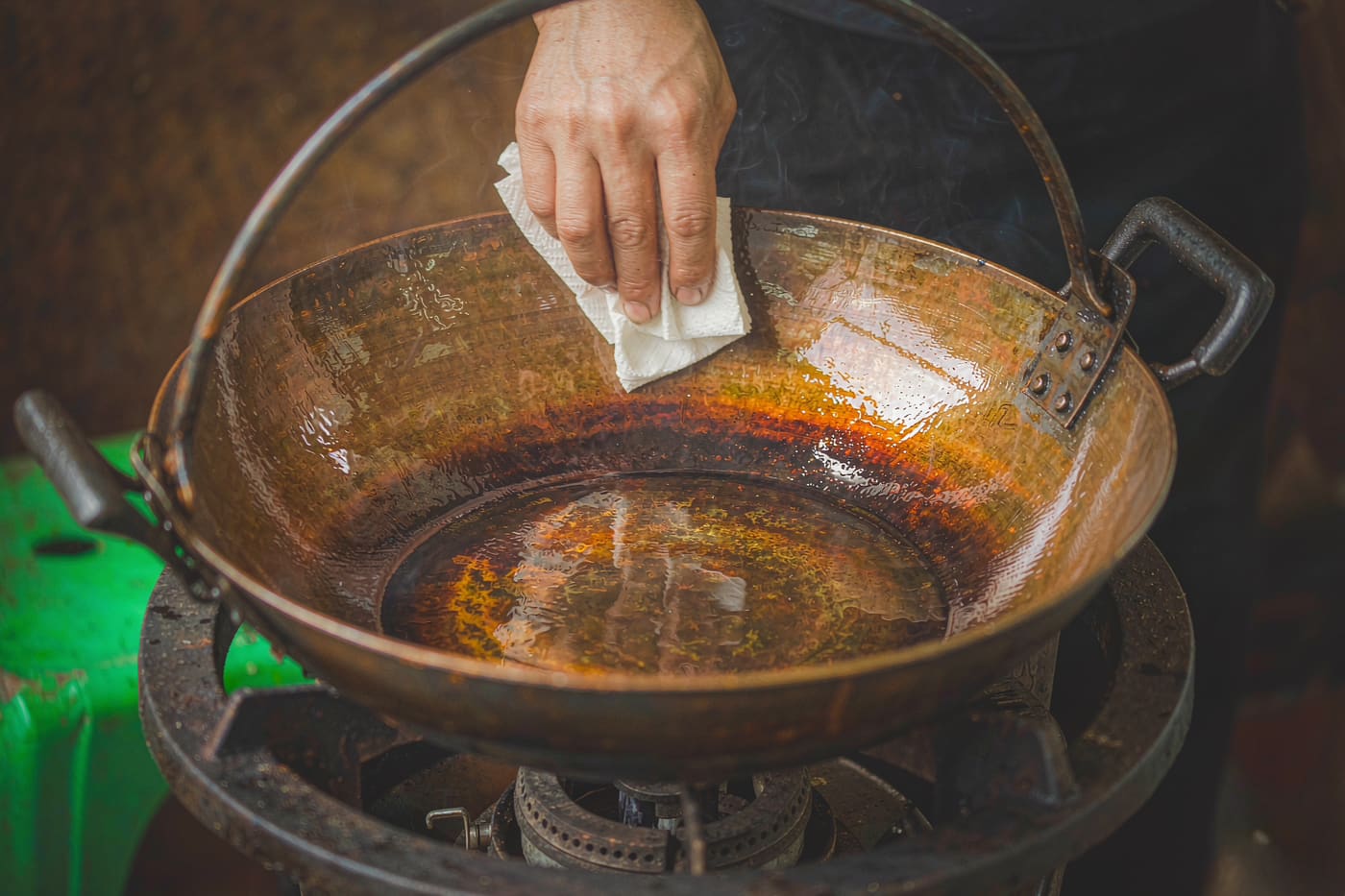
Equipment & Techniques
Seasoning a Carbon Steel Wok: The Method, and How to Fix It
Twenty minutes, four paper-thin coats of oil, one rule: use less than you think. The full method, plus fixes for sticky, flaking and rusty woks.
Jack Chen · Nov 10, 2026 · 6 min read
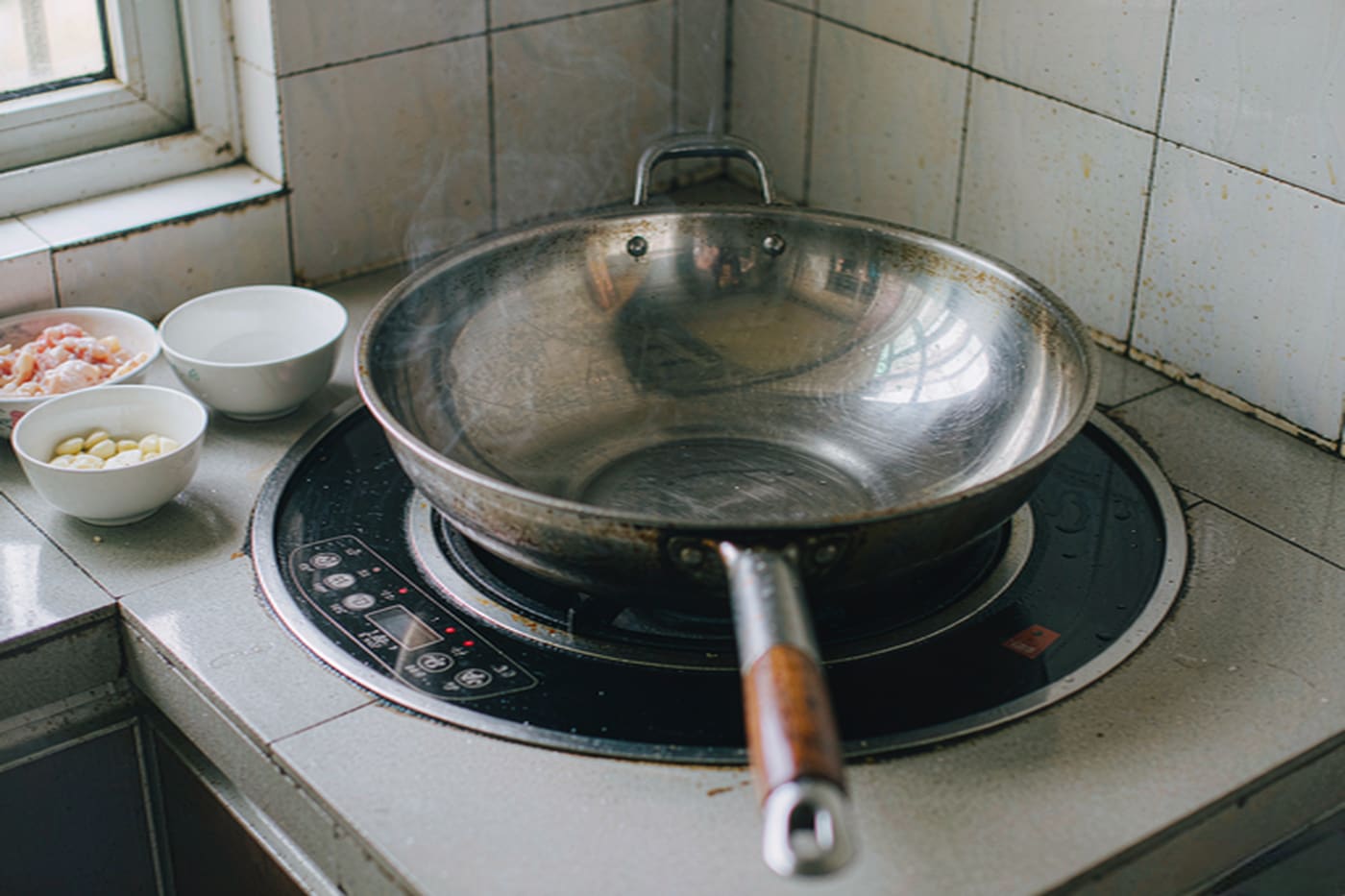
Equipment & Techniques
Gas vs Electric vs Induction for Stir-Frying
Gas still wins for wok cooking, induction is the best compromise with a flat-bottom wok, and a coil element is workable with the right adjustments.
Jack Chen · Nov 10, 2026 · 6 min read
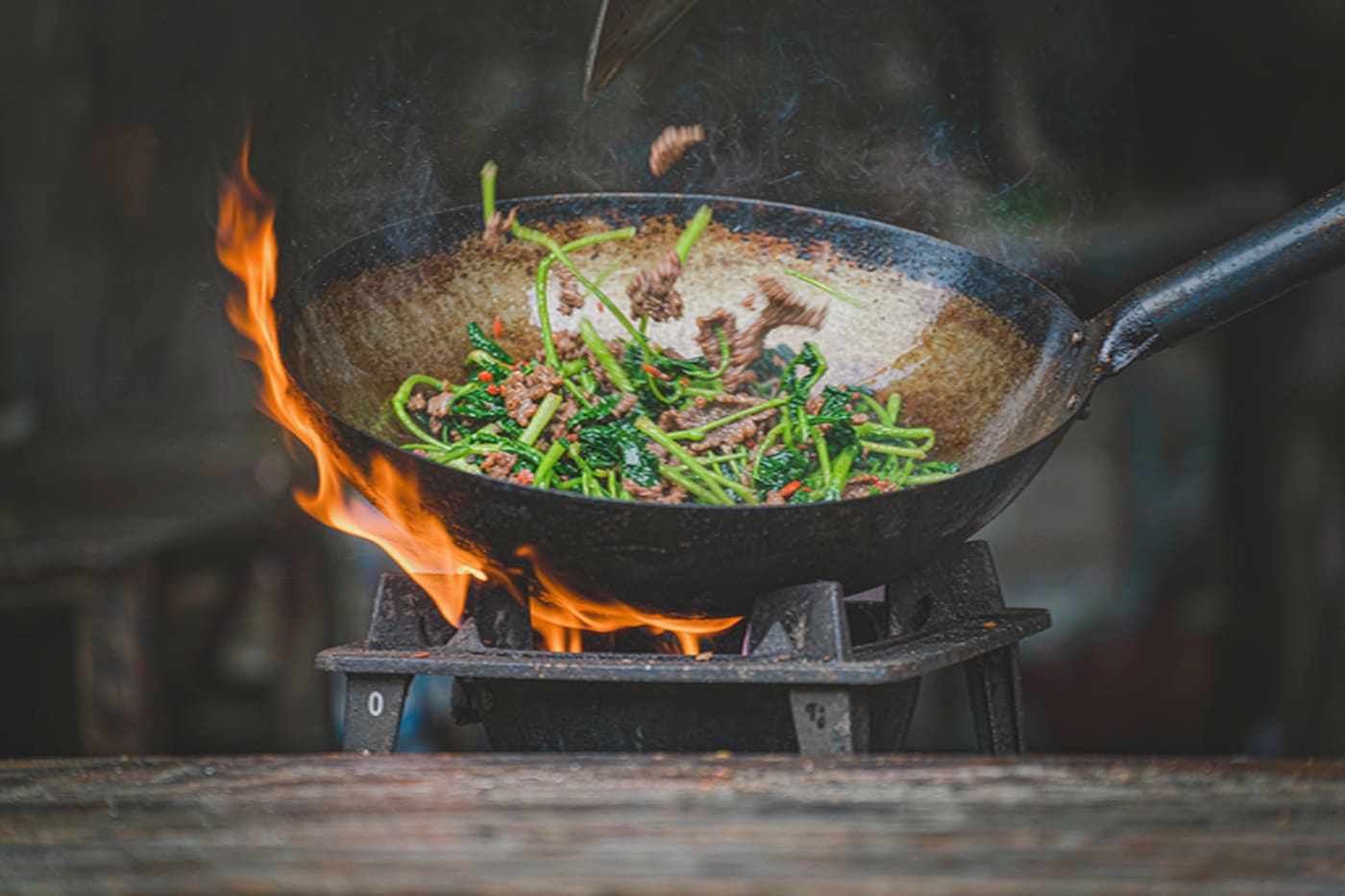
Equipment & Techniques
What Is Wok Hei, and Can You Get It on a Home Stove?
Wok hei is the seared aroma of fat hitting metal hotter than most home stoves allow: what it is, why restaurants get more, and four ways to close the gap.
Jack Chen · Nov 10, 2026 · 6 min read
This article shares food culture and personal experience. It is not medical advice. See our medical disclaimer.
Leave a comment
ModeratedNo comments yet. Questions about the method, your family's version, or something I got wrong — write it here and I will read it.