Gas vs Electric vs Induction for Stir-Frying
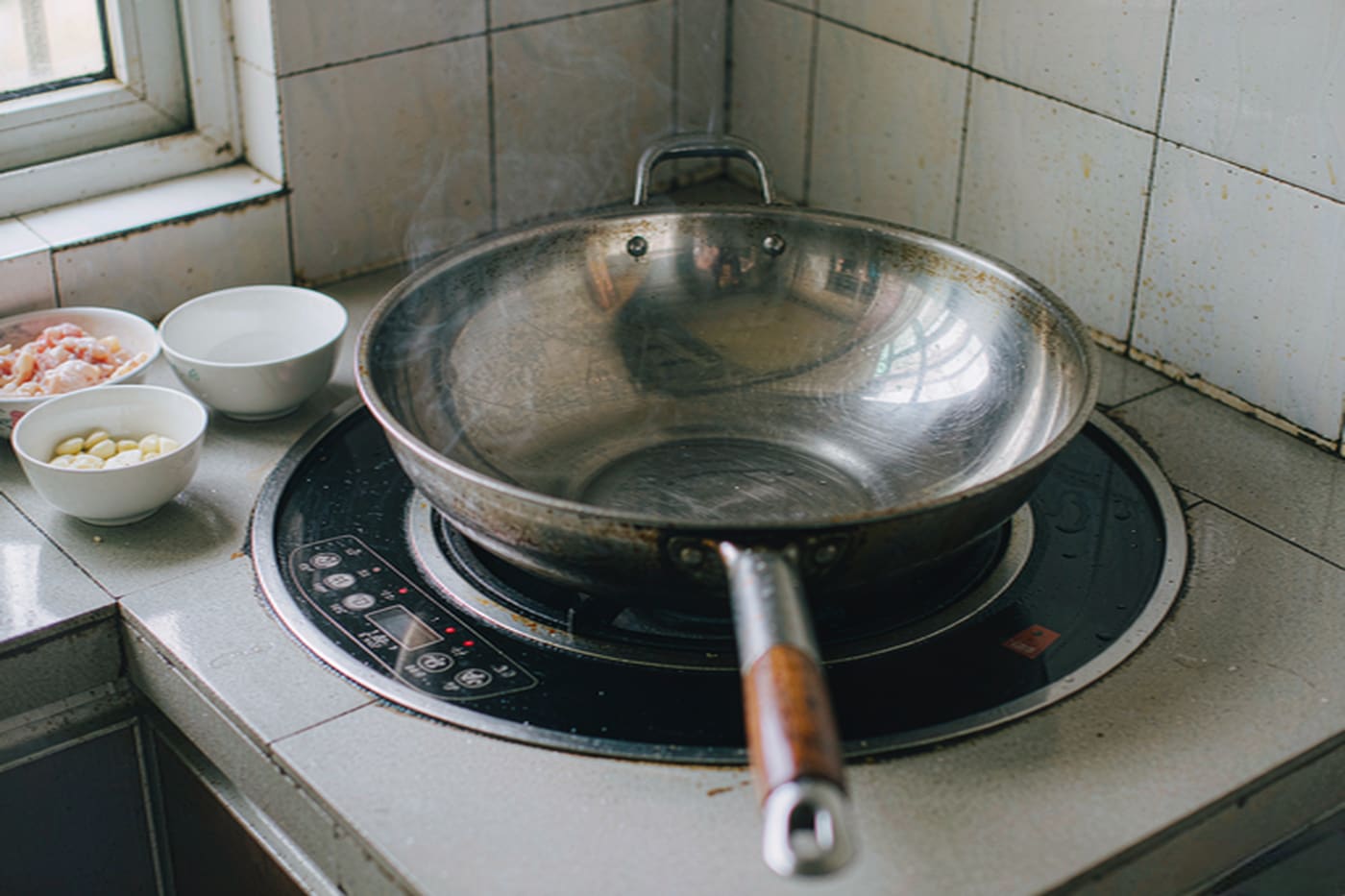
Gas still wins for wok cooking, induction is the best compromise with a flat-bottom wok, and a coil element is workable with the right adjustments.
Gas is still the best heat source for wok cooking, and it isn't close. A flame wraps the curve of the wok, responds instantly, and reaches temperatures a flat element can't. Induction is the best compromise in a modern kitchen — faster and more controllable than a coil, and it works well with a flat-bottom carbon steel wok. A standard electric coil is the weakest of the three, but with a flat-bottom wok, a long preheat, and small batches, it produces respectable stir-fry.
The ranking is easy. The reasons are worth understanding, because they determine which wok you should buy and how you should cook on the stove you already have.
The comparison in one table
| Gas | Induction | Electric coil / glass top | |
|---|---|---|---|
| Heat reaching the wok | 40–55% | 85–90% | 60–70% |
| Peak output, home unit | 7,000–18,000 BTU | 1,800–3,700 W | 1,500–3,000 W |
| Response time | Instant, visible | Fast, near-instant | Slow — 30–90 seconds to change |
| Wok shape | Round or flat | Flat only | Flat only |
| Wok material | Any | Carbon steel, cast iron (must be magnetic) | Any flat-bottomed |
| Heat up the sides | Yes, flame climbs the curve | No | No |
| Ventilation needed | Strong hood | Minimal | Minimal |
| Surface risk | None | Glass can scratch | Glass can scratch |
Gas: why it still wins
A gas flame has two properties no electric element has. It shapes itself to the pan, so heat climbs the curved wall of a wok instead of only touching the base. And it's visible — you adjust by looking at the flame, not by waiting for a limiter to cycle.
The number that matters is output. A standard home gas hob is 7,000–12,000 BTU per burner. A high-output burner gets to 15,000–18,000. A commercial wok range starts around 40,000 and goes past 100,000. That last figure is why restaurant stir-fry tastes different, and it's the whole argument in what wok hei is.
The catch is ventilation. A gas burner puts combustion products into the room, so a hood that actually extracts — ducted outside, sized to the burner, not a recirculating filter — is part of the system, not an accessory. If you can't vent, gas is a worse idea than its cooking performance suggests.
Gas also heats the kitchen. On a 35°C August evening that's not a small thing.
Induction: the sensible compromise
Induction puts 85–90% of its energy into the pan and almost none into the air, which is why a 3,000 W induction hob can outperform a 12,000 BTU gas burner on time-to-boil. For stir-frying, it does two things well: it gets a flat-bottom wok very hot very fast, and it holds that temperature better than a coil because it keeps feeding energy into the base rather than waiting to reheat a element.
The limits are shape and material. The wok base must be flat and magnetic — carbon steel and cast iron qualify, aluminium and most stainless don't. A thin carbon steel wok that has warped, even by a millimetre or two, loses contact and with it most of its heat transfer. Check the base with a straight edge before you blame the hob.
One more: induction hobs only heat the area of the coil, usually 6 to 9 inches. A wok base wider than the coil gets a hot bullseye and a cooler rim. Match the base to the ring.
Curved induction hobs designed for round-bottom woks exist, mostly in professional and high-end domestic ranges. If you find one that fits your counter, it's the closest thing to gas without a flame — but expect to pay for it, and expect the wok to be dedicated to that hob.
Electric coil and glass top: workable, with rules
The coil's problem is thermal lag. The element has to heat, then transfer through contact, then the wok heats, then the food cools it — and by the time you turn the knob down, you're already too late. Glass-top radiant is the same story with worse contact and a surface you can scratch.
That lag is manageable if you stop treating the stove like a gas burner:
- Preheat six to eight minutes, empty, on high. The wok needs to be saturated with heat before food goes in, because the element can't recover quickly.
- Use a flat-bottom wok with a base 5 to 6 inches across, and a burner at least as wide as the base.
- Never cook more than 300 grams at a time. The pan drops temperature when food lands and takes a minute to come back.
- Lift, don't slide. A carbon steel base will gouge glass. This is covered in detail in using a wok on an electric stove.
- Expect the limiter to trip. Many glass tops cut power when an element overheats. A long empty preheat can trigger it; if the ring cycles off, wait a minute.
What you give up is the top end: the last 20% of sear that comes from a flame licking over the rim. What you keep is everything else, provided the wok is thin carbon steel and you're honest about batch size.
The cost question
Per unit of heat delivered to the pan, induction is the cheapest of the three and gas is usually the most expensive, because a large share of a gas flame's energy goes around the wok and into the room. Coil sits in between with mediocre efficiency and the slowest response.
Per year, the difference for a household that stir-fries four times a week is small — a few tens of dollars either way in most markets. Don't choose a stove on energy cost alone. Choose on whether you can vent it, whether you have the right wok for it, and how much you care about the last 20%.
What to do with the stove you have
If you have gas: buy a round-bottom carbon steel wok, 14 inches, 1.5 mm. Season it and use it. Add a wok ring only if the wok won't sit stable.
If you have induction: buy a flat-bottom carbon steel wok with a 5–6 inch base, and check it's magnetic with a fridge magnet before you buy. Keep the base flat; don't bang it on the sink.
If you have a coil or glass top: buy the same flat-bottom wok, plus a heat diffuser if your element is small and hot-spotted. Preheat longer than feels reasonable.
If you have all three and a choice: gas with real ventilation, then induction, then coil. If you cook outside, an outdoor wok burner beats all of them for the price of a decent pan — 60,000 BTU for a few hundred dollars, and no hood required.
Whichever you land on, the wok matters more than the stove. A $25 flat-bottom carbon steel wok, properly seasoned, will outperform a $150 nonstick wok on any heat source. Seasoning a carbon steel wok is the twenty minutes that decides whether the rest of this works.
Keep reading
Frequently asked questions
Can you use a wok on an induction hob?
Yes, if the wok has a flat, magnetic base — carbon steel and cast iron both work. The base should be no wider than the induction ring, and it must stay flat; a warped base loses contact and heat transfer.
Is induction better than gas for stir-frying?
Induction is faster to heat a flat-bottom wok and far more efficient, but it only heats the base. Gas wins overall because the flame climbs the curved wall and reaches higher peak temperatures.
Why does my electric stove not get hot enough for stir-fry?
Most home coil elements deliver 1,500–3,000 W with 60–70% transfer through contact, so the wok surface drops below browning temperature when food lands. Preheat six to eight minutes and cook in batches of 300 grams or less.
About the author
Writer & Home Cook
Chinese home cook writing about seasonal food traditions from an American kitchen. Grew up in Guangdong, now cooks for a mixed family in the US.
Keep simmering
Equipment & Techniques
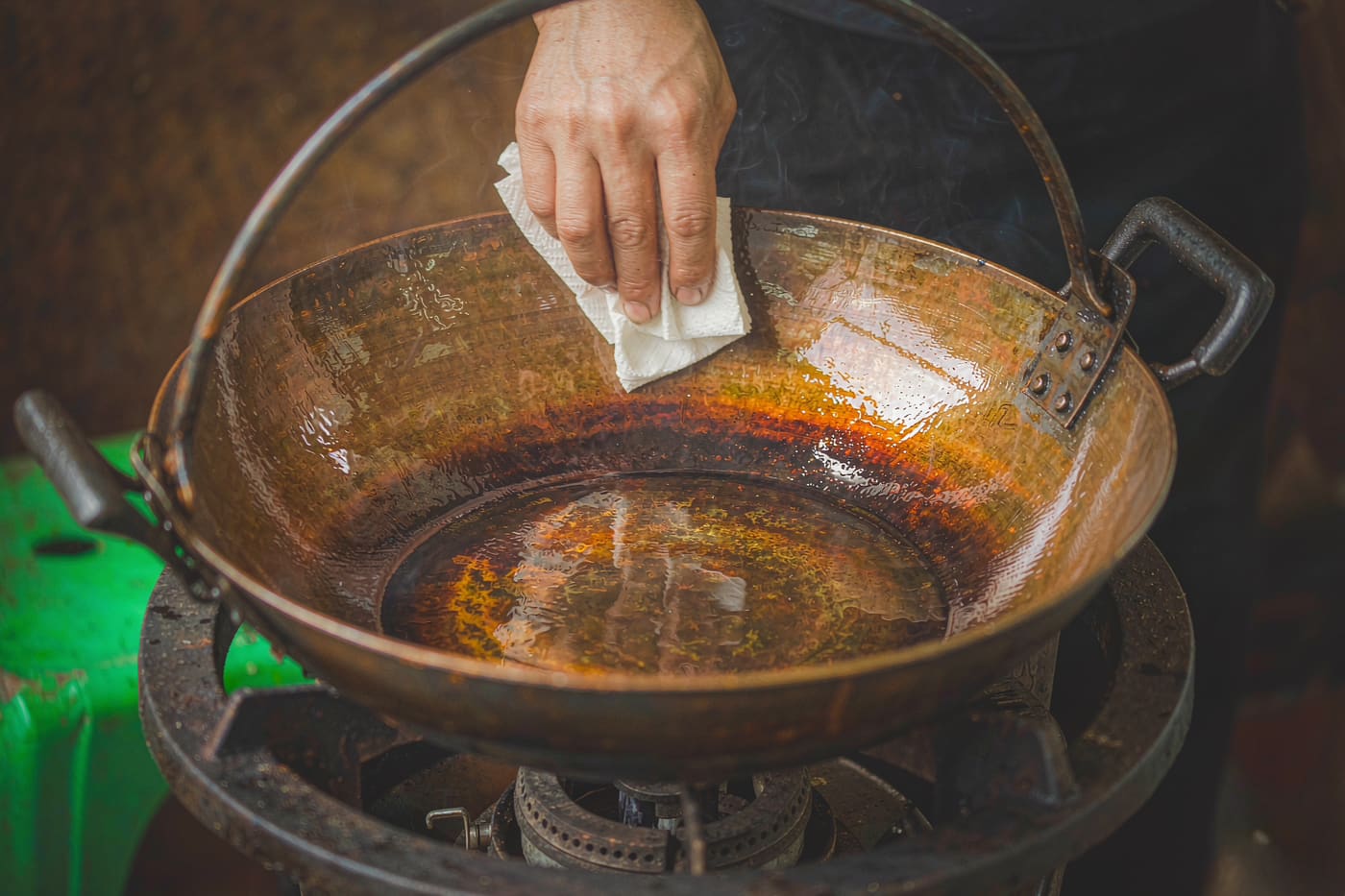
Seasoning a Carbon Steel Wok: The Method, and How to Fix It
Twenty minutes, four paper-thin coats of oil, one rule: use less than you think. The full method, plus fixes for sticky, flaking and rusty woks.
Jack Chen · Nov 10, 2026 · 6 min read
Equipment & Techniques
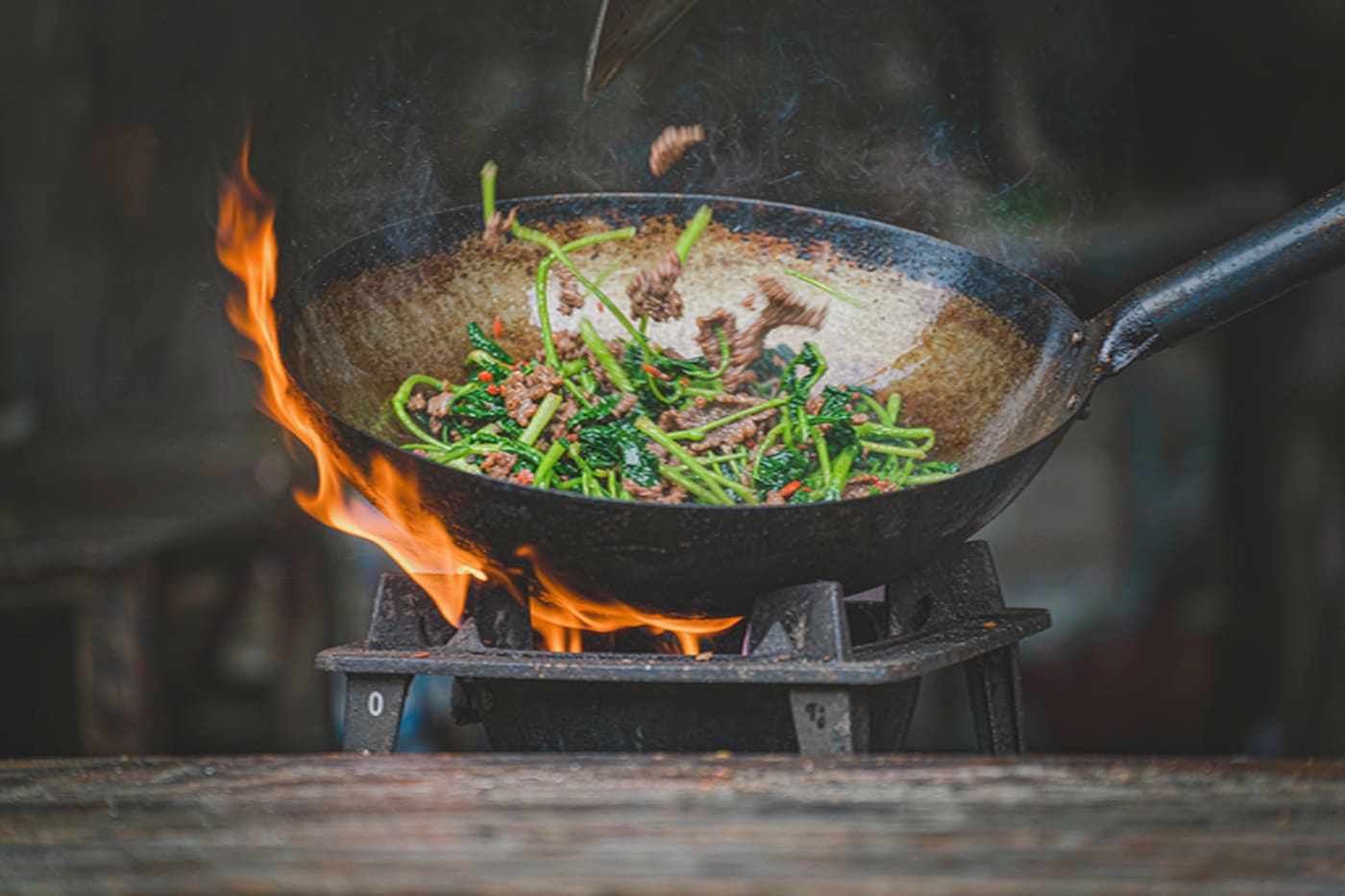
What Is Wok Hei, and Can You Get It on a Home Stove?
Wok hei is the seared aroma of fat hitting metal hotter than most home stoves allow: what it is, why restaurants get more, and four ways to close the gap.
Jack Chen · Nov 10, 2026 · 6 min read
Equipment & Techniques
Rice Cooker vs Clay Pot: Which One for Chinese Rice?
A rice cooker gives even, repeatable grains with a switch you can forget. A clay pot gives a toasted bottom and a steam plume. When each earns its space.
Jack Chen · Nov 4, 2026 · 7 min read
This article shares food culture and personal experience. It is not medical advice. See our medical disclaimer.
Leave a comment
ModeratedNo comments yet. Questions about the method, your family's version, or something I got wrong — write it here and I will read it.