Pickled Mustard Greens: A Practical Guide
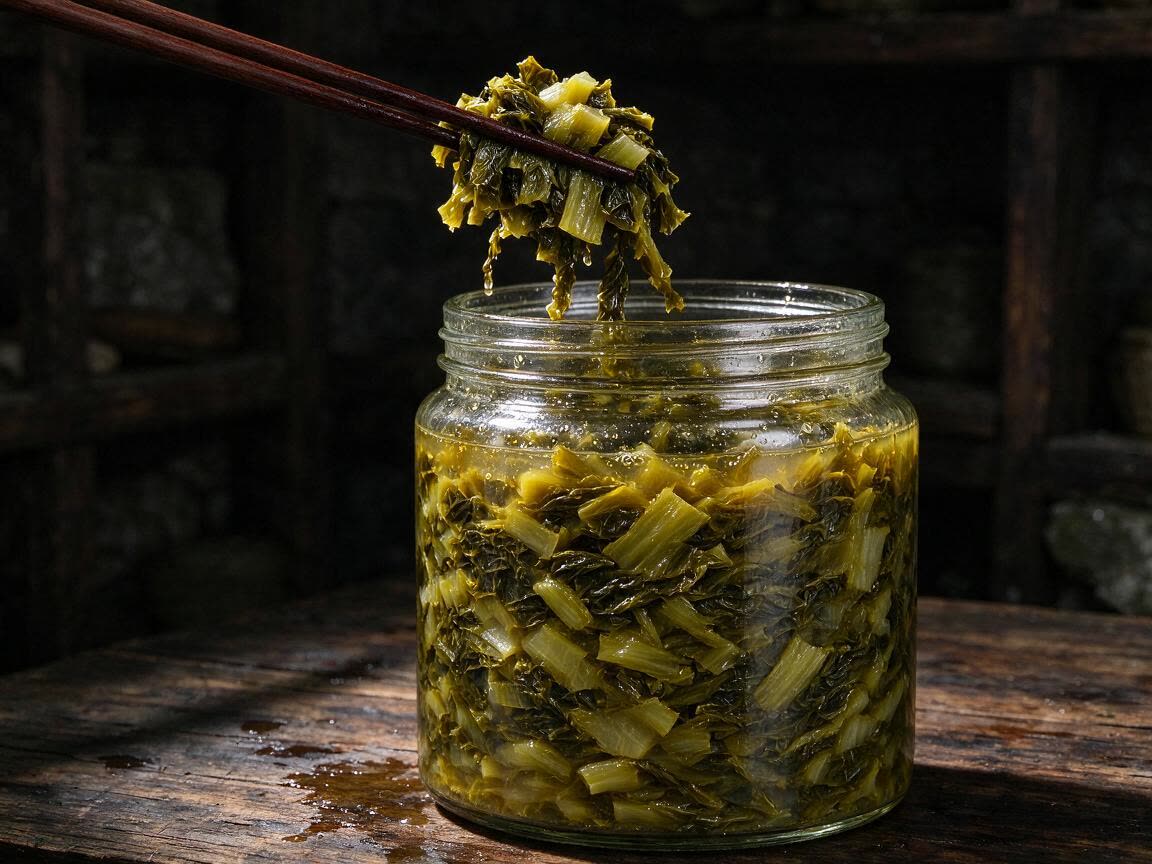
Pickled mustard greens: the 3 main types, which to buy for soups versus stir-fries, how to cook them, and why yours came out bitter or bland.
A $2.49 vacuum-sealed packet of pickled mustard greens in a Chinese grocery is usually enough for four bowls of noodle soup. The same greens in a small jar sold as a "superfood ferment" run $9. It is the same vegetable, salted and soured. The difference is marketing and packaging, not the pickle.
Pickled mustard greens are the salted, fermented leaves and stems of Brassica juncea, the mustard plant that also gives us the seeds in your deli mustard. Chinese kitchens pickle it in several ways, and the type you buy changes what you can cook. Buy the wrong one and your stir-fry turns out either mouth-puckering or oddly sweet.
What exactly is pickled mustard greens?
There are three main types on shelves, and they are not interchangeable:
- Whole sour greens (suancai, 酸菜): pale green to yellow, packed in liquid, sold in plastic pouches or tubs. Tangy, moderately salty, still holds its shape. This is the default for soups and braises.
- Chopped pickled greens (zha cai, 榨菜): actually a different mustard variety, pressed and cured, sold in small foil packets, often shredded and chilli-flecked. Very salty, crunchy, almost like a Chinese pickle relish. Good straight from the packet with rice.
- Mei cai (梅菜): dried and then steamed and cured, dark brown, sweet-savoury. This is the one that goes under pork belly in the classic braise. It is not sour in the same way.
If a recipe just says "pickled mustard greens," it almost always means the first type, the whole sour greens. Check the label: the ingredient list should be mustard greens, salt, water, maybe a little sugar or rice. If it lists vinegar first, you are buying a quick pickle, not a fermented one, and it will taste sharper and flatter.
How do I buy it without guessing?
Look at the liquid. Good whole sour greens sit in cloudy, slightly viscous brine. Clear, thin liquid usually means a short brine and a bland result. The greens themselves should be olive-green to khaki, not bright emerald. Bright green means dye or a very short cure.
Prices at Chinese groceries in the US run roughly:
- $1.99 to $2.99 for a 300g vacuum pouch of whole sour greens
- $0.99 to $1.49 for a 50g to 80g packet of zha cai
- $3.49 to $5.99 for a 200g bag of mei cai
Refrigerate after opening and use within a month. The brine keeps it stable; a dry packet of zha cai keeps in the cupboard for months, which is why it is a pantry staple in dorm rooms and on hiking trips.
If your local supermarket only carries the Korean or Japanese equivalents, they work. Korean gat kimchi and Japanese takana are close cousins. Neither is a perfect swap for mei cai.
How do I cook it so it tastes like something?
The single biggest mistake is not rinsing it. Whole sour greens come packed with salt, and a quick stir-fry straight from the packet will taste like seawater. Rinse under cold water, squeeze, and taste a shred. If it is still aggressively salty, soak in cold water for 10 to 15 minutes and squeeze again. Do not soak longer than that or you lose the sourness that makes it worth eating.
Then:
- Squeeze hard. Wet greens steam instead of frying. Get them as dry as you can in a clean tea towel.
- Chop fine. Half-inch pieces for soup, finer for fried rice. The stems take longer than the leaves, so keep them separate if you are stir-frying.
- Fry the stems first in a neutral oil with garlic and a little pork fat or diced pork belly. Two to three minutes, then add the leaves.
- Add a pinch of sugar, not to sweeten but to round off the sour edge. A quarter teaspoon per cup of chopped greens is enough.
Good pairings: shredded pork, silken tofu, rice noodles, fish, and eggs. The classic Cantonese home dish is pickled greens with pork and rice noodles; the Sichuan version adds chilli bean paste and minced pork. I keep a pouch in the fridge and use it the way most people use capers: a salty-sour hit to cut through something rich.
For mei cai, the method is different. Soak it in warm water for 20 minutes, rinse three or four times to lift the grit, squeeze dry, then chop and stir-fry with a little sugar and soy before layering it under pork belly for a long braise. Skipping the rinse is how you end up with sand in the sauce.
What goes wrong?
It tastes bitter. Usually under-rinsed mei cai, or greens that were cured too long. Soak and rinse again. A pinch of sugar helps.
It tastes flat and sour in a bad way. You bought a vinegar pickle instead of a fermented one, or you soaked it too long and washed out the flavour. Check the label next time.
It goes mushy. Overcooking. Whole sour greens need five to eight minutes in a soup, not thirty. Add them near the end.
The dish tastes too salty. You did not account for the greens when seasoning. Salt the rest of the dish lightly and taste before adding soy sauce.
It smells like a swamp when you open it. That is normal for a fermented brine. If the greens are slimy or the brine is stringy, throw it out.
Frequently asked questions
Can I make it at home? Yes, but it is a project. Salt mustard greens at roughly 3% of their weight, weight them under a plate, and leave them at room temperature for a week to ten days, then refrigerate. The results vary with the weather and the greens. Buying is cheaper and more consistent.
Is it the same as sauerkraut? No. Different vegetable, different brine, different bacteria. Sauerkraut is cabbage; this is mustard greens, and the flavour is more bitter and peppery.
What can I substitute? Kimchi in a pinch for stir-fries, or rinsed capers for a salty-sour hit in a noodle soup. Neither is close, but both will get you through dinner.
Is it healthy? It is a salty fermented vegetable. Treat it as a seasoning and a vegetable, not a supplement.
Sources
- USDA FoodData Central: Mustard greens, raw
- Wikipedia: Pickled mustard
- Serious Eats: Chinese pickled vegetables

Keep reading
- Types of Fermented Tofu: A Shopper's Guide to Fu Ru
- Soy Sauce Grades Explained: What You're Actually Buying
- Dried Scallops: Worth It or Not?
- Dried Tangerine Peel: The Citrus That Ages Like Leather
Sources
Photo: Jason M. C., Han / CC BY-SA 4.0 via Wikimedia Commons · Photo: Florstein ( Telegram: WikiPhoto.Space ) / CC BY-SA 4.0 via Wikimedia Commons
Frequently asked questions
Is pickled mustard greens the same as kimchi?
No. Kimchi is fermented napa cabbage with chilli and fish sauce. Pickled mustard greens use Brassica juncea and a salt brine, giving a more bitter, peppery sourness. Kimchi works as a rough substitute in stir-fries.
Do I have to rinse pickled mustard greens before cooking?
Yes. They are packed with salt. Rinse, squeeze, and taste a shred. If still very salty, soak in cold water for 10 to 15 minutes and squeeze again.
How long does an open packet last?
Refrigerated in its brine, about a month. Dry packets of zha cai keep for months in the cupboard. Discard if the greens turn slimy or the brine goes stringy.
About the author
Writer & Home Cook
Chinese home cook writing about seasonal food traditions from an American kitchen. Grew up in Guangdong, now cooks for a mixed family in the US.
Keep simmering
Ingredient Guides
Dried Shiitake vs Fresh: When Each One Wins
Dried shiitake tastes deeper and costs less per ounce of flavour; fresh wins on texture and speed. A guide to picking the right one.
Jack Chen · Nov 23, 2026 · 6 min read

Ingredient Guides
How to Store Fresh Ginger So It Doesn't Dry Out
Three ways fresh ginger goes wrong, the symptom of each, and the fix. A troubleshooting guide for the fridge, the counter and the freezer.
Jack Chen · Nov 22, 2026 · 7 min read
Ingredient Guides
Star Anise, Cloves and Cassia: What Each One Actually Does in a Braise
Three warm spices, three different jobs. A shopper's guide to what star anise, cloves and cassia add to a pot of red-braised pork or beef.
Jack Chen · Nov 15, 2026 · 6 min read
This article shares food culture and personal experience. It is not medical advice. See our medical disclaimer.
Leave a comment
ModeratedNo comments yet. Questions about the method, your family's version, or something I got wrong — write it here and I will read it.