Using a Wok on an Electric Stove: What Actually Works
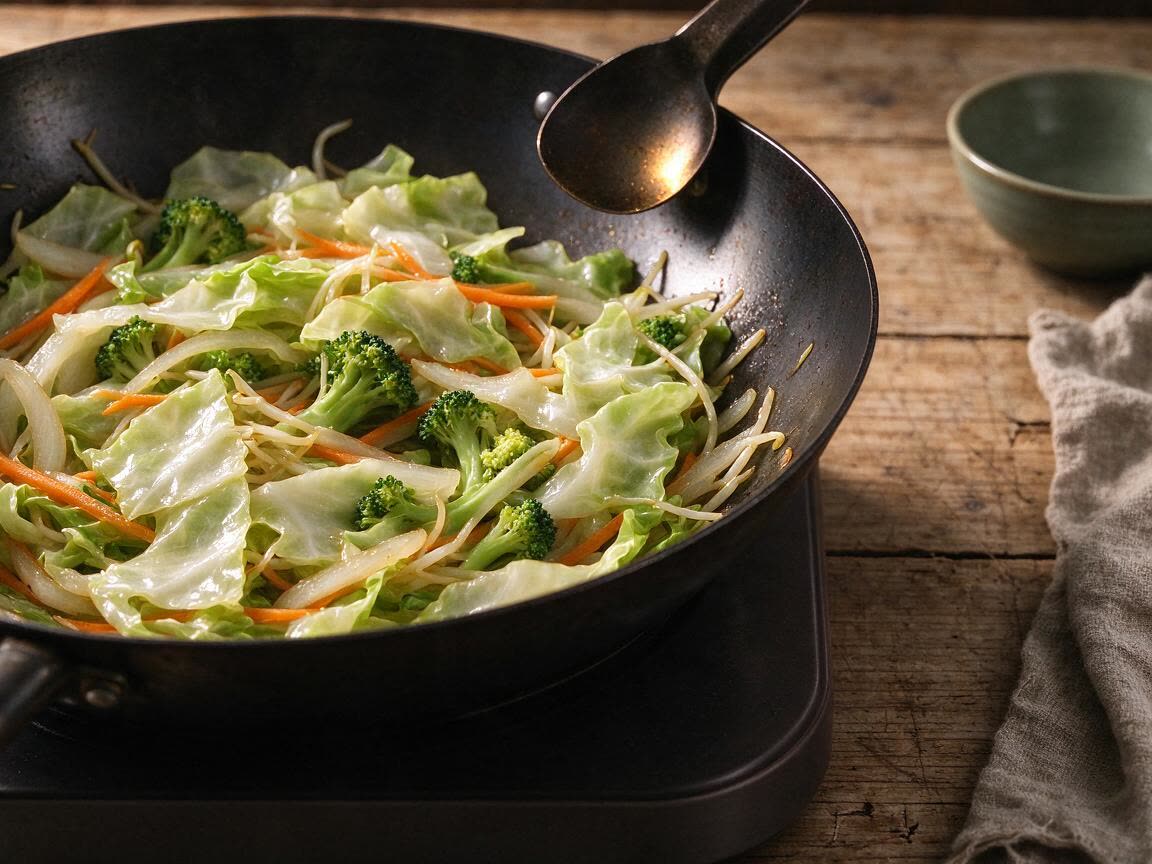
Yes, you can use a wok on an electric stove, if it is flat-bottom carbon steel. How to preheat, batch, and season your way to a real stir-fry.
Can you use a wok on an electric stove? Yes. A flat-bottom carbon steel wok with a base 5 to 6 inches across works on electric coil, glass-top, and induction stoves. Preheat it empty for five to seven minutes, cook in small batches, and stir with a spatula instead of tossing. Round-bottom woks and wok rings don't work well on electric heat.
A $25 flat-bottom carbon steel wok from a restaurant supply store will outperform a $120 nonstick wok on an electric stove every time. That's the whole answer in one sentence. The rest of this guide is about why, and about the five things that go wrong when people try to cook Chinese food on a stove that was designed for boiling pasta.
What kind of wok works on an electric stove?
A flat bottom. Not a slightly flattened round bottom, not a wok with a disc welded on, but a genuinely flat base roughly 5 to 6 inches across that sits flush on the coil or glass top.
Round-bottom woks are made for a wok ring set over a gas flame. On an electric element they wobble, they contact maybe 30 percent of the surface, and they heat in a lopsided ring. You can buy a wok ring for an electric stove, but it doesn't solve the contact problem; it just holds a bad situation steady.
Carbon steel, 1.5 to 2 mm thick, is the material you want. It's light enough to lift and toss with one hand, it seasons up in an afternoon, and it costs next to nothing. Cast iron woks hold heat well but weigh 8 to 10 pounds, which makes tossing a two-handed job. Nonstick woks are convenient for about a year, and then they're landfill; you also can't get them hot enough for proper stir-frying without degrading the coating. When Serious Eats tested 13 woks side by side, they landed on the same conclusion: flat-bottom carbon steel, and nothing else.
Flat-bottom carbon steel woks are common in Asian groceries and restaurant supply stores. A 14-inch one usually runs $20 to $35.
| Wok type | Works on electric? | Why |
|---|---|---|
| Flat-bottom carbon steel (5–6" base) | ✅ Best choice | Full contact with the element; light enough to lift |
| Cast iron, flat bottom | ⚠️ Works, with caveats | Holds heat well, but 8–10 lbs makes tossing a two-handed job |
| Round bottom (with wok ring) | ❌ | About 30% element contact; the ring steadies it but doesn't fix the heating |
| Nonstick | ❌ | Coating degrades at stir-fry temperatures |
Can an electric stove get hot enough to stir-fry?
Usually not, and it's worth being honest about that. A domestic electric coil tops out around 2,000 to 2,600 watts at the element, but the heat transfer through a flat contact surface is inefficient. A gas wok burner puts out 15,000 to 100,000 BTU. You are not matching that. What that gap costs you in flavour — and how much of it you can still get at home — is the subject of what wok hei actually is.
What you can do is stop fighting it. Three adjustments get you most of the way:
- Preheat longer than feels reasonable. Five to seven minutes on high, empty, before anything goes in. The wok metal needs to be saturated, not just warm.
- Cook in smaller batches. A pound of protein becomes half a pound. Crowd the pan and your stir-fry turns into a steam bath.
- Use a larger burner than the wok base. The coil should be as wide as or wider than the flat bottom, so heat spreads across the whole base rather than concentrating in the middle.
The best oils for stir-frying on an electric stove
An electric element is slow to recover its temperature, so the oil matters more than it does over gas. Use a neutral oil with a high smoke point — peanut, canola, or rice bran oil all hold up at wok temperatures. Save toasted sesame oil for the finish; it burns bitter if you cook with it. And measure it: one to two tablespoons per batch is enough. More oil doesn't make the pan hotter, it just makes the food greasy while the temperature drops.
How to stir-fry on an electric stove, step by step
- Preheat the empty wok for five to seven minutes on high. Flick a drop of water in; it should skitter and vanish on contact.
- Stage everything before the oil goes in. Once the wok is hot, you have seconds, not minutes. Chop, measure, and set the sauce by the stove first.
- Sear the protein in two batches. Half a pound at a time, spread it out, and let it sit still against the base for 30 seconds before moving it. Remove the first batch before the second goes in.
- Cook vegetables second, driest first. Green beans before napa. Anything that weeps water goes in last, in its own round.
- Add sauce around the rim, not on top of the food. Hot metal at the edge cooks off the raw alcohol and starch taste instantly.
- Re-oil between batches. A teaspoon swirling around the hot base is all the second batch needs.
How to season and care for a carbon steel wok
Scrub off the factory coating first. Most new carbon steel woks ship with a thin machine oil or a wax layer. Hot water, a drop of dish soap, a green scouring pad, dry thoroughly.
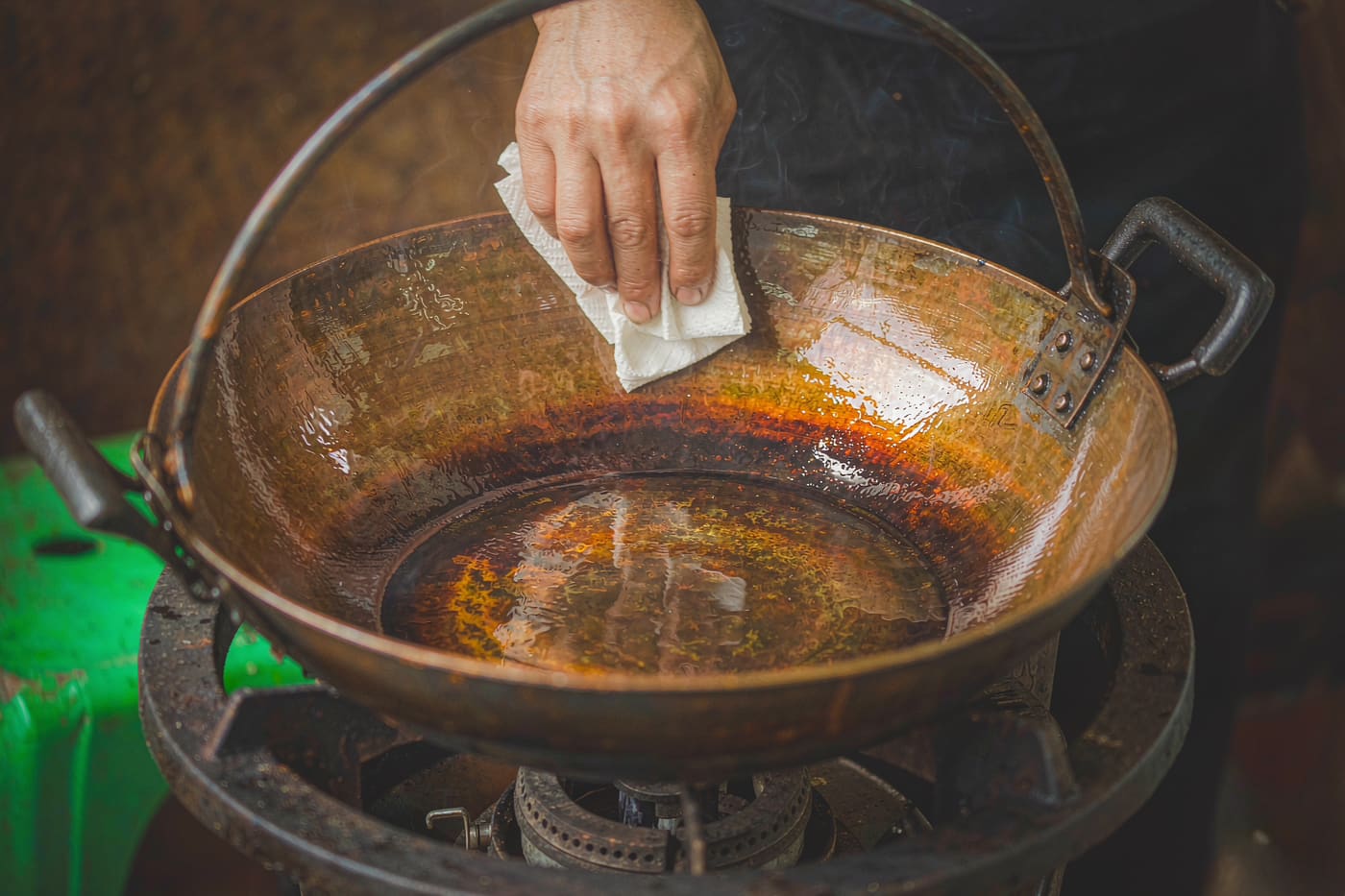
Then season: heat the dry wok on medium-high until a bead of water flicked in evaporates instantly, wipe a teaspoon of neutral oil across the whole interior with a paper towel, and let it smoke for a minute. Repeat three or four times. The surface should go from gray to amber to a dark brown. It will be uneven at first. That's fine; it evens out as you cook. If you want a second opinion on technique, Serious Eats' wok buying and care guide covers the same ground in more depth. For the full twenty-minute method, including how to fix a sticky or flaking surface, see seasoning a carbon steel wok.
The one household habit worth keeping: wash with hot water and a soft brush, no soap on a well-seasoned pan, dry it on the burner for 30 seconds, and wipe a few drops of oil around while it's still warm. A wok left damp in a sink will spot with rust overnight.
Using a wok on a glass-top stove without scratching it
Everything above applies, with two extra rules. First, lift, never slide. A carbon steel base is hard enough to scratch glass, and any burr on the bottom turns a slide into a gouge — run a finger around the base before the first use and sand off anything you feel. Second, check your manual. Some glass-top ranges are rated for the weight and heat of a full wok; others advise against cast iron and heavy pans entirely. The manual is the authority, not me.
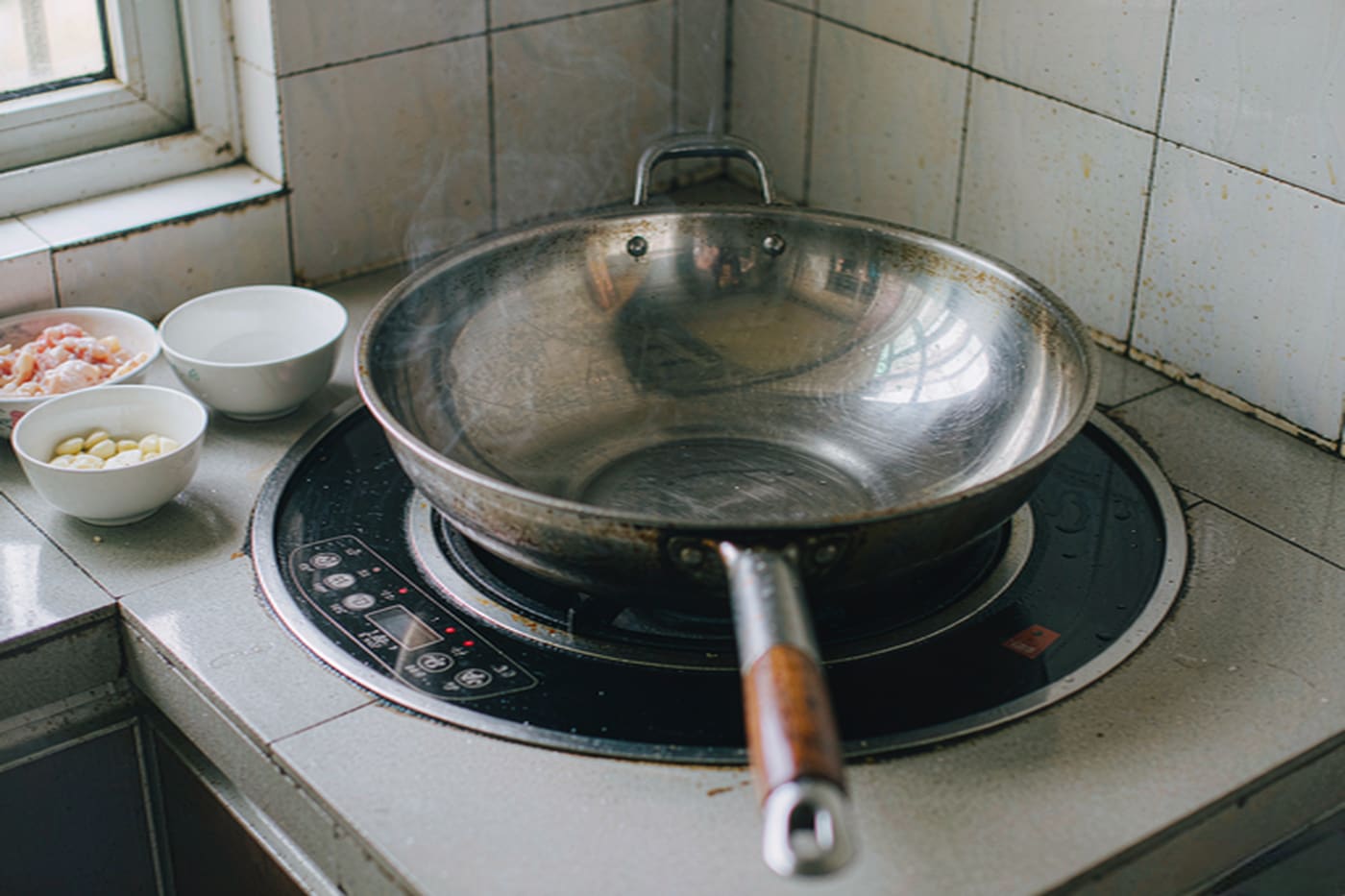
One more quirk: many glass tops have a limiter that cuts power when an element overheats, and a long empty preheat can trip it. If your burner cycles off mid-preheat, that's the limiter, not a fault — give it a minute and it comes back. Preheat with the wok on, don't crank an empty element. And if you are weighing whether to switch heat sources entirely, gas, electric, and induction compared covers what each one can actually deliver to a wok.
The 5 most common mistakes (and the fixes)
1. The pan is not hot enough when food goes in. If the sound is a sizzle, you're fine. If it's a hiss or nothing at all, take the food out, wait, and start again. Food that goes into a cool wok releases water, and water is the enemy.
2. Too much liquid in the marinade. Cornstarch slurries and soy-based marinades are fine, but a wet marinade will pool at the bottom of a flat wok and boil. Drain meat briefly, or use a light coating of cornstarch and a splash of Shaoxing wine rather than a soaking marinade — and if the marinade touched raw meat, boil any leftover marinade before it touches food again.
3. Tossing instead of stirring. A flat-bottom wok on an electric coil doesn't have the curved surface that lets you flip food up the sides. Use a metal wok spatula and push food around and up the sloping walls; that's where the hotter metal is. The classic toss is largely decorative on this setup.
4. Cooking wet vegetables. Napa cabbage, bok choy, and mushrooms release a lot of water. Cook them separately, or salt them and drain for 10 minutes first. A 1-pound head of napa can shed a quarter cup of liquid.
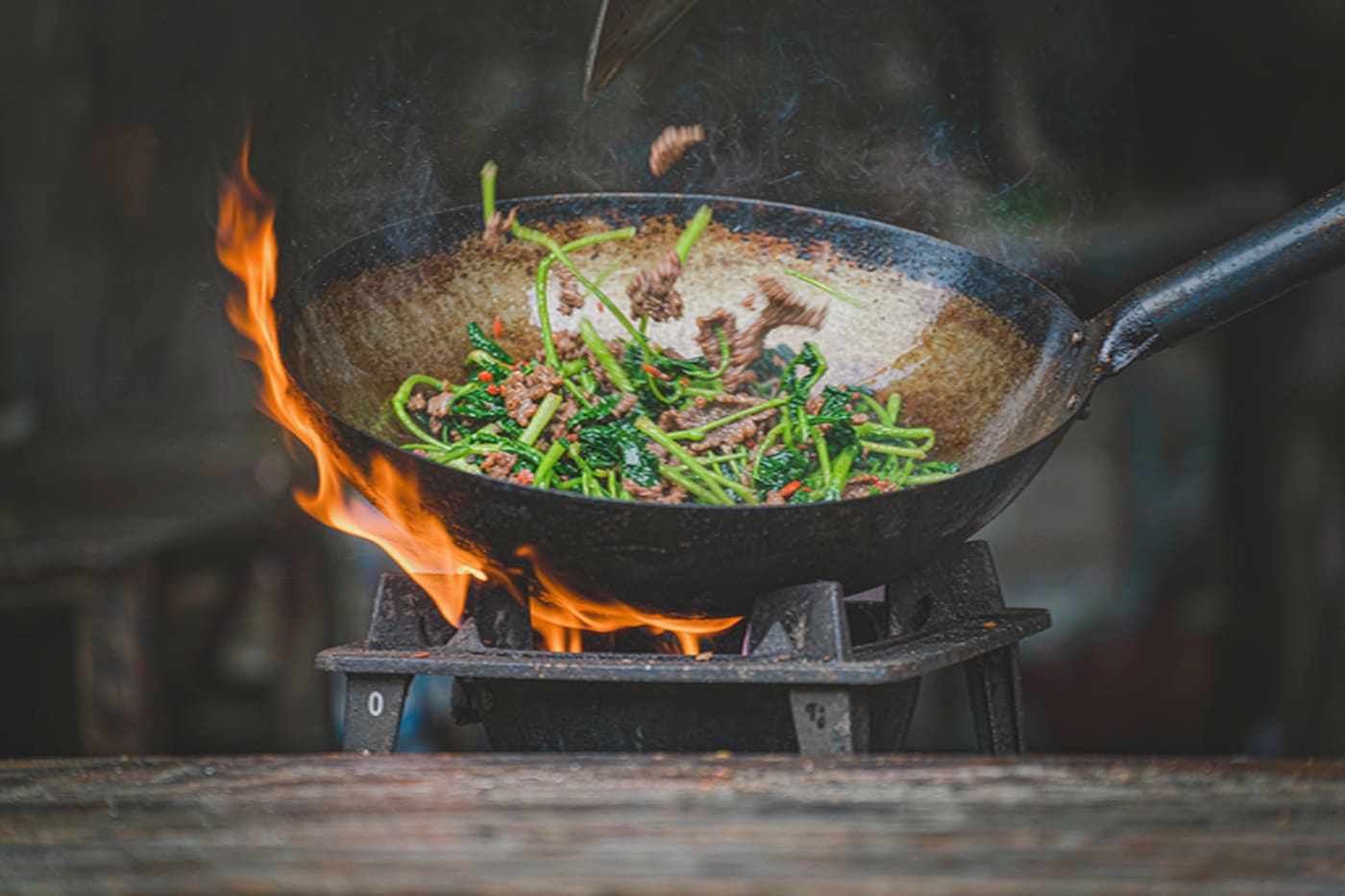
5. Expecting wok hei. That smoky, seared character comes from flame licking over the rim and oil combusting above the food. You won't get it on an electric coil. You can approximate some browning by letting food sit still against the hot base for 30 seconds at a time instead of constantly moving it.
The best wok for an electric stove (and what to skip)
Buy: a 14-inch flat-bottom carbon steel wok ($20 to $35 at an Asian grocery or restaurant supply store), a metal wok spatula with a flat edge ($5 to $8), and a lid that fits loosely — a $10 universal lid works fine. A wok brush is nice but a stiff nylon brush is fine. For the rest of the prep work, a sharp cleaver covers most of it — we've compared the Chinese cleaver vs the chef knife separately.
Skip: nonstick woks, wok rings for electric stoves, round-bottom woks, and any wok marketed with a "helper handle" that makes it too heavy to lift. Also skip the $150 preseasoned woks; you're paying for a coating you could apply in ten minutes.
Should you buy a countertop electric wok?
Probably not. Countertop electric woks are essentially nonstick pans with a thermostat, and the thermostat caps you right out of stir-fry territory — the coating limits the temperature and the element cycles before the metal gets properly hot. They're fine for fried rice on a dorm room desk. For an actual stir-fry, the $35 carbon steel wok on your biggest burner is the better tool.
If you have an outdoor gas burner or a portable butane stove, that's the better tool for high-heat dishes. But a flat-bottom carbon steel wok on a preheated electric stove, used in small batches, produces honest stir-fries. It just requires patience with the preheat and a willingness to cook two rounds instead of one. And for rice, the rice cooker vs. clay pot comparison is the same kind of decision — the traditional tool and the practical one are rarely the same. That's the whole method, and it fits on an index card. If you're building the rest of the kitchen around it, start with our guide to home-style Chinese cooking — most of a Chinese pantry is condiments, not equipment.

Keep reading
- What a Chinese Pantry Actually Holds: A Shopping List for American Kitchens
- Ginger Scallion Oil: The Three-Ingredient Condiment That Runs a Cantonese Kitchen
- Rice Cooker vs Clay Pot: Which One for Chinese Rice?
- Start here: every guide, sorted by what you are trying to cook
Sources
- Serious Eats — The Best Woks
- Serious Eats — How to Buy and Care for a Wok
- USDA — Marinating Safely
- Wok - Wikipedia
Photo: Jason M. C., Han / CC BY-SA 4.0 via Wikimedia Commons · Photo: Florstein ( Telegram: WikiPhoto.Space ) / CC BY-SA 4.0 via Wikimedia Commons
Frequently asked questions
Can I use a round-bottom wok on an electric stove?
You can, but it will wobble and heat unevenly. A wok ring holds it steady but does not improve contact with the element. A flat-bottom wok is the practical choice.
Do I need a special wok for an induction stove?
You need a magnetic base, which carbon steel and cast iron have. Test with a fridge magnet. Flat-bottom carbon steel works well on induction because the base couples directly and responds quickly.
Why does my stir-fry come out steamed instead of browned?
Usually the wok is not hot enough or the pan is crowded. Preheat for five to seven minutes on high, cook in smaller batches, and let food sit still against the base for 30 seconds at a time to brown.
What oil should I use for stir-frying on an electric stove?
A neutral oil with a high smoke point: peanut, canola, or rice bran oil. Electric elements recover temperature slowly, so a high smoke point oil keeps the pan hot without smoking out the kitchen. Save toasted sesame oil for the finish.
Will a wok scratch my glass-top stove?
It can if you slide it. Lift the wok on and off the cooktop instead of sliding, check the base for burrs before the first use, and follow your range manual's weight and heat guidance.
About the author
Writer & Home Cook
Chinese home cook writing about seasonal food traditions from an American kitchen. Grew up in Guangdong, now cooks for a mixed family in the US.
Keep simmering
Equipment & Techniques
Seasoning a Carbon Steel Wok: The Method, and How to Fix It
Twenty minutes, four paper-thin coats of oil, one rule: use less than you think. The full method, plus fixes for sticky, flaking and rusty woks.
Jack Chen · Nov 10, 2026 · 6 min read
Equipment & Techniques
Gas vs Electric vs Induction for Stir-Frying
Gas still wins for wok cooking, induction is the best compromise with a flat-bottom wok, and a coil element is workable with the right adjustments.
Jack Chen · Nov 10, 2026 · 6 min read
Equipment & Techniques
What Is Wok Hei, and Can You Get It on a Home Stove?
Wok hei is the seared aroma of fat hitting metal hotter than most home stoves allow: what it is, why restaurants get more, and four ways to close the gap.
Jack Chen · Nov 10, 2026 · 6 min read
This article shares food culture and personal experience. It is not medical advice. See our medical disclaimer.
Leave a comment
ModeratedNo comments yet. Questions about the method, your family's version, or something I got wrong — write it here and I will read it.