Seasoning a Carbon Steel Wok: The Method, and How to Fix It
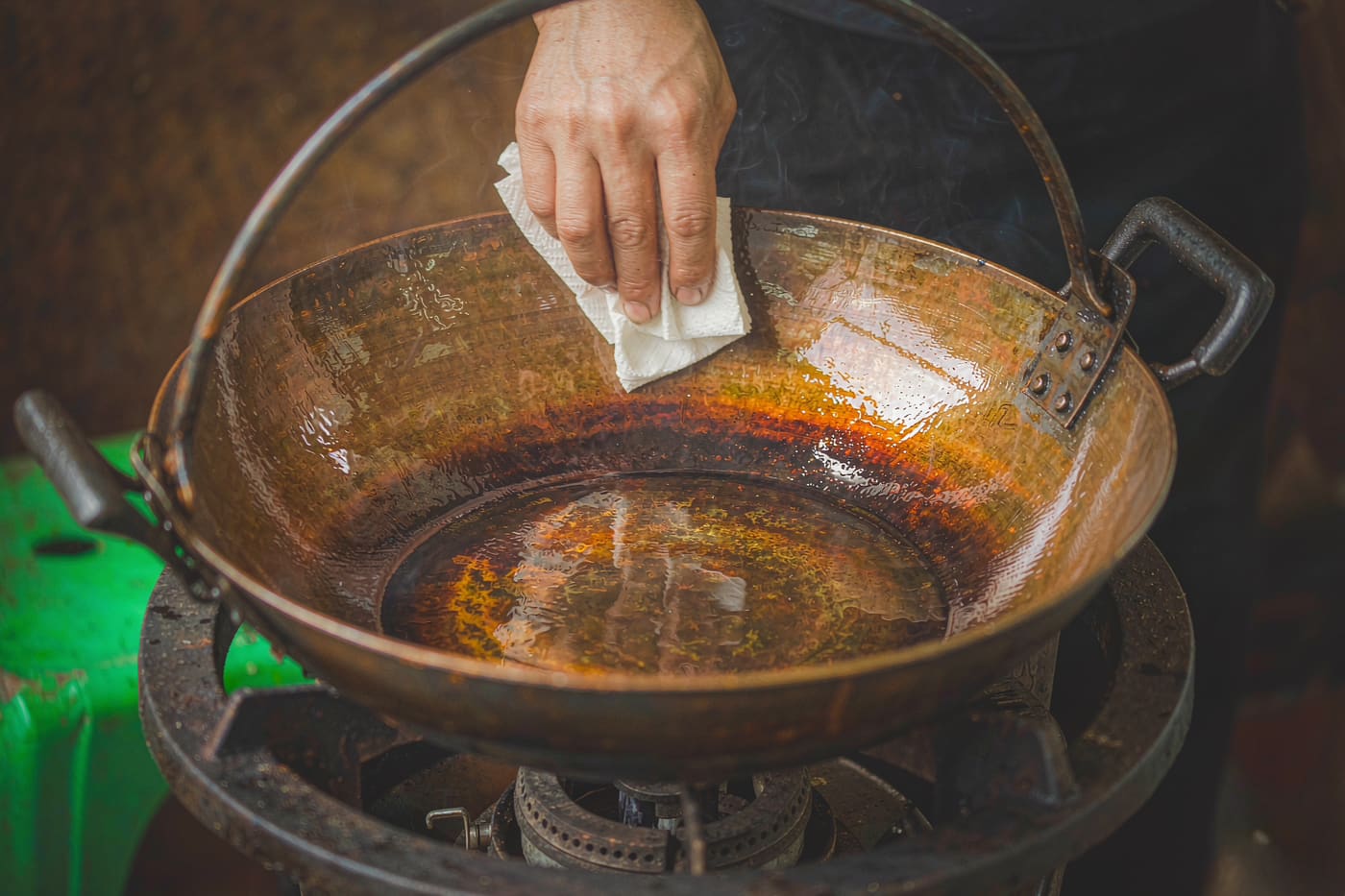
Twenty minutes, four paper-thin coats of oil, one rule: use less than you think. The full method, plus fixes for sticky, flaking and rusty woks.
To season a carbon steel wok, scrub off the factory oil, heat the wok until it smokes, then wipe on four to five coats of neutral oil as thin as you can make them, letting each one smoke for 60 to 90 seconds. The whole job takes twenty minutes. The one rule that decides whether it works is this: less oil than you think, every time.
Seasoning is not a coating you apply. It's a layer of oil that has polymerised onto the steel — cross-linked into a hard, slick film that bonds to the metal and fills its microscopic pores. That film is why a properly seasoned wok doesn't stick, why it doesn't rust in a damp kitchen, and why it eventually turns black.
Step by step
1. Strip the factory coating
New carbon steel ships with machine oil or a wax layer to stop it rusting in transit. Wash it with hot water, a drop of dish soap, and a green scouring pad, inside and out, including the handle rivets. Rinse and dry it completely — on the burner for thirty seconds is easiest.
Do not skip this. Seasoning over machine oil gives you a sticky, uneven film that flakes within a week.
2. Heat the bare wok, and blue it if you can
Put the dry wok on the highest heat you have. As it comes up, the steel will turn straw yellow, then bronze, then blue-grey, then back toward a dull black. This is oxidation of the steel surface, and it's a real head start — the traditional Chinese term for it is 烤藍, literally roasting blue.
On a domestic coil or induction hob you may only get the flat base to blue, and that's fine. On gas the flame will climb the sides and you'll see the colour travel. Don't panic at the smell; it's the last of the factory residue burning off.
A word on warping: thin carbon steel can distort if you heat one small area to blue-hot and then cool it fast. Heat gradually, and never dunk a hot wok in water.
3. Apply the first coat — barely there
Turn the heat down to medium. Put half a teaspoon of neutral oil on a folded paper towel — peanut, rice bran, or refined canola — and wipe it around the entire interior. Then wipe it again with a clean dry towel, as if you're trying to remove it. The film left behind should be invisible.
This is the step people get wrong. A visible puddle of oil cures into a gummy, amber layer that peels. Thin is the whole technique.
4. Let it smoke, then repeat
The film will start to smoke within 30 to 60 seconds. Hold it there for another minute, moving the wok so the heat travels around the walls, then let it cool for a minute or two and wipe on the next coat. Four or five rounds is enough for a new wok. The surface should go from grey to amber to a mottled brown.
Uneven colour is normal and not a problem. The dark patches are just thicker polymer. Cook on it and it evens out.
5. Cook something fatty and cheap first
The traditional Chinese method for a new wok uses pork skin or a handful of scallion and ginger stir-fried in oil, then discarded. Both do the same job: they push hot fat into the pores and pull out any remaining metallic taste. Fifteen minutes of stir-frying aromatics you're going to throw away is the best investment the wok will ever get.
Then wash it with hot water and a soft brush — no soap — dry it on the burner, and wipe a few drops of oil around while it's still warm.
The most common failures, and what caused them
| Symptom | Cause | Fix |
|---|---|---|
| Sticky, gummy, amber film | Too much oil per coat | Scrub with hot water and steel wool, start over with thinner coats |
| Flaking patches | Thick coats, or seasoning over factory oil | Strip to bare metal with steel wool, reseason |
| Orange-brown rust spots | Left damp, or stored in a humid cupboard | Scour the spots off, reseason those areas, dry on the burner every time |
| Food sticks in the middle | Wok not hot enough, or too little oil | Preheat longer; add oil to a hot wok, not a cold one |
| Grey, stripped-looking interior | Dish soap, dishwasher, or a long tomato simmer | Reseason with two or three coats |
| Wobbles on a flat stove | Warped base | Straight-edge test; if it rocks by more than 1 mm, replace it |
Can you season with olive oil?
No, or rather don't. Extra virgin olive oil has a low smoke point and leaves a sticky residue, and its flavour turns acrid when it polymerises. Flaxseed oil is fashionable and does produce a hard, glossy film, but it flakes in sheets when it fails, which is worse than a modest peanut oil seasoning. Neutral high-smoke-point oil is the boring correct answer.
Daily care, which matters more than the initial season
- Wash with hot water and a soft brush or a bamboo wok scrubber. No soap on a seasoned wok, no dishwasher ever.
- Dry it on the burner for 30 seconds. A wok left damp in a sink will spot with rust overnight, and rust means stripping and starting again.
- Wipe a few drops of oil around while it's still warm. Thirty seconds, every time.
- Don't simmer acidic dishes in it. Tomatoes, vinegar-heavy braises, and long wine reductions strip a young seasoning. Use a clay pot or stainless for those.
- Expect the first month to be ugly. A wok looks genuinely bad at week three: patchy, brown, uneven. It becomes glossy black somewhere around month six, and that's when it starts to behave like a nonstick pan you can also put in a 300°C oven.
When to reseason, and when to start over
Reseason when the interior goes grey in patches, when food starts sticking consistently, or after any rust repair. Two or three thin coats is usually enough.
Start over when the seasoning is flaking in sheets, or when the film is thick enough to feel tacky. Strip it with steel wool and hot water down to grey metal and follow the steps above. It's an hour of work, and the second attempt is always better than the first because you know what "thin" means now.
One thing worth knowing before you buy: a wok with a wooden handle can't go in the oven, which rules out oven-based seasoning methods. If your handle is wood or plastic, season on the stovetop only. If you have a metal or removable handle, an oven at 230°C for an hour with the wok upside down also works, though it's slower than the burner and gives you less control.
The seasoning is also the prerequisite for everything else. A wok that sticks can't be preheated hard, and a wok you can't preheat hard won't produce wok hei. If your stove is electric or induction, the flat base and the seasoning matter even more — see using a wok on an electric stove and gas versus electric versus induction.
Keep reading
Frequently asked questions
How long does it take to season a carbon steel wok?
About twenty minutes for four to five stovetop coats, plus fifteen minutes of stir-frying aromatics to finish it. The seasoning keeps improving with use for the first six months.
Do I need to season a carbon steel wok before first use?
Yes. New woks ship with machine oil or wax that must be scrubbed off before seasoning, or the film will flake.
Why is my wok sticky after seasoning?
Almost always too much oil per coat. Oil applied thicker than a haze cures into a gummy layer instead of a hard polymer. Scrub back to metal and redo it with paper-thin coats.
Can I use soap on a seasoned wok?
No. Detergent strips the polymerised layer. Hot water and a soft brush are enough for normal cleaning; dry it on the burner afterwards.
About the author
Writer & Home Cook
Chinese home cook writing about seasonal food traditions from an American kitchen. Grew up in Guangdong, now cooks for a mixed family in the US.
Keep simmering
Equipment & Techniques
Gas vs Electric vs Induction for Stir-Frying
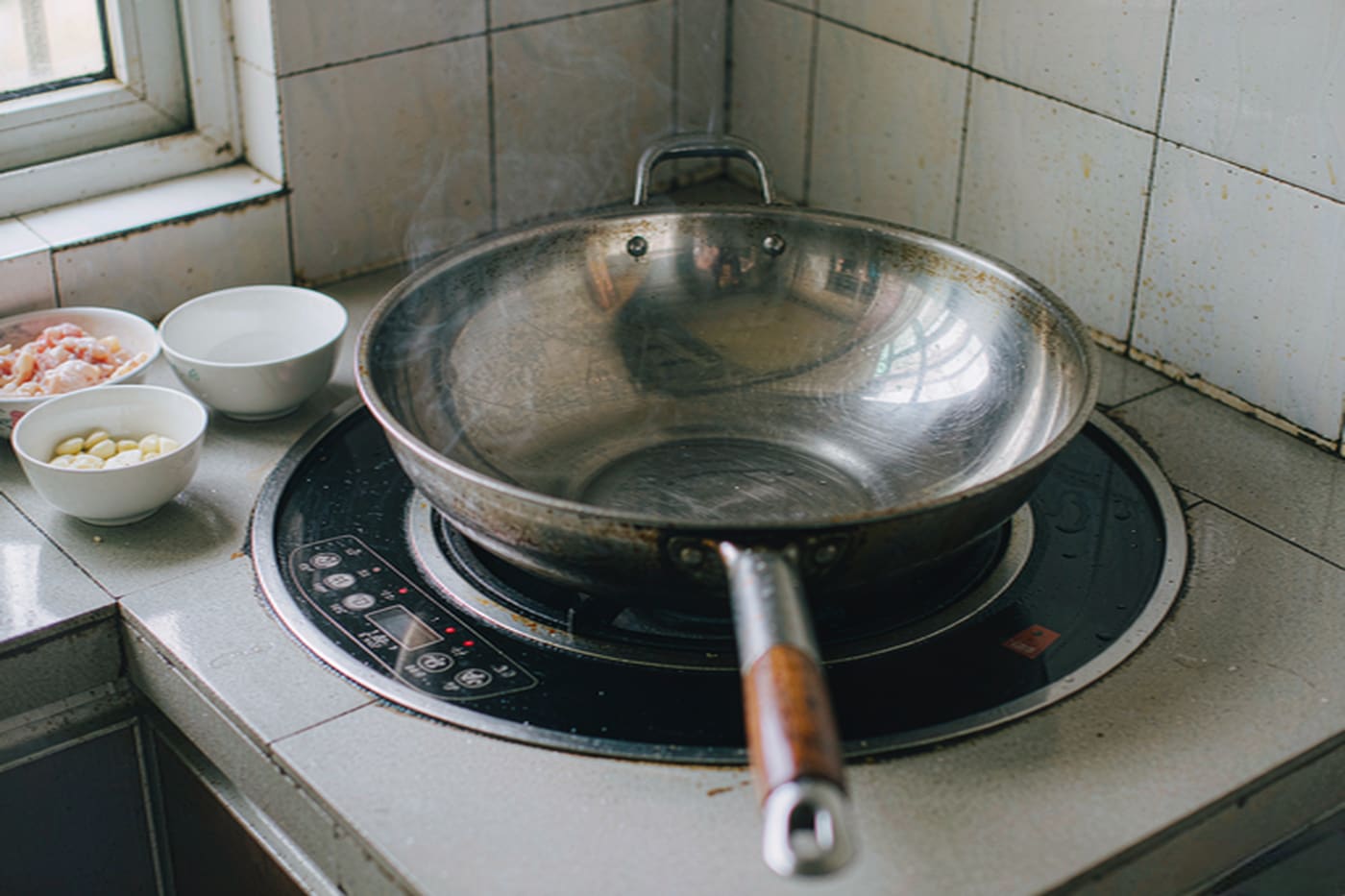
Gas still wins for wok cooking, induction is the best compromise with a flat-bottom wok, and a coil element is workable with the right adjustments.
Jack Chen · Nov 10, 2026 · 6 min read
Equipment & Techniques
What Is Wok Hei, and Can You Get It on a Home Stove?
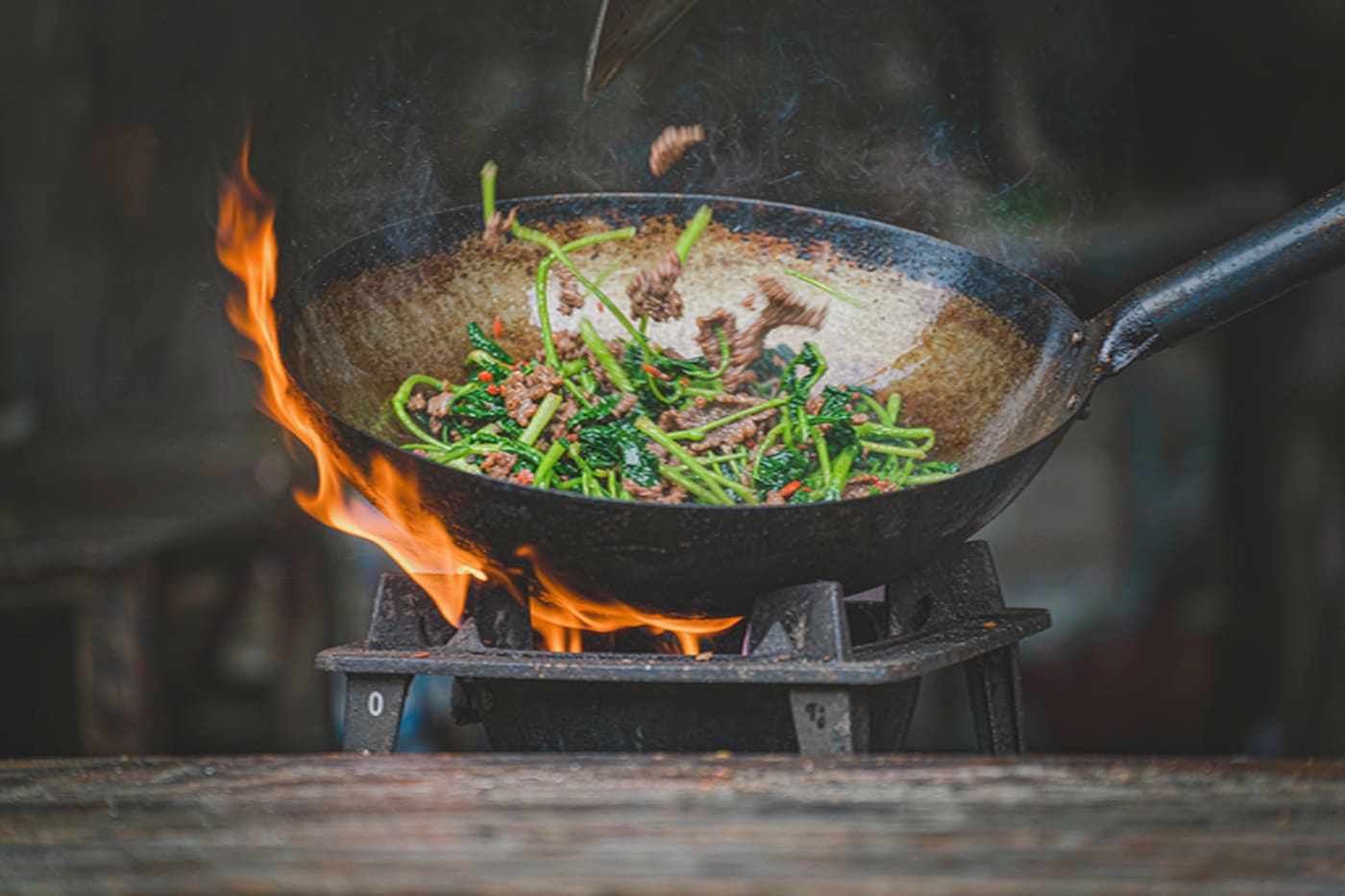
Wok hei is the seared aroma of fat hitting metal hotter than most home stoves allow: what it is, why restaurants get more, and four ways to close the gap.
Jack Chen · Nov 10, 2026 · 6 min read
Equipment & Techniques
Rice Cooker vs Clay Pot: Which One for Chinese Rice?
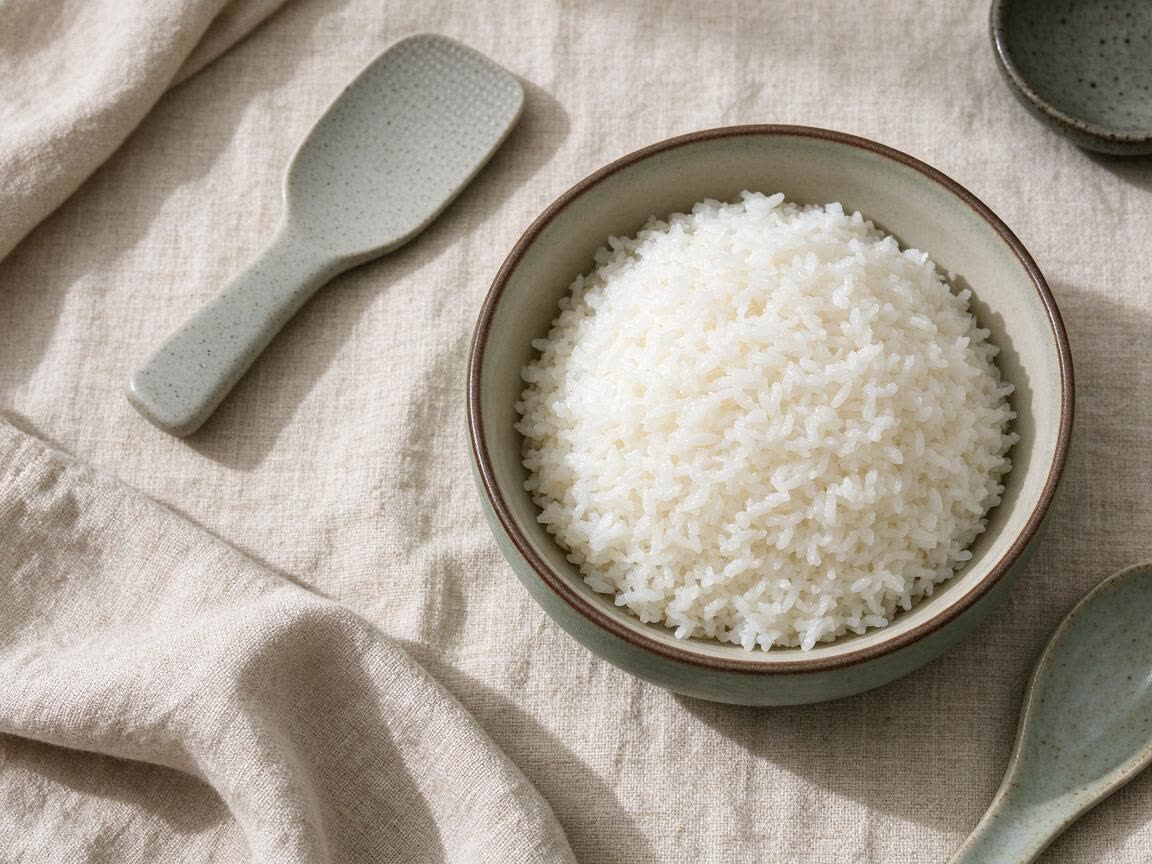
A rice cooker gives even, repeatable grains with a switch you can forget. A clay pot gives a toasted bottom and a steam plume. When each earns its space.
Jack Chen · Nov 4, 2026 · 7 min read
This article shares food culture and personal experience. It is not medical advice. See our medical disclaimer.
Leave a comment
ModeratedNo comments yet. Questions about the method, your family's version, or something I got wrong — write it here and I will read it.