Dried Shrimp: The Pantry Seasoning That Does the Work of Anchovies
A $6 to $9 bag of dried shrimp adds salt, umami and texture to fried rice, braises and soup. How to buy it, soak it, and spot a bag gone bad.
A four-ounce bag of dried shrimp costs about $6 to $9 at a Chinese grocer and keeps for a year in the freezer. That is roughly the same price per ounce as a decent Parmesan, and it does a comparable job: it makes plain things taste like they were cooked with something expensive.
What is dried shrimp, exactly?
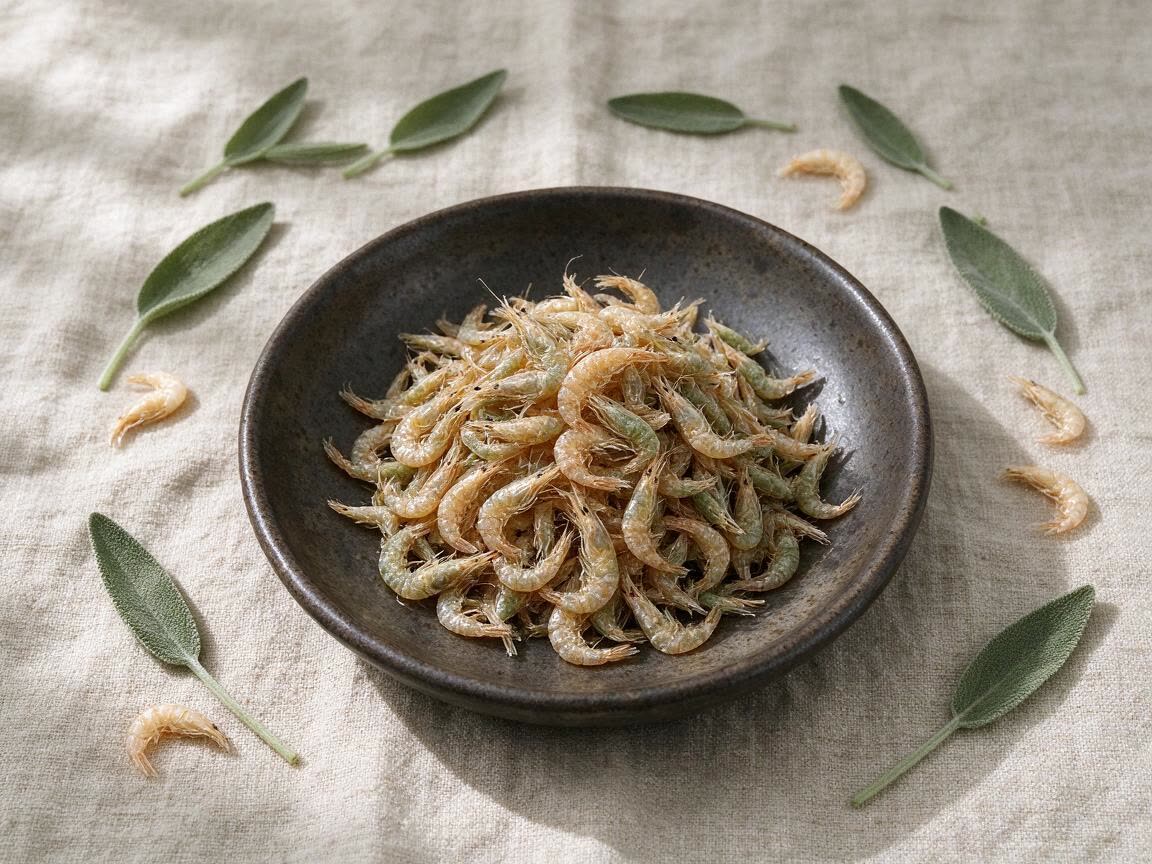
Small shrimp, usually the species sold as Acetes or a related krill-like shrimp, cooked briefly in salt water and then sun-dried or machine-dried until they are hard, orange-pink and translucent. They are sold whole, head and shell on, in bags ranging from two ounces to a pound. In Cantonese they are called ha mai; in Mandarin xia mi. They are not the same as shrimp paste, which is fermented and much stronger, and not the same as the pale, larger dried shrimp sold in Latin American markets, though those work in a pinch.
The flavour is intense and specifically shrimp-like, with a strong savoury edge and a pronounced saltiness. Some bags smell of low tide; that is normal. A bag that smells of ammonia or dust is not.
Why keep a bag in the pantry?
Because it seasons in a way that is hard to replicate. A tablespoon of chopped dried shrimp stirred into fried rice, a braise, or a pot of winter melon soup adds salt, body and a savoury depth that plain salt cannot. It is the reason a plate of stir-fried bok choy at a good Cantonese restaurant tastes rounder than the same dish at home.
It also adds texture. Unlike anchovies, which dissolve, dried shrimp stay chewy and slightly crunchy. That is the point. In dishes like ha mai fan (dried shrimp rice) or a simple steamed egg, the little nubs are part of the eating, not a background note.
I keep a small jar of them in the freezer door and a smaller jar of ground dried shrimp in the cupboard, which is the form I reach for most often.
How do you buy good ones?
Look at colour and size first.
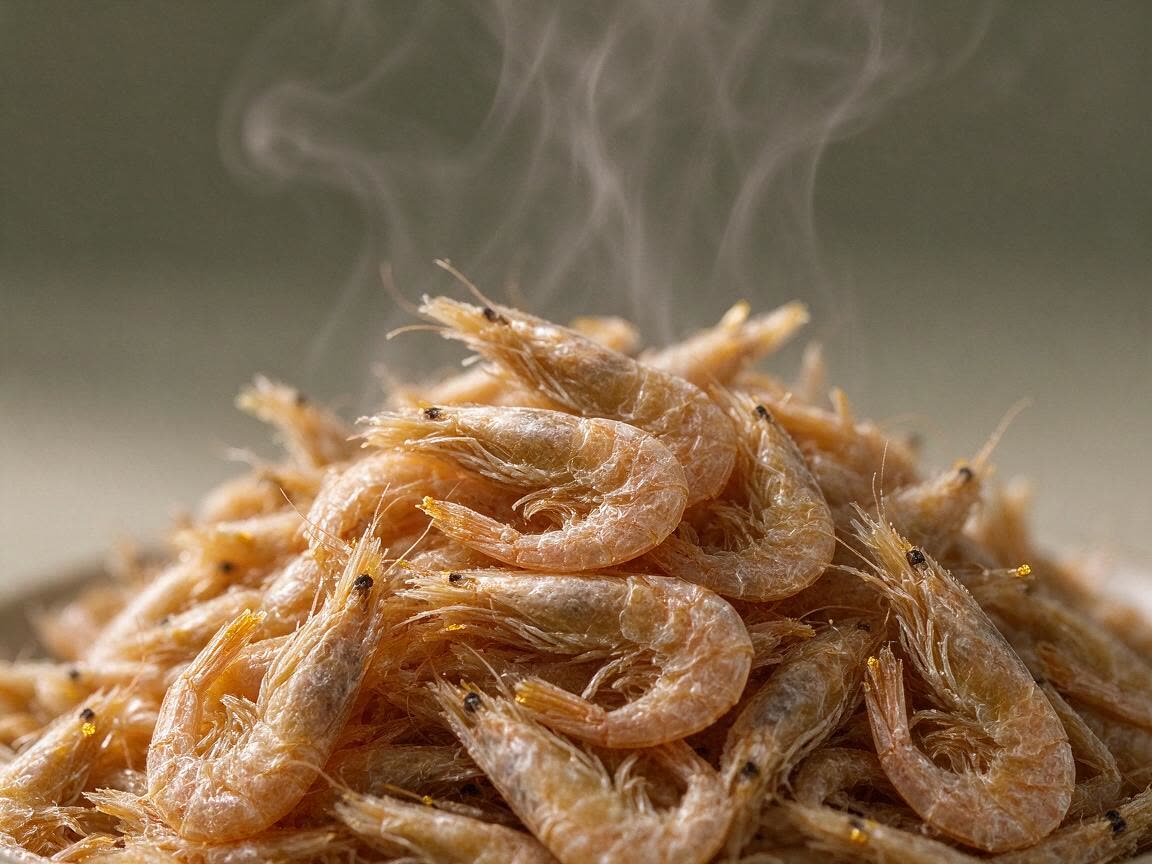
- Colour: bright orange-pink, not brown or grey. Brown means old.
- Size: small ones (about half a centimetre) are the standard all-purpose grade and are what most recipes mean. Larger ones, sometimes sold as 'king' dried shrimp, are meatier and better when you want the shrimp to be a visible ingredient rather than a seasoning.
- Feel: dry and firm, not tacky. Sticky shrimp have absorbed moisture and will go off.
- Label: check for added colour. Some cheap bags are dyed. The ingredient list should say shrimp and salt, nothing else.
At a US supermarket, the reliable option is the frozen or refrigerated section of an Asian grocery, or the dried goods aisle. Online, look for bags from brands like Pearl River Bridge or Wing Hing. Expect to pay $6 to $9 for four ounces; a pound runs $20 to $30.
Substitutions if you cannot find them: use two anchovy fillets plus a pinch of sugar for each tablespoon of dried shrimp in a braise, or a teaspoon of shrimp paste fried in oil. Neither is exact. For texture, there is no substitute.
How do you prepare and cook them?
Soak first, almost always. Cover with warm water for 15 to 20 minutes, then drain, reserving the water. The soaking water is salty and deeply savoury and should go into the dish, not down the sink.
Then choose a treatment:
- Whole, chopped coarse: for fried rice, steamed egg, stir-fried greens, and fillings. Chop roughly so you get pieces, not powder.
- Ground: pulse in a spice grinder or chop finely with a knife. Use a teaspoon at a time as a seasoning for soups, congee, and stir-fries. This is the most versatile form.
- Fried in oil: heat two tablespoons of neutral oil, add a tablespoon of chopped shrimp, and cook for 30 seconds until fragrant. The oil becomes a seasoning in its own right; spoon it over noodles or vegetables.
- Simmered whole: for braises and soups where they soften and give up their flavour, such as winter melon soup or a pork and daikon braise.
A note on salt: dried shrimp are salty. Taste the soaking water before you season the dish, and cut back on soy sauce or salt accordingly. Most recipes that include them need less added salt than you think.
What goes wrong?
They are used unsoaked. Hard, dry shrimp in a quick stir-fry stay hard. Soak unless the dish cooks for at least 30 minutes.
Too many. A quarter cup of dried shrimp in a two-person stir-fry will overwhelm everything else. Start with a tablespoon.
Old stock. Dried shrimp absorb moisture and go stale. Buy small bags, keep them in the freezer, and use within a year. If they have lost their smell, they have lost their point.
Skipping the soaking liquid. It is the best part. Strain it if you are worried about grit, then use it as the liquid in a braise or soup.
Expecting them to dissolve. They will not. If you want a smooth result, grind them.
Not accounting for salt. A tablespoon of dried shrimp contains roughly 300–400 mg of sodium, about the same as a quarter teaspoon of fine salt. If you season the dish before adding them, you will overshoot. Add the shrimp first, taste, then adjust.
Using the wrong size. The large 'king' shrimp are meaty and good when you want to bite into them, but they are too big for a seasoning. For fried rice or steamed egg, the small ones are what you want; for a braise where they will soften, either works.
Not drying them after soaking. If you are going to fry them, pat them dry first. Wet shrimp will spit in hot oil and will not brown properly.
Buying a pound to save money. Unless you cook dried shrimp rice weekly, a pound will last long past its best. Four ounces is the right size for most households.
One more thing: a family I know in Guangzhou keeps a jar of ground dried shrimp mixed with a little sugar and white pepper, and uses it like a finishing salt on plain rice. That is a good habit to copy.
What should a first-time American cook buy?
Start with a four-ounce bag of small dried shrimp from a brand you recognise, such as Pearl River Bridge or Wing Hing. Expect to pay $6 to $9. If you cannot get to an Asian grocery, online suppliers like The Mala Market or Amazon carry them, though prices run higher. Check the label: shrimp and salt only. Avoid anything with added colour or preservatives you do not recognise.
You will also need a small spice grinder or a sharp knife to chop them, and a jar for the freezer. That is it. Once you have the bag, the rest is practice.
A few dishes to start with
- Dried shrimp fried rice: one tablespoon chopped, soaked, added with the egg.
- Steamed egg with dried shrimp: three eggs, 1.5 times their volume of warm water, a tablespoon of chopped shrimp, steamed 12 minutes.
- Winter melon soup: simmered with ginger, a handful of whole shrimp, and their soaking water.
- Stir-fried bok choy: ground shrimp and garlic in hot oil, then the greens.
- Congee: a teaspoon of ground shrimp per bowl, stirred in at the end.
Keep reading
- Pickled Mustard Greens: A Practical Guide
- Types of Fermented Tofu: A Shopper's Guide to Fu Ru
- Soy Sauce Grades Explained: What You're Actually Buying
- Dried Scallops: Worth It or Not?
Sources
Photo: Alpha from Melbourne, Australia / CC BY-SA 2.0 via Wikimedia Commons
Frequently asked questions
Do I have to soak dried shrimp before cooking?
Yes, for almost every quick dish. Cover with warm water for 15 to 20 minutes, then drain and keep the water. The only exception is a long braise or soup, where they will soften on their own.
What can I use instead of dried shrimp?
Two anchovy fillets plus a pinch of sugar per tablespoon of dried shrimp works in braises and sauces. A teaspoon of shrimp paste fried in oil is closer in flavour but much stronger. Neither gives the chewy texture.
How long do dried shrimp keep?
About a year in an airtight container in the freezer, or six months in a cool, dark cupboard. Discard them if they smell of ammonia or dust, or if they have turned brown.
About the author
Writer & Home Cook
Chinese home cook writing about seasonal food traditions from an American kitchen. Grew up in Guangdong, now cooks for a mixed family in the US.
Keep simmering
Ingredient Guides
Dried Shiitake vs Fresh: When Each One Wins
Dried shiitake tastes deeper and costs less per ounce of flavour; fresh wins on texture and speed. A guide to picking the right one.
Jack Chen · Nov 23, 2026 · 6 min read

Ingredient Guides
How to Store Fresh Ginger So It Doesn't Dry Out
Three ways fresh ginger goes wrong, the symptom of each, and the fix. A troubleshooting guide for the fridge, the counter and the freezer.
Jack Chen · Nov 22, 2026 · 7 min read
Ingredient Guides
Star Anise, Cloves and Cassia: What Each One Actually Does in a Braise
Three warm spices, three different jobs. A shopper's guide to what star anise, cloves and cassia add to a pot of red-braised pork or beef.
Jack Chen · Nov 15, 2026 · 6 min read
This article shares food culture and personal experience. It is not medical advice. See our medical disclaimer.
Leave a comment
ModeratedNo comments yet. Questions about the method, your family's version, or something I got wrong — write it here and I will read it.