Tea Through the Seasons: How Chinese Households Actually Drink It
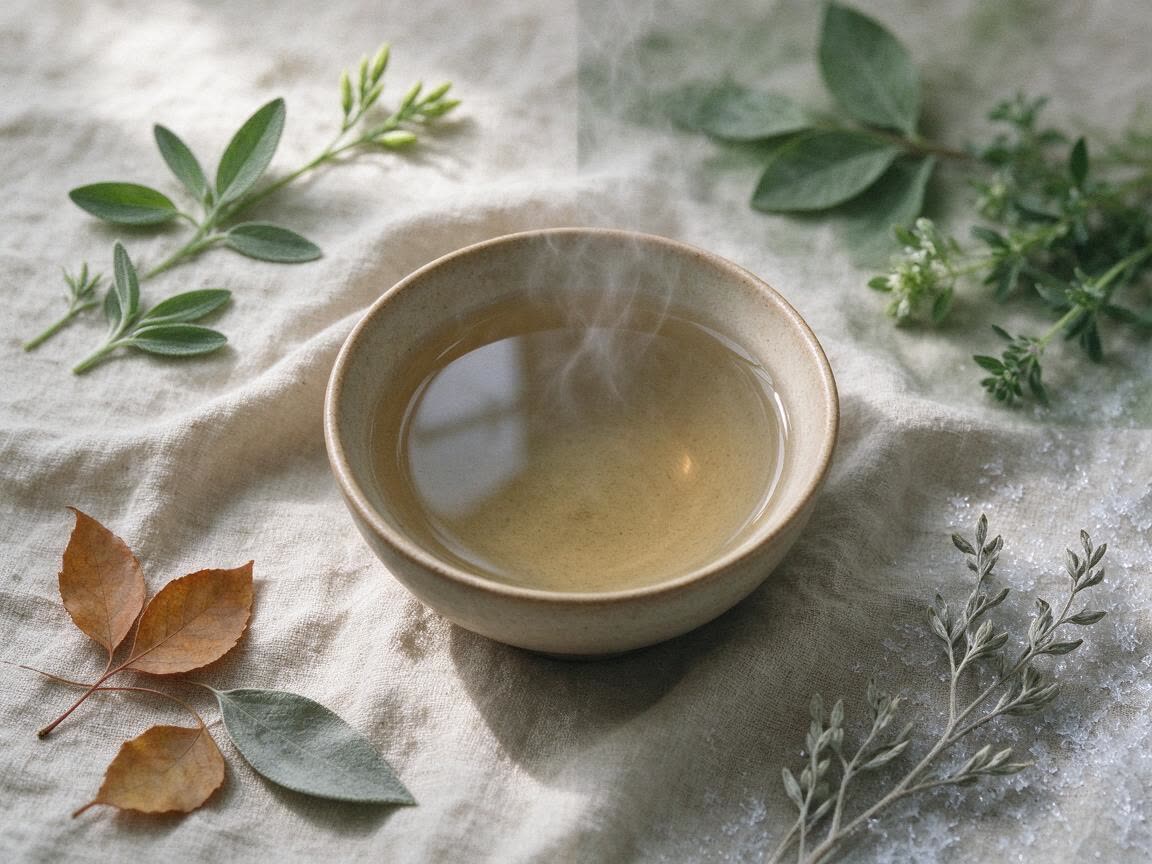
What actually changes in the cup from spring to winter: water temperature, leaf quantity, and when a slice of ginger goes in. What stays the same, and why.
A tin of jasmine pearls at the Asian grocery near me costs $9.99 for 100 grams. The same shelf has a 250-gram bag of loose-leaf tieguanyin for $12.49. That price gap is the whole argument of this piece: most Chinese households are not drinking rare spring harvests, they are drinking decent tea in quantity, and what changes through the year is mostly the water, the strength, and what gets added.
Does Chinese home tea actually change with the seasons?
Less than the marketing suggests, more than outsiders assume. The base tea in most kitchens stays the same for years: a green, a roasted oolong, a pu-erh, a jasmine. What shifts is how it is brewed and what joins it.
Spring and early summer tend toward lighter, cooler drinking: green tea brewed at lower heat, drunk plain, often in a glass so you can watch the leaves open. Late autumn and winter tilt toward darker, hotter, stronger cups: roasted oolong, black tea, pu-erh, sometimes with a slice of ginger or a dried citrus peel dropped in. Nobody writes this down. It is a habit that follows the weather.
A concrete example of how small the seasonal shift can be: the same 3 grams of tieguanyin that gets 8 ounces of 190°F water in April gets 6 ounces of 205°F water in December, and the cup reads as a different drink. Same tin, same spoon, different weather.
One thing worth saying plainly: none of this is a health regimen. It is a drink, chosen because it tastes right for the temperature outside.
What temperature should I actually use?
This is the single mistake that ruins the most green tea in American kitchens. Boiling water on a delicate green turns it bitter and grassy in a way no amount of leaf adjustment fixes. You will notice it as a dry, astringent pull at the back of the tongue, and no amount of sugar hides it.
A rough working scale:
- Green tea (longjing, biluochun, most supermarket greens): 160-175°F. Boil, then let the kettle sit 3-4 minutes with the lid open.
- Jasmine: 175-185°F. Hotter than green, gentler than oolong.
- Light oolong (tieguanyin): 185-195°F.
- Roasted oolong (yancha, dancong): 200-212°F. These want heat.
- Black tea and pu-erh: full boil, 212°F. They can take it.
No thermometer? Watch the kettle. Small bubbles clinging to the bottom and a faint steam = roughly green tea temperature. Big rolling bubbles = black tea. If you own an instant-read thermometer for meat, it works fine here: dip the probe in the kettle, not the cup.
How much leaf, and how long?
The Western default of one teaspoon per cup and a five-minute steep is calibrated for broken black tea in bags. Loose Chinese leaf is usually whole and needs more room and less time.
For a mug, I use about 3 grams of leaf, roughly a heaped teaspoon of a curled oolong or a scant teaspoon of a fine green, to 8 ounces of water. Steep green tea 1-2 minutes, oolong 2-3, black and pu-erh 3-4. Then take the leaves out, or brew in a small pot and pour off everything.
The home method most families use is not a single steep at all. It is a small pot or a lidded glass, repeatedly refilled, with the leaf staying in. First pour is quick, maybe 20 seconds. Each later pour gets a little longer. That is gongfu brewing in its everyday form, and it is less ceremonial than it sounds: it is just a way to get four or five good cups out of one spoon of leaf.
What goes wrong: leaf left sitting in a mug of hot water for ten minutes. The first two minutes are fine, then it keeps extracting and turns harsh and woody. If your tea tastes stewed, this is almost always why. The fix is a $10 gaiwan, or simply pouring the mug through a small strainer into a second mug.
What gets added, and when?
Plain tea is the default in most homes. Additions are seasonal and regional.
Winter is when things get put in the cup. A slice of fresh ginger, about a quarter-inch thick, with black tea. A small piece of dried tangerine peel (chenpi), roughly a one-inch square, with pu-erh, which is a Cantonese habit and tastes like orange oil and old wood. Rock sugar, one or two lumps, in some northern households. In summer, the reverse: green tea drunk cold, or barley tea, or chrysanthemum with a little rock sugar, served at room temperature or chilled.
Jasmine is the year-round exception. It is the tea most likely to be in a household that keeps only one, and it is forgiving of clumsy brewing, which is part of why it travels so well. A general habit I notice among households that keep a single tin: they buy jasmine in 100-gram bags and finish them in about six weeks, which is roughly the right pace for any green-adjacent tea.
Can I just use supermarket tea bags?
Yes, with adjustments. Standard black tea bags are fine for milk tea and for winter cups. For green tea, bags are usually dust-grade and go bitter fast: use 160°F water and steep 60-90 seconds, then pull the bag. If the bagged green tastes like wet hay and leaves a dry coating on your teeth, it is oversteeped, not a bad brand.
If you want to move to loose leaf without spending much, here is what a first-time American cook should actually buy:
- Jasmine pearls, 100 g, about $9.99 at an Asian grocery; $12-14 online.
- Tieguanyin, 250 g, about $12.49.
- A basic gaiwan or a small 8-ounce porcelain pot: $8-15. A glass measuring jug works too.
- A small fine-mesh strainer, $3-5, if you are not using a gaiwan.
- One airtight tin, 4-8 ounces, $5-8.
Total outlay under $40, and it covers a year of daily drinking for one person. Skip the $60 gyokuro and the aged pu-erh cakes until you know what you like. The gap between a $10 jasmine and a $40 one is real but it is not where a beginner should start.
How do I store it without ruining it?
Light, heat, moisture, and smell are the four things that flatten tea. Keep it in a small tin, not the bag it came in, and keep the tin in a cupboard away from the stove. Green and light oolong are the most fragile; buy them in amounts you will finish in two or three months. Roasted oolong, black, and pu-erh are sturdier and will hold for a year or more.
Do not put tea in the fridge unless it is sealed and you have space away from food. Tea absorbs odors, and a fridge full of leftovers is a bad neighbor. If you do refrigerate green tea, let the tin come to room temperature before opening it, or condensation will do the damage the cold was meant to prevent.
A last note on strength. The most common home adjustment through the year is not a new tea, it is less leaf in summer and more in winter, and hotter water as the weather turns. Two grams in July, four in January, same tin. That is the whole seasonal system, and it costs nothing to try.

Keep reading
- A Chinese New Year Table for a Mixed Family: Three Ways It Goes Wrong
- Why Chinese Soups Simmer for Hours (and What That Actually Costs)
- Food as Seasoning, Not Medicine: What "Shiliao" Actually Means in a Chinese Home
- Why Chinese Breakfast Is Warm: Congee, Soy Milk and the Logic of Morning
Sources
Photo: Jason M. C., Han / CC BY-SA 4.0 via Wikimedia Commons · Photo: Florstein ( Telegram: WikiPhoto.Space ) / CC BY-SA 4.0 via Wikimedia Commons
Frequently asked questions
Is it bad to pour boiling water on green tea?
It makes it bitter and grassy. Let the kettle sit 3-4 minutes after boiling, or aim for 160-175°F, and steep 1-2 minutes.
How many times can I reuse tea leaves?
Whole-leaf oolong and pu-erh commonly give four to six good pours if you keep the steeps short and lengthen them each time. Fine green tea gives two or three at most.
What is the cheapest way to start drinking loose-leaf Chinese tea?
A 100 g tin of jasmine pearls (about $10), a small porcelain pot or gaiwan ($8-15), and one airtight tin ($5-8). Buy small amounts, store away from light and heat.
About the author
Writer & Home Cook
Chinese home cook writing about seasonal food traditions from an American kitchen. Grew up in Guangdong, now cooks for a mixed family in the US.
Keep simmering
Food Culture
Why Restaurant Fried Rice Uses Day-Old Rice: A Cost Comparison
Day-old rice costs less and fries better. We compare prices at a Chinese grocer vs a US supermarket and explain the technique.
Jack Chen · Nov 21, 2026 · 6 min read
Food Culture
Why Chinese Dinners Are Shared From the Centre (And Why Yours Goes Wrong)
A shared Chinese table fails in 3 predictable ways: one dish per person, dishes sized like mains, no rice anchor. Here is the symptom of each, and the fix.
Jack Chen · Nov 10, 2026 · 7 min read
Food Culture
Mooncake for Beginners: What They Cost and What You Actually Get
Mooncakes cost $8 to $12 at a Chinese grocer and $18 to $25 boxed at a US supermarket. A beginner's guide to what's inside and how to eat them.
Jack Chen · Nov 9, 2026 · 6 min read
This article shares food culture and personal experience. It is not medical advice. See our medical disclaimer.
Leave a comment
ModeratedNo comments yet. Questions about the method, your family's version, or something I got wrong — write it here and I will read it.