Why Chinese Breakfast Is Warm: Congee, Soy Milk and the Logic of Morning
Ice water at breakfast is an American default that a Chinese kitchen would quietly fix. A tour of the warm morning table — congee, soy milk, youtiao — and the reasoning behind it, minus the mysticism.
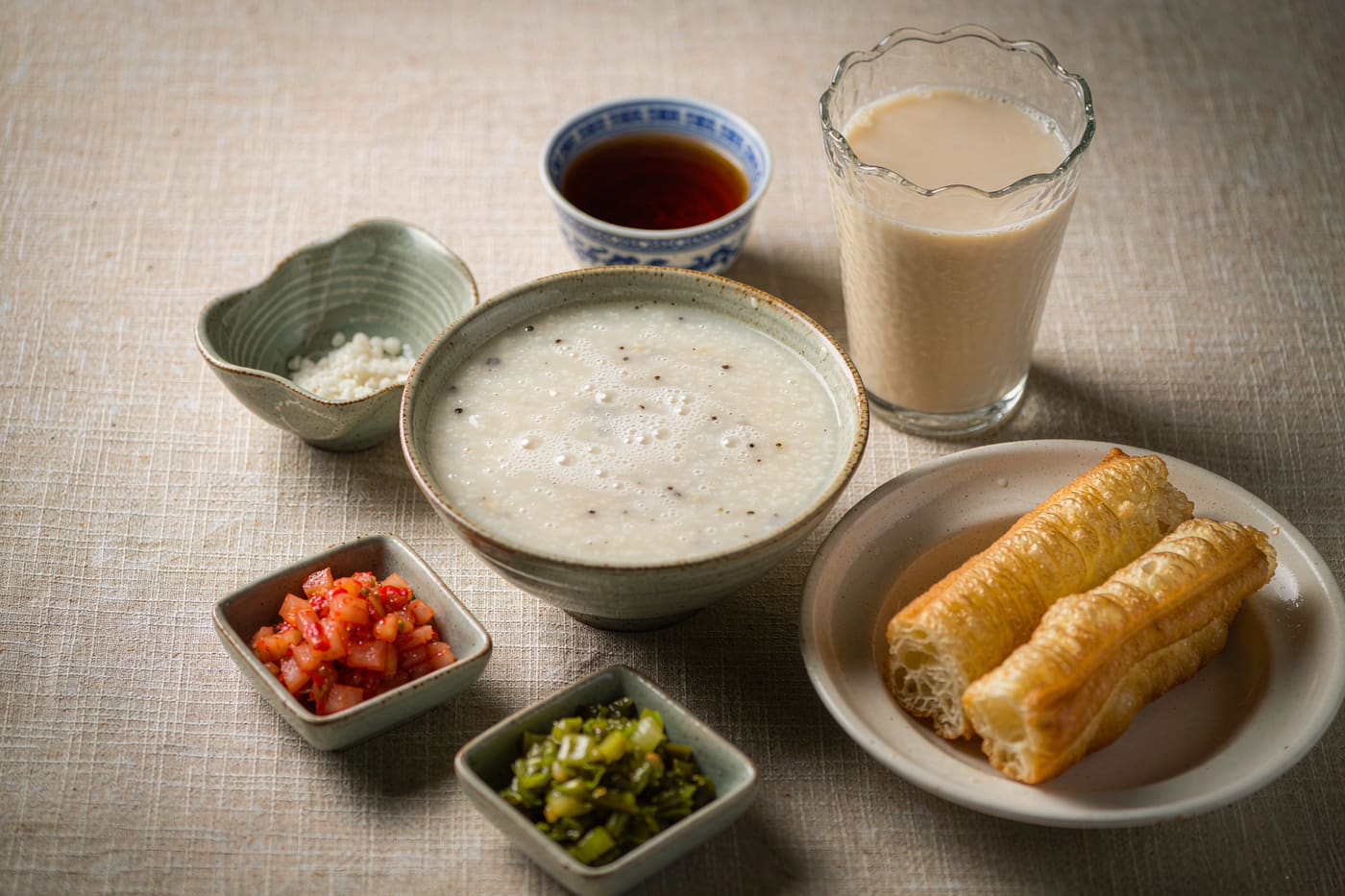
The first morning my American spouse stayed at my parents' apartment, my mother put a bowl of hot congee in front of them, a glass of warm soy milk beside it, and then — seeing a stranger's hesitation she decided to attribute to politeness — a cup of hot tea. It was July. There was, of course, no ice water anywhere in the apartment, because there was never ice water anywhere in the apartment.
"Why is everything warm?" is a fair question. This is my attempt at the honest answer, from inside the tradition rather than from a wellness brochure.
The table itself
A Chinese breakfast, the kind you get at a morning shop in Guangzhou or a street stall in Shanghai, is not one cuisine — it is a temperature policy with regional accents. In my corner of it:
Congee is the spine. Rice simmered until it surrenders, eaten with whatever the kitchen has: a century egg, pickles, fried peanuts, last night's leftovers in small dishes. It is less a dish than a format, like toast.
Soy milk comes hot, in bowls or glasses, lightly sweetened or savory — the savory version gets dried shrimp, scallion, vinegar drops that curdle it into soft flowers, which sounds wrong and eats beautifully.
Youtiao is the exclamation point: two strands of dough fried together into a golden log that crunches, then gives way to something almost custardy inside. Dunked into hot soy milk, it is the Chinese answer to cookies and milk, except at seven in the morning, on the way to work.
And tea, always, in some form, at some temperature north of warm.
The reasoning, de-mystified
The traditional explanation is the one about warming foods being gentle on a morning stomach — the same shiliao framework I wrote about in my piece on what food therapy actually means. I grew up with it stated as fact and served as breakfast.
Here is the part I find most persuasive, though, and it is not mysticism at all: hot water was the only safe water for most of that history. Boiling water every morning was a fixed habit in every household, and once you are boiling water anyway, a hundred warm foods arrange themselves around the kettle — congee, tea, soy milk heated in the same pot. The tradition is older than germ theory, but the physics that sustains it is not. Warm breakfast was infrastructure before it was philosophy.
Layer onto that the practical rhythm of a kitchen: congee takes an hour of unattended simmering, which means the morning cook's real work was done the night before, with a pot on a low flame and the morning free. A breakfast that cooks itself while you sleep is not superstition. It is meal prep, invented before we had a word for it.
What I actually eat now, at 7 a.m. in Ohio
I have not gone full purist, and I would not recommend that anyone try to import a whole cuisine before coffee. What survived immigration is a reduced set:
- Rice cooker congee, overnight. Jasmine rice, water at one-to-nine, the delayed-start timer set for when the alarm rings. The smell of it is my current alarm clock, frankly.
- One warm thing at the center of the table, whatever it is — congee, tea, warmed soy milk from the carton. The point is not the item; it is starting the day with a pot rather than a fridge.
- Toppings as a bar. Peanuts, scallions, soy sauce, a century egg if I have been to the Asian grocery, last night's vegetables. Congee's genius is that it is a plate for leftovers wearing a breakfast costume.
And yes — sometimes I eat cold cereal, and my mother has opinions about it that I have chosen not to translate.
The part worth keeping
You do not need the warming-and-cooling theory to find something real here. Strip the framework away and what is left is just a sensible observation most food cultures landed on independently: mornings are for gentle, warm, pre-prepared food, eaten slowly enough to notice the day starting. Whether that is congee or oatmeal matters less than the structure.
But I will say this for the congee specifically: it asks so little of the morning. A pot, water, rice, time. In a decade when breakfast content is mostly something to photograph, a dish whose highest praise is that it lets you wake up slowly feels quietly radical. My grandmother would find it funny that anyone needs convincing.
Frequently asked questions
Why is Chinese breakfast mostly warm foods?
Tradition, climate and habit. Warm, soft foods were believed gentler on the stomach at the start of the day, and hot breakfasts made practical sense in homes that were already boiling water every morning. We describe the tradition here as culture, not health advice.
What is youtiao?
A pair of dough strands deep-fried together into a golden, airy cruller. Slightly savory, wonderfully greasy, and the classic partner for soy milk — some people dunk it.
How do I start eating this way without a big lifestyle change?
Cook a plain pot of congee in a rice cooker overnight or in the morning. Add one warm element — tea, warmed soy milk, a fried egg over the congee. That is the entire on-ramp.
About the author
Writer & Home Cook
Chinese home cook writing about seasonal food traditions from an American kitchen. Grew up in Guangdong, now cooks for a mixed family in the US.
Keep simmering
This article shares food culture and personal experience. It is not medical advice. See our medical disclaimer.