Why Restaurant Fried Rice Uses Day-Old Rice: A Cost Comparison
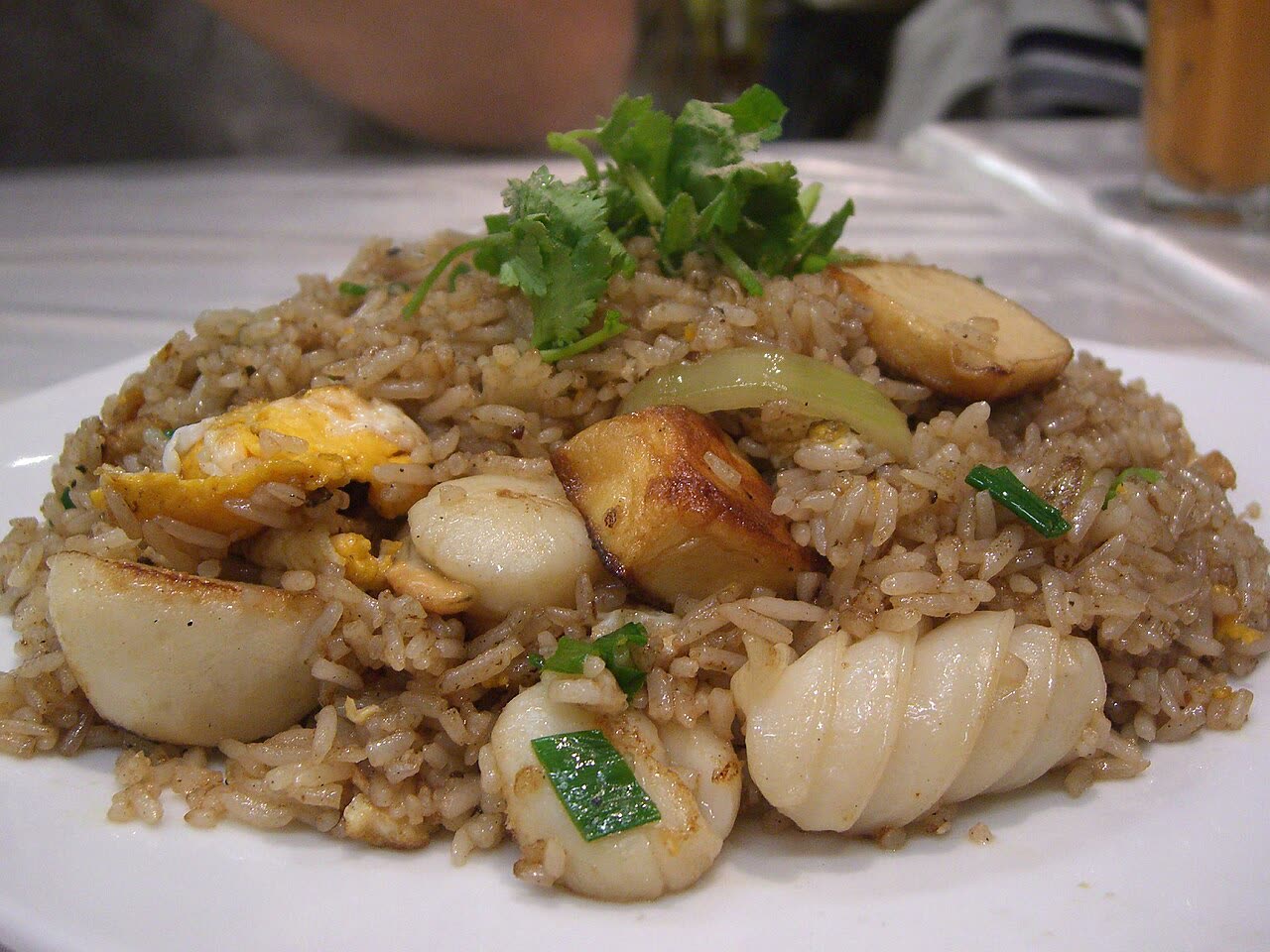
Day-old rice costs less and fries better. We compare prices at a Chinese grocer vs a US supermarket and explain the technique.
Day-old rice is used for fried rice because it has dried out, so the grains stay separate and absorb sauce without turning to mush. It also costs less: leftover rice is essentially free, while fresh rice takes time and energy. At Chinese groceries, day-old rice is often sold at a discount, and the same rice at a US supermarket costs more. The price difference is small per pound, but it adds up, and the texture is better.
Why does day-old rice fry better?
Freshly cooked rice is full of water. A cup of just-cooked long-grain rice holds roughly 70 percent of its weight as water. When you fry it, the heat turns that water to steam, which makes the grains sticky and clumpy. Day-old rice has lost some of that surface moisture, so the grains are firmer and less likely to stick together. This is why restaurant fried rice has distinct, separate grains. It's not a secret ingredient; it's physics.
What goes wrong, and how you notice it: fresh rice hits a hot wok and hisses hard, then the grains mash together into a paste that coats the spatula. You end up with a wet, gluey pan and a pool of liquid at the bottom. Day-old rice hits the wok with a dry crackle and stays loose. If you press a grain between your fingers and it squashes flat, it has too much water for frying.
At home, you can spread freshly cooked rice on a tray and let it dry for an hour, but day-old rice is easier. I keep leftover rice in the fridge in a covered container, and it's ready for frying the next day. The fridge dries it out further, which is exactly what you want. Spread it no more than an inch deep on a sheet pan so the steam escapes; a deep container traps moisture and the rice comes out clammy.
How much does rice cost at a Chinese grocer vs a US supermarket?
Rice prices vary by type and brand, but here's a comparison of common options. Prices are from a recent survey of Chinese grocers in the US and a mainstream supermarket.
| Item | Chinese grocer price | US supermarket price |
|---|---|---|
| Long-grain rice, 5 lb | $4.99 | $6.49 |
| Jasmine rice, 5 lb | $6.99 | $8.99 |
| Day-old cooked rice, 1 lb | $0.99 (from hot bar) | Not typically sold |
| Soy sauce, 16 oz | $2.49 | $3.29 |
| Sesame oil, 8 oz | $3.99 | $5.49 |
As you can see, the Chinese grocer is generally cheaper for rice and basic seasonings. But the biggest savings come from using leftover rice, which costs nothing extra. Even if you buy day-old rice from a hot bar, it's still less than a dollar per pound. One pound of cooked rice is about 2 cups, which is enough for two generous servings of fried rice.
What substitutions work at a US supermarket?
If you don't have a Chinese grocer nearby, you can still make great fried rice. Here are some substitutions with exact quantities and prices from a US supermarket:
- Instead of day-old rice: cook 1 cup of long-grain rice, spread it on a sheet pan, and let it dry for 1 hour. Or use leftover rice from a previous meal. Cost: about $0.20 per cup.
- Instead of Shaoxing wine: use dry sherry (1 tablespoon per recipe). Cost: about $0.50 per tablespoon.
- Instead of light soy sauce: use regular soy sauce (same amount). Cost: about $0.20 per tablespoon.
- Instead of Chinese chives: use scallions (same amount). Cost: about $0.30 per bunch.
These substitutions won't be identical, but they work in a pinch. Dry sherry is the closest match for Shaoxing because both are rice or grape wines with a similar acidity; sweet vermouth is too sugary and will make the pan catch. Regular soy sauce is darker and saltier than light soy, so cut the amount by a quarter if you are sensitive to salt.
How do restaurants handle rice for fried rice?
Restaurants often cook rice specifically for fried rice and let it cool overnight. Some use a rice cooker, then spread the rice on trays and refrigerate it. This is standard practice in Chinese kitchens. At home, you can do the same: cook rice, spread it out, and refrigerate. The next day, it's ready.
A common mistake is to use freshly cooked rice straight from the pot. It will steam and clump. If you must use fresh rice, reduce the water slightly and let it cool completely before frying. Cook 1 cup of rice with 1 1/4 cups water instead of the usual 1 1/2, then spread it thin and cool it for at least 30 minutes.
One more piece of equipment advice: use a wok or a wide skillet with high sides, and get it properly hot before the rice goes in. A 12-inch carbon steel wok is the traditional tool, but a 12-inch cast iron or stainless skillet works. Heat it over high heat until a drop of water sizzles and evaporates in under a second, then add 2 tablespoons of oil. A crowded pan steams instead of frying, so cook no more than 3 cups of cooked rice at a time in a 12-inch pan. If the rice starts to look wet, stop stirring and let it sit for 30 seconds to crisp.
What about the cost of other ingredients?
Fried rice is a frugal dish. Eggs, scallions, and soy sauce are cheap. At a Chinese grocer, a dozen eggs might be $2.99, while a US supermarket sells them for $3.49. A bunch of scallions is $0.50 vs $0.79. These small differences matter when you're cooking often.
But the real savings come from using up leftovers. Fried rice is a way to turn leftover rice, vegetables, and meat into a meal. That's why it's a staple in home kitchens. A typical home version uses 3 cups of cooked rice, 2 eggs, 2 scallions, 1 tablespoon of soy sauce, and a handful of whatever vegetables are on hand. The whole pan costs under $2 at Chinese grocer prices.
For a first-time American cook, the sensible buy is a 5 lb bag of jasmine rice (about $6.99 at a Chinese grocer, $8.99 at a supermarket), a 16 oz bottle of soy sauce, an 8 oz bottle of toasted sesame oil, and a dozen eggs. That is roughly $15 to $18 and makes fried rice for a week. Skip the specialty Shaoxing wine on the first trip; dry sherry from the liquor store covers it.
The bottom line
Day-old rice is better for frying and cheaper. Whether you buy it discounted at a Chinese grocer or use leftovers, it's the right choice. The cost comparison shows that Chinese grocers are often cheaper for staples, but the biggest savings come from planning ahead and using what you have.
So next time you make rice, cook extra. Spread it out, put it in the fridge, and fry it tomorrow. Your fried rice will be better, and your wallet will thank you.

Keep reading
- Why Chinese Dinners Are Shared From the Centre (And Why Yours Goes Wrong)
- Mooncake for Beginners: What They Cost and What You Actually Get
- What MSG Does in Chinese Cooking (and What It Doesn't)
- Tea Through the Seasons: How Chinese Households Actually Drink It
Sources
Photo: Alpha from Melbourne, Australia / CC BY-SA 2.0 via Wikimedia Commons · Photo: Unknown author Unknown author / Public domain via Wikimedia Commons
Frequently asked questions
Can I use fresh rice for fried rice?
Yes, but it will be stickier. Spread it on a tray and let it dry for an hour, or reduce the water when cooking.
How long does day-old rice keep in the fridge?
Cooked rice can be kept in the refrigerator for 3 to 4 days. Reheat it thoroughly before eating.
Is day-old rice safe to eat?
Yes, if it has been refrigerated promptly and reheated to steaming hot. Follow food safety guidelines.
About the author
Writer & Home Cook
Chinese home cook writing about seasonal food traditions from an American kitchen. Grew up in Guangdong, now cooks for a mixed family in the US.
Keep simmering
Food Culture
Why Chinese Dinners Are Shared From the Centre (And Why Yours Goes Wrong)
A shared Chinese table fails in 3 predictable ways: one dish per person, dishes sized like mains, no rice anchor. Here is the symptom of each, and the fix.
Jack Chen · Nov 10, 2026 · 7 min read
Food Culture
Mooncake for Beginners: What They Cost and What You Actually Get
Mooncakes cost $8 to $12 at a Chinese grocer and $18 to $25 boxed at a US supermarket. A beginner's guide to what's inside and how to eat them.
Jack Chen · Nov 9, 2026 · 6 min read
Food Culture
What MSG Does in Chinese Cooking (and What It Doesn't)
MSG is a seasoning, not a secret. A $6 bag seasons about 150 dinners. Here is what a quarter teaspoon does in the wok, and where home cooks go wrong.
Jack Chen · Nov 8, 2026 · 6 min read
This article shares food culture and personal experience. It is not medical advice. See our medical disclaimer.
Leave a comment
ModeratedNo comments yet. Questions about the method, your family's version, or something I got wrong — write it here and I will read it.