How Long Do You Steam a Whole Fish? A Timing Chart by Weight
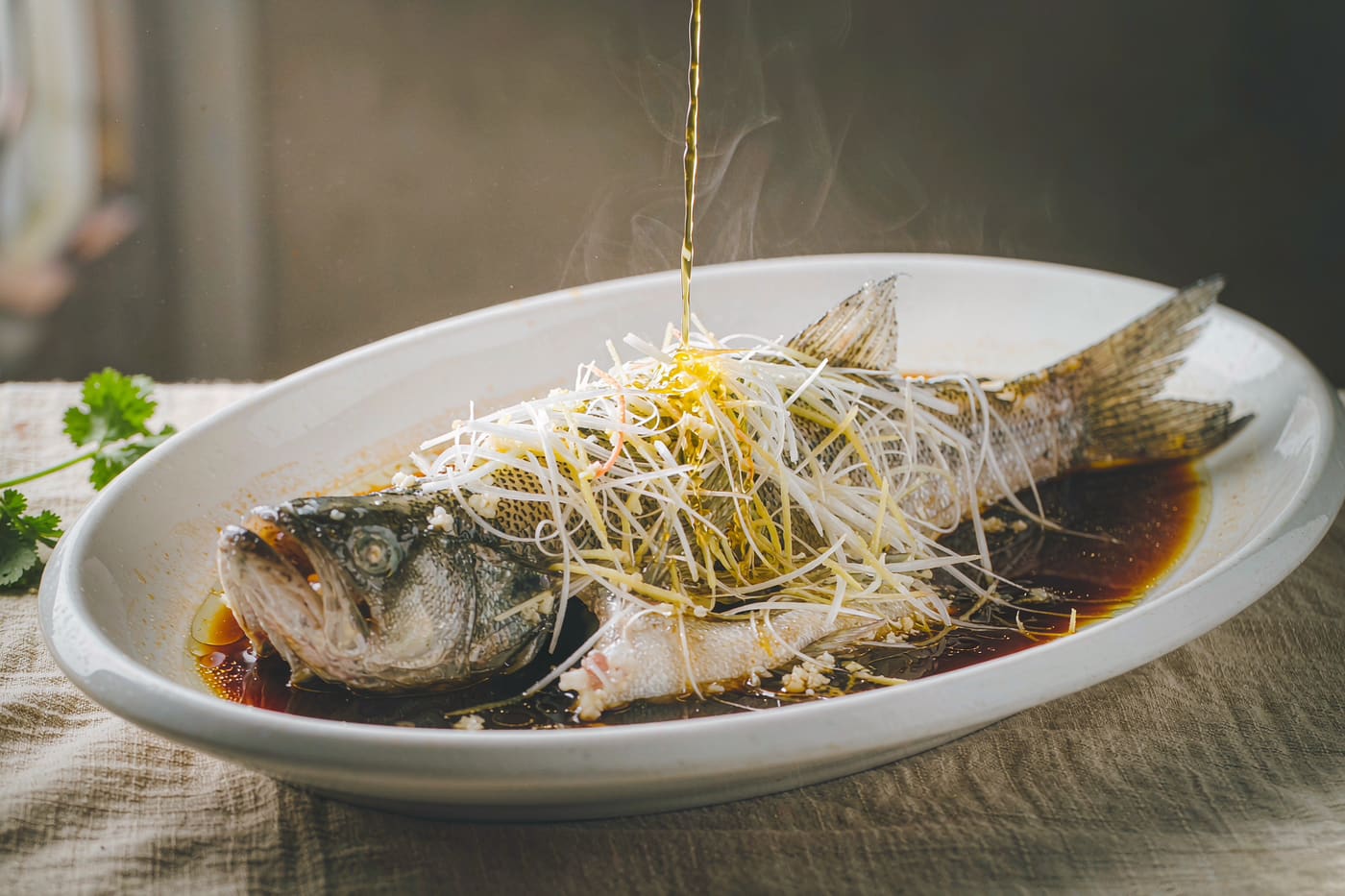
A timing chart for whole fish: 8 minutes for the first pound, about 1 minute per 100 grams after, and what to buy at an American fish counter.
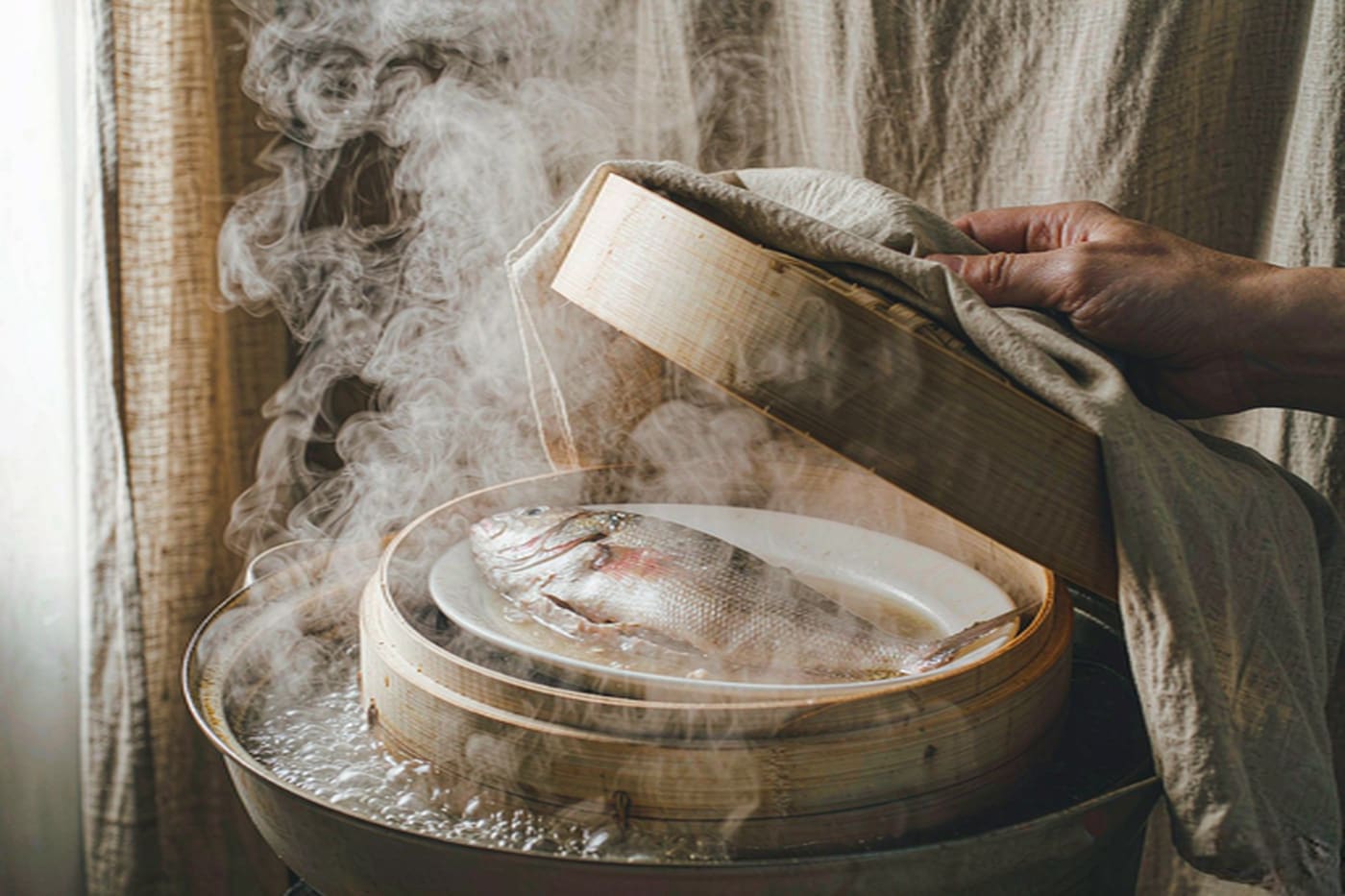
Eight minutes for the first pound, then about one extra minute for every hundred grams after that. A one-and-a-half pound branzino goes in for eleven minutes; a two-pounder takes thirteen. The clock starts when the water comes back to a hard boil with the lid on, not when you turn on the stove, and it stops two minutes before you eat, because the fish needs to sit.
In Cantonese households, steamed fish is a home-kitchen staple, cooked in a wok over a high gas flame. Home cooks there rarely reach for a timer. The plate goes in, the lid goes on, and the cook lifts the lid at what looks like an arbitrary moment. It is never arbitrary. When cooks in the diaspora ask for numbers instead of instincts, the rule that gets handed back is the one below, and it has held up for fifteen years.
Why the clock starts when the steam comes back
The difference between fish that tastes like a restaurant and fish that tastes like a mistake is rarely the fish. It is whether the steam was already rolling when the plate went in.
If you put a cold plate of fish into a pot of water still climbing to temperature, you have invented a new dish: fish poached in its own patience. The outside sets slowly, the inside stays cold, and by the time the center is done the edges have given up.
So: two inches of water, high heat, lid on, wait for the boil. Then the plate goes in. The plate matters more than people think. Use one with a shallow lip to catch the liquid, and warm it first under the hot tap, because a cold plate steals heat from the fish exactly where the fish is thickest.
The fish itself should sit on the counter for fifteen minutes before it goes in. Not longer. A whole fish straight from the fridge will still be cold at the bone when the outside has already started to flake.
The timing chart I actually use
| Fish weight | Minutes once the steam is rolling |
|---|---|
| 3/4 lb (340 g) | 6 |
| 1 lb (450 g) | 8 |
| 1 1/4 lb (570 g) | 9 |
| 1 1/2 lb (680 g) | 11 |
| 2 lb (900 g) | 13 |
| 2 1/2 lb (1.1 kg) | 16 |
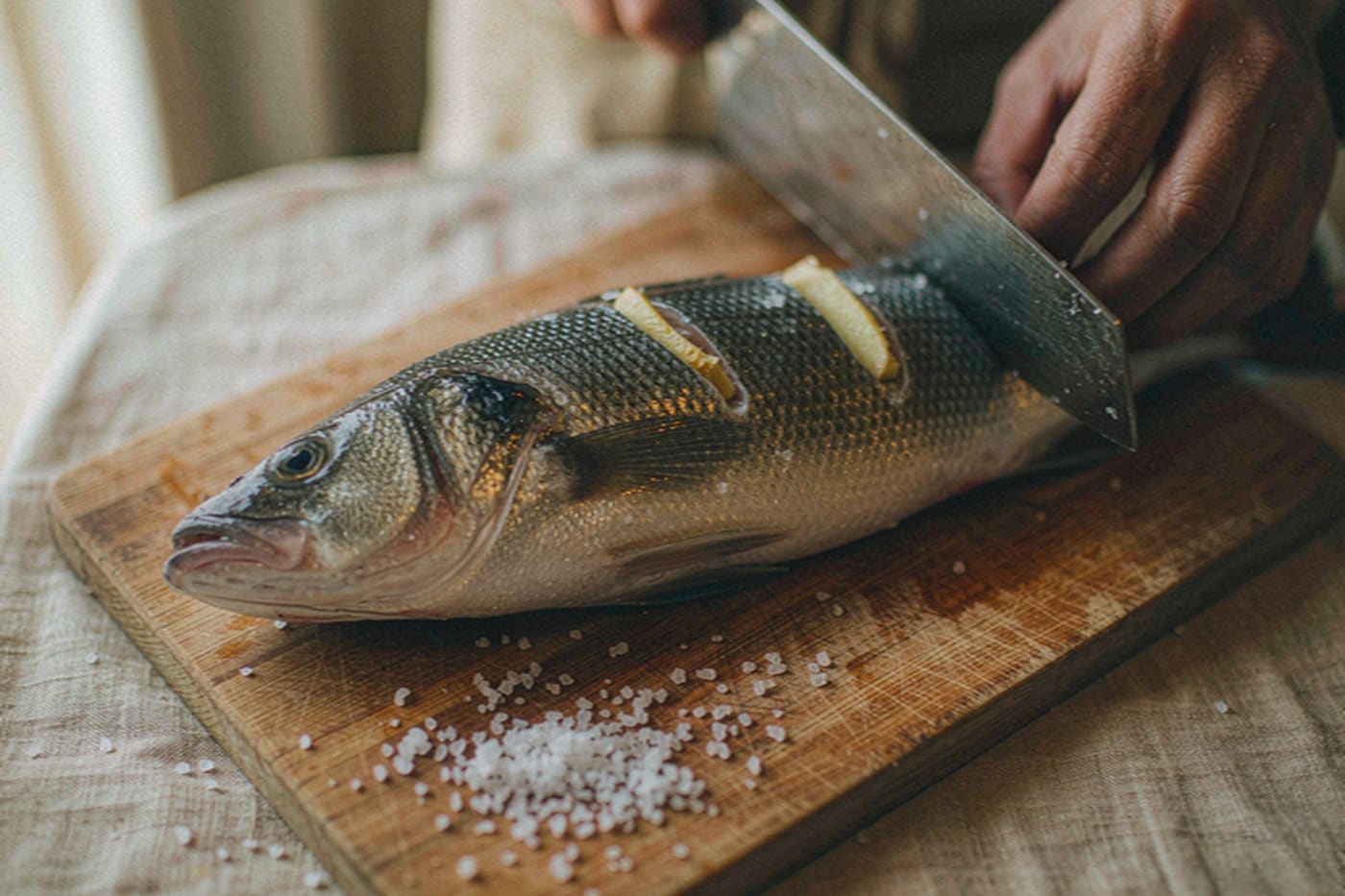
These numbers assume a whole, gutted fish, lid on, steady full boil, and a plate that fits inside the pot with an inch of clearance on the sides. They also assume you have scored the thickest part of the flank twice with a knife, one-inch cuts on the diagonal, with slivers of ginger pushed into them. That is not decoration. It lets heat reach the bone at roughly the same moment it reaches the skin.
Above two and a half pounds, stop. Ask the fish counter to butterfly it, or cut it into two pieces and steam them side by side. A four-pound fish steamed whole will be raw at the spine and cotton at the tail, and no amount of extra time fixes that trade.
To check without wrecking it: a chopstick, at the thickest point, straight down to the bone. It should meet a moment of resistance and then give way. Pull it out. If the tip is cold, lid back on for ninety seconds. The eye should be white and slightly popped. The flesh at the bone should be barely opaque and still glossy. If it is coming away in sheets, it went long, and you should serve it anyway with a little more sauce.
What to buy at an American fish counter
The classic fish for this dish is a freshwater bass sold live from a tank, and the closest thing at an American counter is a whole branzino, one to one and a half pounds, farmed. I buy mine at Costco or Whole Foods without apology. Striped bass, black sea bass, and red snapper all work with the same chart. Whole croaker, in the freezer case of almost any Asian grocery, is the cheapest way to practice.
Ask the counter to scale it, gut it, and pull the gills. Ask them to leave the head on. This is not nostalgia: the cheek is the best bite on the fish, and the head keeps the body from collapsing as it cooks.
Tilapia runs small, around three quarters of a pound, six minutes on the chart, and it is what I cook for people who claim not to like fish.
What I do not buy: salmon, which is too oily for this method and goes chalky under steam, and any fillet, to which this entire chart does not apply.
Three pantry swaps, with amounts. Dry sherry, one tablespoon, in place of Shaoxing wine. Kikkoman less-sodium soy, two tablespoons, if Pearl River Bridge light soy is not on the shelf — and it must be the light one, because dark soy is thick and sweet and will bury a delicate fish. Peanut oil, three tablespoons, for the finish; grapeseed or canola will do, olive oil will not, since its flavor argues with the ginger.
The two-minute finish
Lift the plate out and tip it over the sink. The liquid that collects on it is cloudy and fishy, and leaving it there undoes the rest of the work. This is the step people skip, and it is the reason home-steamed fish so often tastes muddy.
Then, on the hot fish: three scallions cut into two-inch lengths and then into fine threads, and a one-inch knob of ginger given the same treatment. Three tablespoons of oil in a small pan over high heat until it shimmers and a stray scallion thread sizzles the instant it touches. Pour it over the top. The smell that comes up is the entire point of the dish.
Sauce last, around the rim rather than over the fish: two tablespoons light soy, one teaspoon sugar, one tablespoon hot water, stirred until the sugar disappears. Poured over the top, it washes the oil off the scallions and down onto the plate where nobody can reach it.
Serve with rice and one plain green vegetable. That is the whole meal, and it is a standard weeknight meal in Cantonese households.
The mistakes I made for years
Salting the fish an hour ahead, because I had read somewhere that it improves the texture. It does. It also pulls water out of the flesh and leaves it standing on the plate. Ten minutes at most, and only for a thick fish.
Checking on it. Every time the lid comes off, the temperature inside drops and you lose about thirty seconds of cooking. On an eleven-minute fish, three checks cost you two minutes and a drier tail.
Using a pot so narrow that the fish touches the lid. Whatever touches the lid steams unevenly and turns grey, and it will be the piece you end up eating alone in the kitchen.
And poking the fish in three places to see whether it is done, which is really just anxiety holding a chopstick. One hole, near the bone, is enough.
FAQ
Can I steam a fish straight from the freezer?
No. Thaw it overnight in the fridge and add nothing to the time. A frozen fish steams to a watery, fibrous texture that no amount of sauce covers up.
Do I need a bamboo steamer?
No. A wok with a metal rack and a lid, or a wide pot with two chopsticks laid across the bottom, does exactly the same job. What matters is that the plate sits above the water, never in it.
How do I know it is done without a thermometer?
A chopstick at the thickest point, down to the bone: brief resistance, then it gives. If you want a number, 130 to 135°F at the thickest part, read as you take it off the heat, since it will climb a few degrees as it rests.
Sources
Keep reading
Frequently asked questions
Can I steam a fish straight from the freezer?
No. Thaw it overnight in the fridge and add nothing to the time. A frozen fish steams to a watery, fibrous texture that no amount of sauce covers up.
Do I need a bamboo steamer?
No. A wok with a metal rack and a lid, or a wide pot with two chopsticks across the bottom, does the same job. The plate only has to sit above the water, never in it.
How do I know it is done without a thermometer?
A chopstick pushed down to the bone at the thickest point should meet brief resistance and then give way. For a number, 130 to 135 F at the thickest part, read as you take it off the heat.
About the author
Writer & Home Cook
Chinese home cook writing about seasonal food traditions from an American kitchen. Grew up in Guangdong, now cooks for a mixed family in the US.
Keep simmering
Seasonal Recipes
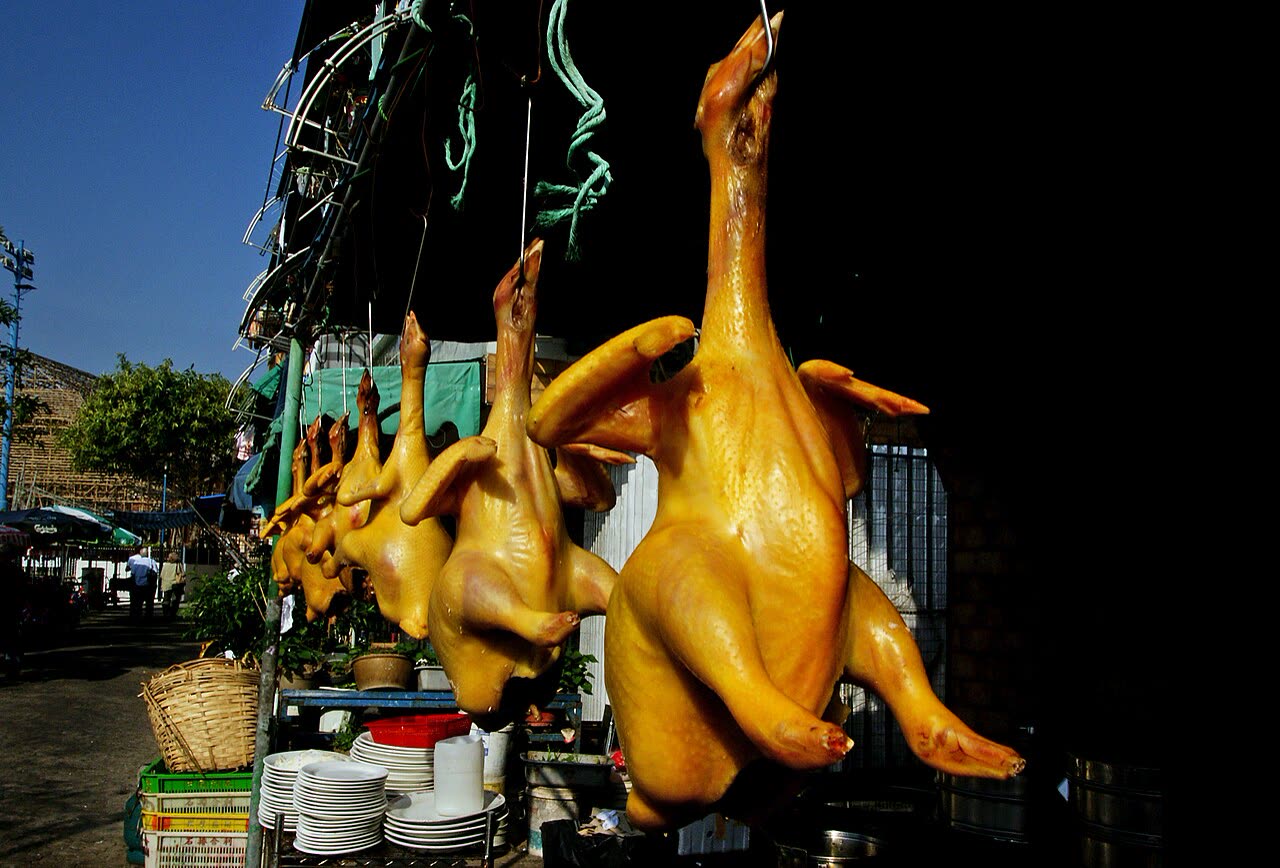
What to Do With Leftover Roast Duck
A whole Cantonese roast duck costs about $28 and feeds two. Here is how to use the rest: reheating, noodles, fried rice, and the bones.
Jack Chen · Nov 24, 2026 · 6 min read
Seasonal Recipes
Chinese Cleaver Care: Sharpening Angle and Honing
Most Chinese cleavers are sharpened at 15 to 20 degrees per side. Here is how to find that angle, hone without wrecking it, and fix a dull edge.
Jack Chen · Nov 20, 2026 · 5 min read
Seasonal Recipes
What Keep-Warm Does to Rice After Four Hours
A rice cooker on keep-warm for four hours is still safe to eat, but the texture and smell change. Here is what happens and what to do.
Jack Chen · Nov 19, 2026 · 5 min read
This article shares food culture and personal experience. It is not medical advice. See our medical disclaimer.
Leave a comment
ModeratedNo comments yet. Questions about the method, your family's version, or something I got wrong — write it here and I will read it.