Scallion Pancakes With a Shortcut Dough
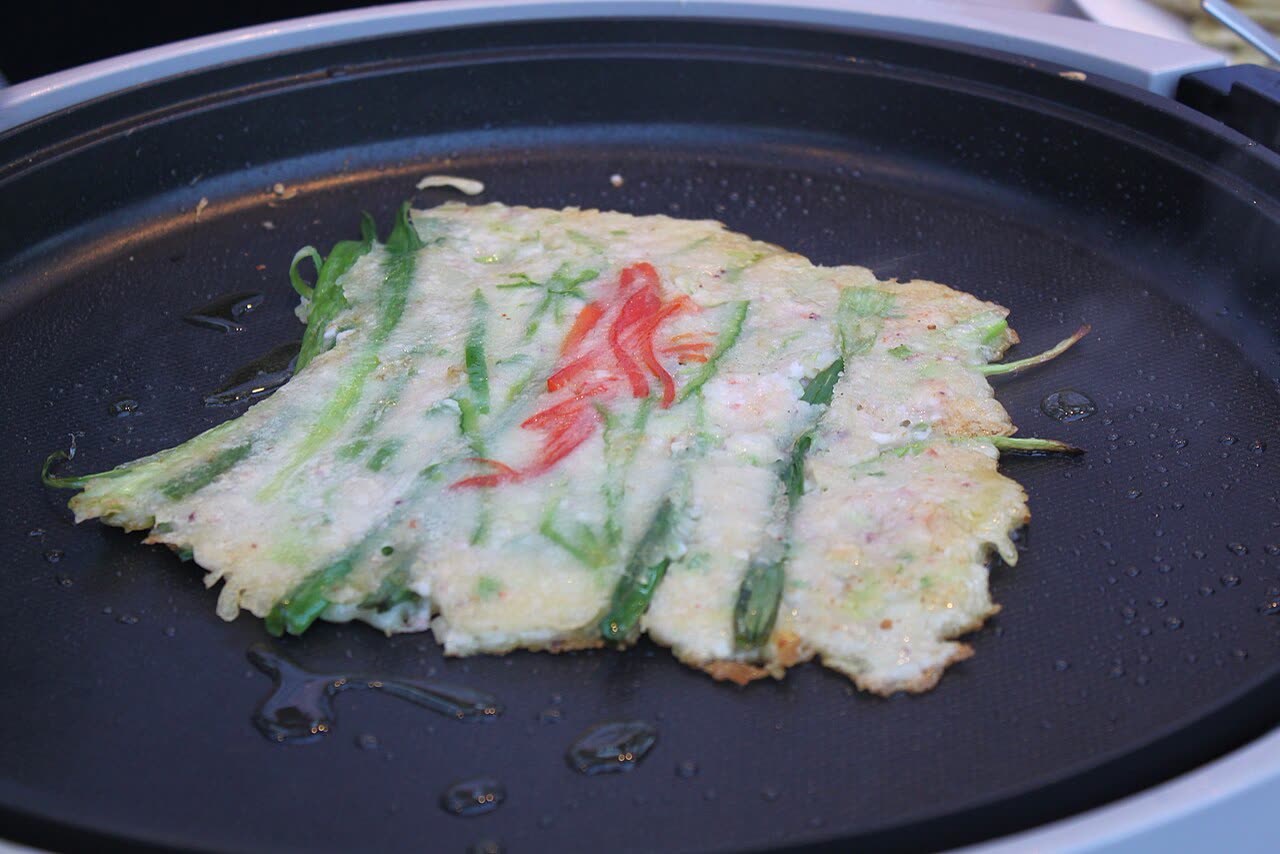
Hot water partly cooks the flour, a 30-minute rest does the rest, and coiling the dough into a snail gives flaky layers without lard or an overnight proof.
You can make scallion pancakes on a weeknight. Use a hot-water dough, roll it thin, coil it into a snail, and flatten again; the layers come from the coil, not from hours of resting. My shortcut skips the overnight rest and the lard, and it still gives you crisp edges and a chewy middle in about 45 minutes. This is the version I make when the kids want cong you bing and I do not want to stand at the counter all evening.
What makes the dough a shortcut?
Two things: hot water and a short rest. Hot water (about 176°F / 80°C) partly cooks the flour, so the gluten relaxes faster and the dough turns soft and pliable in minutes instead of hours. The 30-minute rest is not optional, but it is short enough to fit between homework and dinner.
Use 2 cups (240 g) all-purpose flour, 3/4 cup (180 ml) hot water, and 1/2 teaspoon fine salt. Stir with chopsticks until shaggy, then knead 3 to 4 minutes until smooth. Cover and rest 30 minutes. That is it. No yeast, no overnight proof, no special flour.
If you have only bread flour, use 1 3/4 cups (220 g) and add 2 tablespoons water; the dough will fight you a little more but still work.
What goes wrong: if the water is boiling hot, the flour will clump and the dough will be tough. Let the kettle sit for a minute after boiling. If the dough is sticky, add flour 1 tablespoon at a time; if it is crumbly, add water 1 teaspoon at a time. You want a soft dough that barely sticks to your fingers.
How do I get flaky layers without lard?
The coil does the work. Roll the rested dough into a thin rectangle, brush with oil, scatter scallions and salt, roll it up like a cigar, then coil the cigar into a spiral and flatten. Each turn of the spiral becomes a layer.
For the filling: 4 to 5 scallions, thinly sliced (about 3/4 cup), 2 tablespoons neutral oil, and 1/2 teaspoon salt. Some cooks add a pinch of five-spice or white pepper; I usually do not, because the scallion should taste like scallion. Brush the oil on the dough, spread the scallions evenly, and leave a 1/2-inch border so the roll does not split.
A note on scallions: use both white and green parts, but keep the greens for the inside and save a few for the pan. In the US, the bunches at the supermarket are often thicker than the thin ones at a Chinese market. Slice them finer than you think you need.
What goes wrong: if you overfill, the pancake will burst when you roll it. If you underfill, it will taste plain. Aim for a thin, even layer of scallions, not a pile.
What is the rolling and coiling trick?
Work one piece at a time. Divide the dough into 4 pieces. Roll each into a 6-by-9-inch rectangle, about 1/8 inch thick. Brush, scatter, roll into a cigar, then coil the cigar into a snail. Tuck the tail under. Press flat with your palm, then roll gently to a 6-inch round, about 1/4 inch thick.
Do not roll too hard on the second pass or you will press the layers together. A light hand keeps the air pockets that puff in the pan.
If the dough springs back, cover it and wait 5 minutes. It is telling you the gluten is tight, not that the recipe failed.
What goes wrong: if the coil unravels, press the tail firmly under the spiral. If the pancake tears, patch it with a little dough and roll gently. A torn pancake still cooks fine; it just looks rustic.
How do I cook them so they stay crisp?
Use a cast-iron or nonstick pan over medium heat with 1 tablespoon oil per pancake. Cook 2 to 3 minutes per side until deep golden and blistered. Press lightly with a spatula as it cooks; that helps the layers separate.
Drain on a rack, not paper towels, or the bottom steams. Keep finished pancakes in a 200°F oven while you cook the rest. They hold for about 20 minutes.
For the dipping sauce: 2 tablespoons soy sauce, 1 tablespoon black vinegar, 1 teaspoon chili oil, and a pinch of sugar. Stir and taste. If you have Chinkiang vinegar, use it; if not, rice vinegar plus a few drops of balsamic gets close.
What goes wrong: if the pan is too hot, the outside burns before the inside cooks. If it is too low, the pancake absorbs oil and turns greasy. Medium heat is the sweet spot; adjust after the first pancake.
Can I make these ahead or freeze them?
Yes. Roll and coil the pancakes, then stack them with parchment between each one and freeze for up to 2 months. Cook from frozen over medium-low heat, adding a minute per side. Do not thaw first; the layers hold better frozen.
You can also cook them, cool them, and reheat in a dry pan for 2 minutes. They will not be quite as crisp as fresh, but they are still better than most takeout.
What goes wrong: if you freeze them without parchment, they will stick together and you will have one giant pancake. Separate them while they are still firm.
What do I serve with them?
Scallion pancakes are a snack, a side, or a light meal. I serve them with a cucumber salad dressed with rice vinegar and sesame oil, or with a bowl of plain congee on a cold morning. In many Chinese households they also show up next to roast chicken, which is a sensible pairing.
A note on the scallions: in the US, look for bunches with firm, upright greens. If they are wilted, rinse in ice water for 10 minutes and they will perk up enough for the filling.
One more thing: do not skip the salt in the filling. It seasons the layers from the inside, and without it the pancake tastes flat no matter how much dipping sauce you use.
In some families, the last pancake is saved for whoever likes it extra crispy. I find myself doing the same now, though my kids usually beat everyone to it.
What should a first-time American cook buy?
You do not need a Chinese pantry to start. Here is what I would pick up at a regular supermarket:
- All-purpose flour (Gold Medal or King Arthur)
- Fine salt
- Neutral oil (canola or vegetable)
- Scallions (two bunches; you will use about one)
- Soy sauce (Kikkoman or similar)
- Rice vinegar (Marukan or seasoned rice vinegar)
- Chili oil (Lao Gan Ma or any crisp chili oil)
If you want to go further, add Chinkiang vinegar and toasted sesame oil. But the basic list is enough for a first batch.
What goes wrong: if you buy scallions that are already limp, they will not slice cleanly. Look for firm stalks and bright green tops.
Frequently asked questions
Can I use a food processor? Yes. Pulse the flour and salt, add hot water, and pulse until a ball forms. Rest 30 minutes as usual.
Can I use whole wheat flour? Replace half the all-purpose with whole wheat and add 1 tablespoon water. The pancakes will be denser but still good.
Why did my pancakes turn hard? Usually the pan was too hot or the dough was rolled too thin. Medium heat and a 1/4-inch thickness fix it.
Can I skip the rest? You can, but the dough will fight the rolling pin and the layers will be uneven. Thirty minutes is the shortcut; skipping it is a different, worse recipe.
What if I do not have scallions? Thinly sliced garlic chives or the green parts of leeks work. Use 3/4 cup either way.
Sources
Keep reading
- Winter Melon Candy: The Cantonese Sweet That Takes All Afternoon
- Steamed Egg Custard Ratios: The 1:1.5 Rule
- How to Blanch Meat Before Braising
- Dried Scallops: Worth It or Not?
Photo: by World to Table at Flickr / CC BY-SA 3.0 via Wikimedia Commons
Frequently asked questions
Can I make scallion pancake dough ahead of time?
Yes. Rest the dough, divide and coil it, then freeze the flattened pancakes with parchment between each one for up to 2 months. Cook from frozen over medium-low heat.
Why is my scallion pancake not flaky?
Usually the coil was pressed too hard on the second roll, or the pan was too hot. Roll gently after coiling and cook over medium heat so the layers can separate.
What can I use instead of lard?
Neutral oil works. Brush 2 tablespoons of oil on the dough before adding scallions and salt; the coil creates the layers, not the fat.
About the author
Writer & Home Cook
Chinese home cook writing about seasonal food traditions from an American kitchen. Grew up in Guangdong, now cooks for a mixed family in the US.
Keep simmering

Seasonal Recipes
What to Do With Leftover Roast Duck
A whole Cantonese roast duck costs about $28 and feeds two. Here is how to use the rest: reheating, noodles, fried rice, and the bones.
Jack Chen · Nov 24, 2026 · 6 min read
Seasonal Recipes
Chinese Cleaver Care: Sharpening Angle and Honing
Most Chinese cleavers are sharpened at 15 to 20 degrees per side. Here is how to find that angle, hone without wrecking it, and fix a dull edge.
Jack Chen · Nov 20, 2026 · 5 min read
Seasonal Recipes
What Keep-Warm Does to Rice After Four Hours
A rice cooker on keep-warm for four hours is still safe to eat, but the texture and smell change. Here is what happens and what to do.
Jack Chen · Nov 19, 2026 · 5 min read
This article shares food culture and personal experience. It is not medical advice. See our medical disclaimer.
Leave a comment
ModeratedNo comments yet. Questions about the method, your family's version, or something I got wrong — write it here and I will read it.