Chinese Cleaver Care: Sharpening Angle and Honing
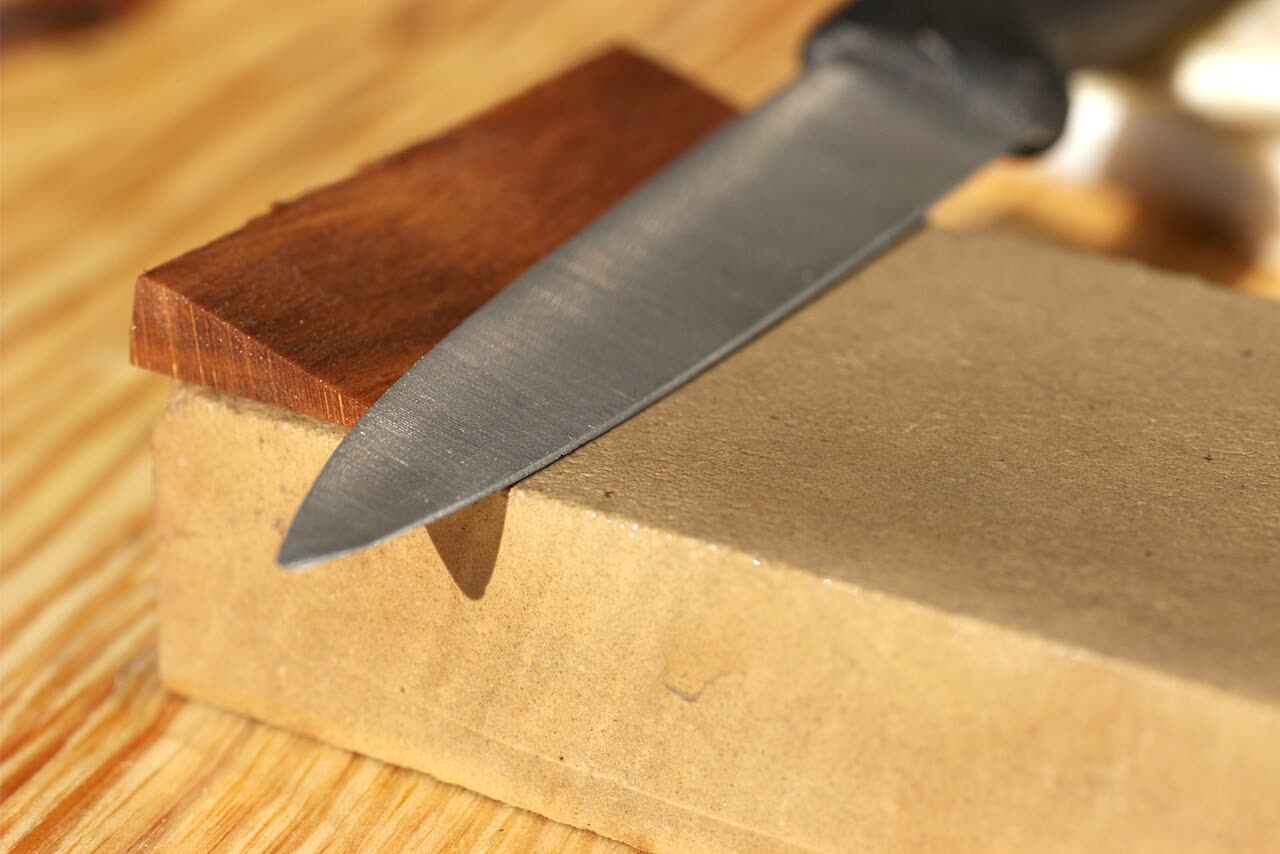
Most Chinese cleavers are sharpened at 15 to 20 degrees per side. Here is how to find that angle, hone without wrecking it, and fix a dull edge.
A Chinese cleaver that will not cut through a scallion is usually not a bad knife. It is a knife that has been honed at the wrong angle, or honed on a steel that should have stayed in the drawer. The short answer: sharpen a standard Chinese cleaver at roughly 15 to 20 degrees per side, hone lightly and often at that same angle, and skip the ribbed steel entirely. Most vegetable cleavers are thin, hard steel and a few strokes at the wrong angle will do more damage than a month of use.
What angle should a Chinese cleaver be sharpened at?
Fifteen to twenty degrees per side is the working range. A few reference points:
- Thin vegetable cleavers (caidao): closer to 15 degrees. The blade is thin behind the edge and the steel is often hard carbon. A low angle keeps it slicing tomatoes and ginger without crushing them.
- Bone choppers (gudaodao): closer to 20 degrees, sometimes a little more. The edge is thicker and the job is impact, not finesse.
- Stainless budget cleavers: 18 to 20 degrees is a safe compromise. Softer stainless rolls over at a very low angle, so a slightly wider bevel holds up better.
If you do not know your knife, start at 18 degrees. You can always take it lower next time. Going lower than the factory bevel on a soft stainless blade is the classic mistake: the edge feels razor-sharp for a week and then folds over the first time you hit a chicken bone.
How do I find the angle without a jig?
The old method is a coin under the spine. Stack two US nickels (about 3.9 mm together) under the spine and lay the blade so the edge touches the stone. That gives you a rough 15-to-18-degree angle on a blade about 50 mm tall, which covers most home cleavers. It is not exact, but it is repeatable, which is what matters.
A simpler check: colour the edge with a permanent marker, take three strokes on a fine stone at your chosen angle, and look at the bevel. If the marker is only removed at the very edge, you are too steep. If it comes off across the whole bevel and onto the flat, you are too shallow. Adjust and repeat until the marker comes off evenly.
A cheap angle guide that clips onto the spine does the same job for about $8 to $12. For a knife you use daily, that is money well spent.
Honing: what should I actually use?
A traditional ribbed honing steel is the wrong tool for most Chinese cleavers. Those steels are hard, coarse and designed for soft European blades. On a thin, hard Chinese blade they scrape metal off the edge and leave it weaker than before.
What works instead:
- A fine ceramic rod (about $15 to $25). Five to ten light strokes per side at the sharpening angle, once a week in a home kitchen, realigns the edge without removing much steel.
- A leather strop, loaded with a little green compound. Ten to twenty passes per side. This is the gentlest option and the one I reach for most often, because it polishes the edge without changing the geometry.
- A fine water stone, used only for a few feather-light passes. Useful if you already have one out.
Honing is maintenance, not repair. If the knife will not cut paper after ten strokes on ceramic, it needs sharpening, not more honing.
How do I sharpen it, start to finish?
- Soak the stone. A 1000/6000 combination water stone (roughly $30 to $50) covers everything a home cook needs. Soak the 1000 side for ten minutes.
- Find the angle with the marker trick or a clip-on guide.
- Raise a burr on the 1000 grit. Work in sections along the edge, edge leading or edge trailing, whichever you can hold steady. You are done on this side when you can feel a slight burr along the full length of the opposite side.
- Flip and repeat until the burr runs the whole edge.
- Refine on the 6000 side with light pressure, alternating sides, five to ten strokes each.
- Remove the burr with a few edge-trailing strokes on the stone, then strop on leather or newspaper.
- Test on a sheet of newspaper or a ripe tomato. It should bite, not skid.
A home cook sharpening once every two to three months will keep a cleaver in good shape for years. Professionals sharpen far more often, but they are also cutting through cases of product a day.
What goes wrong most often?
- Honing on a ribbed steel. The most common mistake. It micro-chips a hard edge and shortens the knife's life.
- Sharpening only the flat side. Chinese cleavers are usually ground with a primary bevel on one face and a flat or near-flat opposite face. If you only work one side, the edge drifts off-centre and the knife starts steering in the cut.
- Using a pull-through sharpener. Carbide pull-throughs take off a lot of metal and leave a ragged edge. On a thin cleaver they can visibly shorten the blade over a couple of years.
- Letting it stay wet. Carbon steel cleavers rust. Dry them immediately after washing and wipe a thin film of food-safe oil (mineral oil, about $5 for a small bottle) on the blade before storage. A rust spot is not the end, but it is extra work.
- Chopping on glass or stone. Both dull an edge fast. End-grain or edge-grain wood, or a soft plastic board, is the right surface.
- Storing it loose in a drawer. The edge knocks against other tools. A magnetic strip or a blade guard (about $8 to $15) solves it.
None of this is complicated. The whole routine is a stone, a ceramic rod or a strop, a board that is not glass, and five minutes of attention every couple of months. A $30 cleaver cared for this way will outcut a $150 knife that gets honed on a steel and left wet in the sink.
Keep reading
- What Keep-Warm Does to Rice After Four Hours
- How to Reheat Rice So It Doesn't Turn to Grit
- Winter Melon Candy: The Cantonese Sweet That Takes All Afternoon
- Steamed Egg Custard Ratios: The 1:1.5 Rule, Explained
Sources
Photo: Simon A. Eugster / CC BY 3.0 via Wikimedia Commons
Frequently asked questions
What angle should I sharpen a Chinese cleaver at?
About 15 to 20 degrees per side. Thin vegetable cleavers sit near 15, bone choppers near 20, and budget stainless cleavers are safest around 18 to 20.
Can I use a regular honing steel on a Chinese cleaver?
It is not ideal. Ribbed steels are coarse and hard, and they can chip a thin, hard Chinese blade. A fine ceramic rod or a leather strop is a better match.
How often should I sharpen a Chinese cleaver?
For a home kitchen, every two to three months is plenty if you hone lightly in between. Sharpen when honing no longer brings the edge back.
About the author
Writer & Home Cook
Chinese home cook writing about seasonal food traditions from an American kitchen. Grew up in Guangdong, now cooks for a mixed family in the US.
Keep simmering
Seasonal Recipes
What to Do With Leftover Roast Duck
A whole Cantonese roast duck costs about $28 and feeds two. Here is how to use the rest: reheating, noodles, fried rice, and the bones.
Jack Chen · Nov 24, 2026 · 6 min read
Seasonal Recipes
What Keep-Warm Does to Rice After Four Hours
A rice cooker on keep-warm for four hours is still safe to eat, but the texture and smell change. Here is what happens and what to do.
Jack Chen · Nov 19, 2026 · 5 min read
Seasonal Recipes
How to Reheat Rice So It Doesn't Turn to Grit
Three common mistakes that make leftover rice gritty, and the simple fixes to keep it tender.
Jack Chen · Nov 18, 2026 · 6 min read
This article shares food culture and personal experience. It is not medical advice. See our medical disclaimer.
Leave a comment
ModeratedNo comments yet. Questions about the method, your family's version, or something I got wrong — write it here and I will read it.