Shaoxing Wine Substitutes That Actually Work
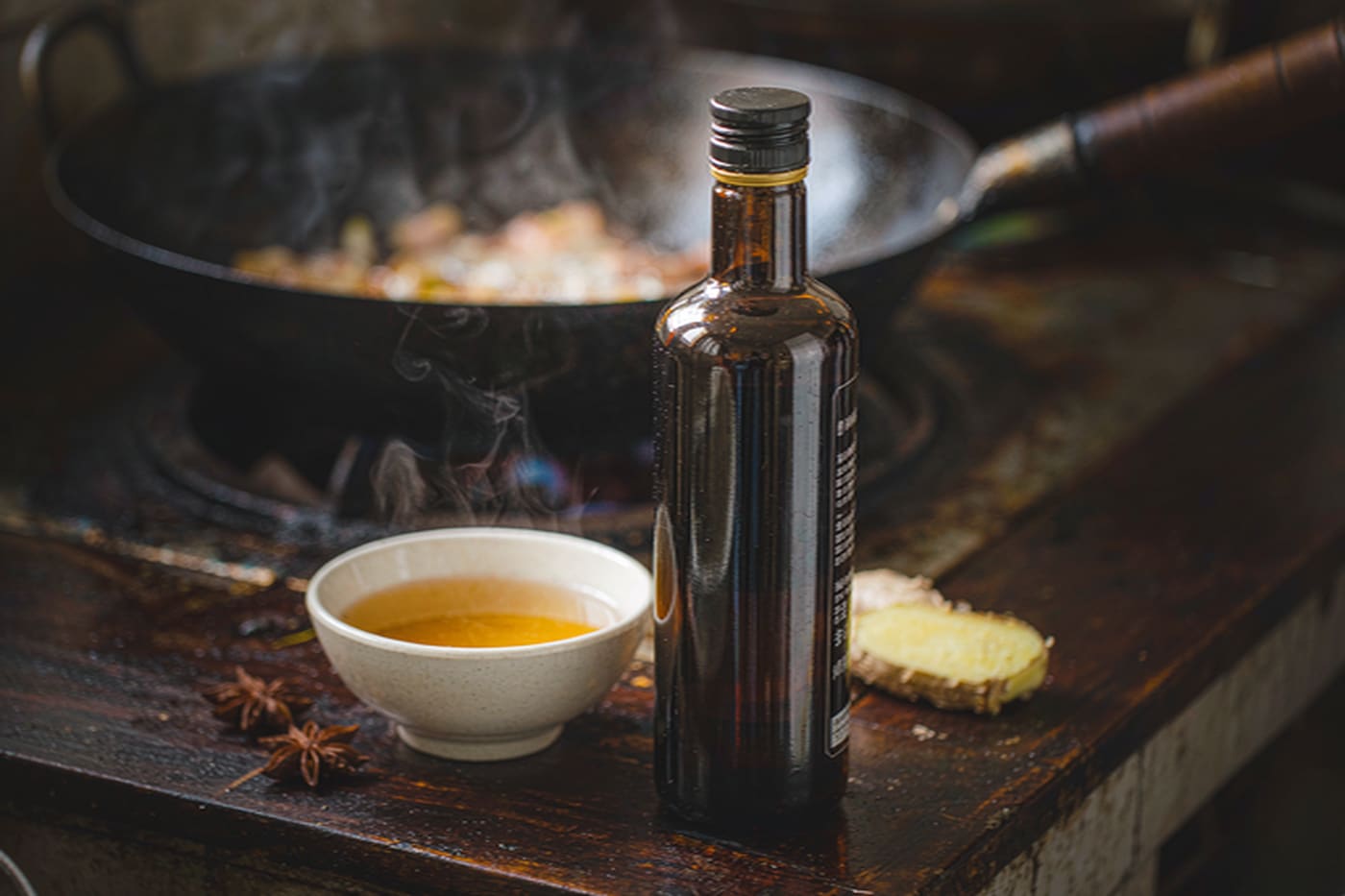
Three ways swapping shaoxing wine goes wrong, the symptom you will taste, and the fix that keeps the dish on course.
A bottle of real shaoxing wine costs about $6 to $9 at a Chinese grocer and lasts years. A bottle of "cooking wine" with salt added costs $3 and will quietly ruin a stir-fry. The gap between those two outcomes is what this guide is about: not whether you can substitute, but which substitutions hold up and which ones leave a sweet, salty, or flat-tasting pan behind.
Shaoxing wine (Shaoxing jiuniang, sometimes spelled Shaohsing) is a fermented rice wine from Zhejiang, amber to brown, around 15 to 18 percent alcohol, with a nutty, slightly caramel edge and a savoury finish. It goes into marinades, braises, dumpling fillings and the deglazing splash at the end of a stir-fry. When it is missing, most cooks reach for whatever wine is in the cupboard. That is where things go wrong.
Why does my stir-fry taste sweet and syrupy?
The symptom: the sauce clings like glaze, the meat tastes of sugar, and the wok smells like dessert rather than browned aromatics.
The cause is almost always Mirin or a sweet sherry. Mirin is rice wine, so it looks like the right answer on the shelf, but it carries roughly 40 percent sugar and very little alcohol. It will not deglaze properly and it pushes the whole dish toward sweetness. Cream sherry has the same problem in a different accent.
The fix: use a dry sherry such as fino or manzanilla, or a dry vermouth, and add nothing else. Both are fortified grape wines with the same job as shaoxing: alcohol to lift the fond off the pan and acidity to cut richness. Use the same volume as the recipe calls for. If all you have is Mirin, cut it by half and top up with a dry white wine or a splash of water plus a teaspoon of rice vinegar per tablespoon.
One more trap: "cooking wine" sold in US supermarkets is usually salted, sometimes heavily. Check the label for salt or sodium. A salted wine will make a braise taste like bad stock. If that is all you have, reduce it by a third and taste before adding any soy sauce.
Why does the dish taste thin and alcoholic?
The symptom: the sauce tastes sharp and boozy, the aroma burns off into something harsh, and the finished dish feels like it is missing a bass note.
The cause is using a neutral spirit or a wine with no body. Vodka, soju, and cheap dry white wine all provide alcohol but not the nutty, savoury depth that shaoxing contributes. Shaoxing gets that depth from the rice mash and from aging; a neutral spirit has nothing to offer but heat.
The fix: build the missing note back in. For every tablespoon of substitute, add a quarter teaspoon of dark soy sauce or a few drops of toasted sesame oil, and let the alcohol cook off for 20 to 30 seconds before the next ingredient goes in. If you are using dry white wine, add a pinch of sugar (a quarter teaspoon per tablespoon) to mimic the roundness. A dry oloroso sherry is the closest single-bottle match for body, and it is widely available for around $10 to $14.
What if I want no alcohol at all?
The symptom: the dish tastes flat, the aromatics sit on top of the food instead of inside it, and the pan lacks the glossy finish that comes from a proper deglaze.
The cause is skipping the step entirely rather than replacing it thoughtfully. Alcohol dissolves flavour compounds that water does not, so simply leaving it out changes the dish, not just the booze level.
The fix: use a mixture of three parts good stock (chicken or mushroom) to one part rice vinegar, plus a small pinch of sugar. Add it to the hot pan and let it reduce by half. The vinegar supplies the acidity and the stock supplies the savoury base. A splash of brewed soy sauce can stand in for the fermented note. This will not taste like shaoxing, but it keeps the dish in the right family. For dumpling fillings, where the wine is not cooked off, replace it with an equal volume of stock and a teaspoon of grated ginger per pound of filling.
Which bottle should I actually buy?
If you can get to a Chinese grocer, buy a bottle labelled Shaoxing hua tiao or "aged shaoxing" and check that the ingredient list is rice, water, and wheat (or just rice and water). Expect $6 to $9 for 750 ml. Skip anything labelled "cooking wine" with salt. Once opened, it keeps for months in a cool cupboard; I keep mine in a dark bottle with a pour spout and it has never turned.
If you cannot get to a Chinese grocer, the best single substitute is a dry oloroso or amontillado sherry, around $10 to $14 at most US liquor stores. Second choice is dry vermouth, around $8 to $12. Third is a dry white wine you would actually drink, around $8 to $12 a bottle. All three are closer to shaoxing than Mirin, sake, or anything labelled "rice cooking wine" from a supermarket shelf.
A note on the salt question: shaoxing itself is not salted, which is why it can go into a marinade without throwing off the seasoning. Any substitute that lists salt on the label needs to be treated as a seasoned ingredient, not a neutral one.
How much should I use, and when does it go in?
The rule of thumb is one tablespoon per pound of protein for marinades, two tablespoons for a braise that serves four, and a quick splash (about a teaspoon) at the end of a stir-fry to deglaze. Add it to the hot pan, not the cold marinade, and let it cook for 20 to 30 seconds before the next step. That is enough time for the harsh edge to burn off and the nutty note to come forward.
For cold dishes and dipping sauces, where the wine is not cooked, use half the amount and taste. The alcohol will be more present, so a little goes further. In dumpling fillings, the wine is there to season the meat, not to be tasted on its own; a teaspoon per pound is enough.
If you substitute sherry or vermouth, use the same volume. They are similar in strength. If you substitute white wine, use the same volume but expect a sharper edge; the pinch of sugar mentioned above handles most of it.

Keep reading
- Salted Duck Eggs: Buying, Curing, and Using Them (With Real Prices)
- Bamboo Shoots: Fresh, Vacuum-Packed, and Canned
- Dried Shrimp: The Pantry Seasoning That Does the Work of Anchovies
- Pickled Mustard Greens: A Practical Guide
Sources
Photo: Jason M. C., Han / CC BY-SA 4.0 via Wikimedia Commons · Photo: Florstein ( Telegram: WikiPhoto.Space ) / CC BY-SA 4.0 via Wikimedia Commons
Frequently asked questions
Can I use rice vinegar instead of shaoxing wine?
Only in part. Rice vinegar has the acidity but not the alcohol or the fermented depth. Use one part rice vinegar to three parts stock, plus a pinch of sugar, and let it reduce in the pan. It works for deglazing but not for marinades where the wine needs to season the meat.
Is supermarket 'cooking wine' the same thing?
No. Most US supermarket cooking wine is salted, often heavily, and made from a neutral base. Check the label for salt or sodium. If it is salted, reduce the amount by a third and taste before adding soy sauce, or skip it and use dry sherry instead.
Does shaoxing wine need to be refrigerated after opening?
Not usually. Its alcohol and acidity keep it stable in a cool, dark cupboard for several months. Keep the cap tight and away from heat. If it starts to smell like vinegar rather than rice, replace it.
About the author
Writer & Home Cook
Chinese home cook writing about seasonal food traditions from an American kitchen. Grew up in Guangdong, now cooks for a mixed family in the US.
Keep simmering
Ingredient Guides
Dried Shiitake vs Fresh: When Each One Wins
Dried shiitake tastes deeper and costs less per ounce of flavour; fresh wins on texture and speed. A guide to picking the right one.
Jack Chen · Nov 23, 2026 · 6 min read

Ingredient Guides
How to Store Fresh Ginger So It Doesn't Dry Out
Three ways fresh ginger goes wrong, the symptom of each, and the fix. A troubleshooting guide for the fridge, the counter and the freezer.
Jack Chen · Nov 22, 2026 · 7 min read
Ingredient Guides
Star Anise, Cloves and Cassia: What Each One Actually Does in a Braise
Three warm spices, three different jobs. A shopper's guide to what star anise, cloves and cassia add to a pot of red-braised pork or beef.
Jack Chen · Nov 15, 2026 · 6 min read
This article shares food culture and personal experience. It is not medical advice. See our medical disclaimer.
Leave a comment
ModeratedNo comments yet. Questions about the method, your family's version, or something I got wrong — write it here and I will read it.