Bamboo Shoots: Fresh, Vacuum-Packed, and Canned
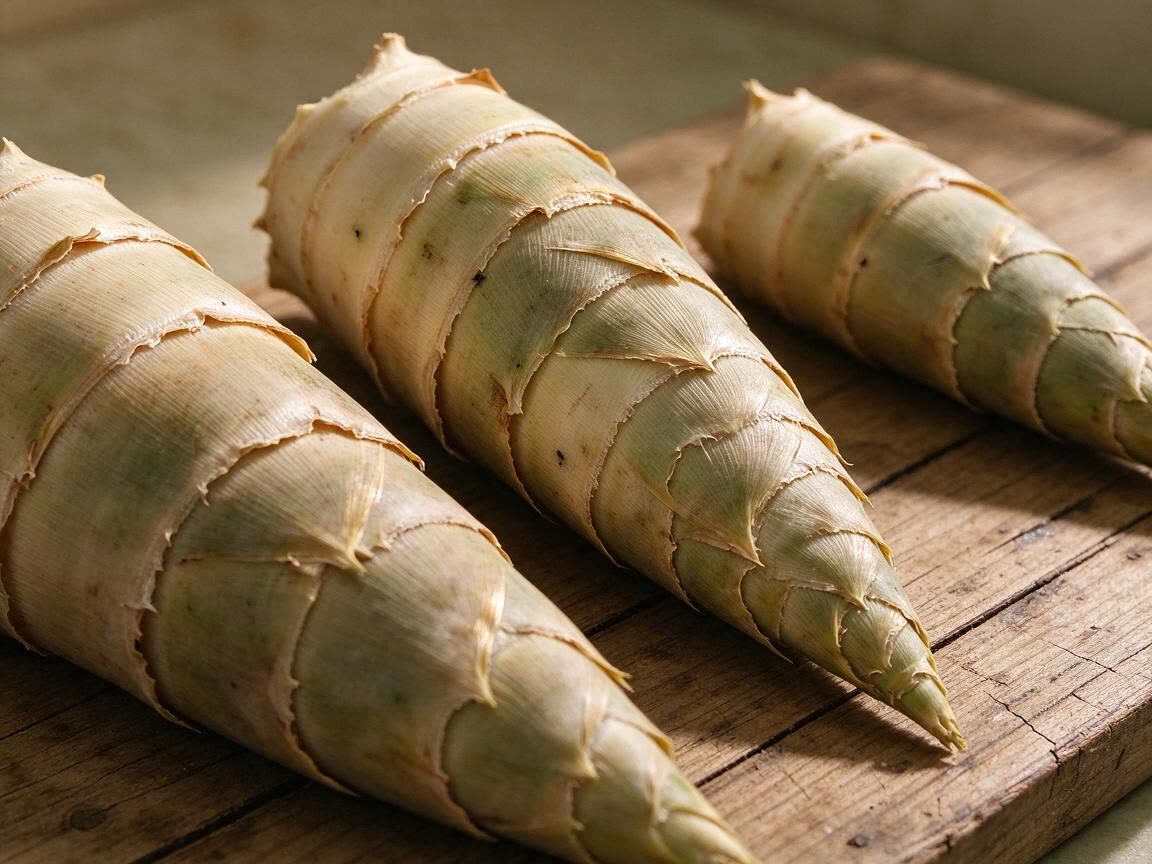
Fresh winter bamboo costs $6 a pound and can be bitter enough to ruin a stir-fry. How the three kinds differ, and how to cook each.
A pound of fresh winter bamboo shoots runs about $6 to $9 at a Chinese grocer in a US city, and the same weight of vacuum-packed shoots costs $3 to $4. Canned is cheaper still, roughly $1.50 for an 8-ounce can. The price gap is not marketing. Fresh shoots are alive when you buy them and start turning woody within days; the packed ones are already cooked. Knowing which one is in your hand decides how you cook it, and how much of it you get to eat.
What are bamboo shoots, exactly?
Bamboo shoots are the young, pointed culms a bamboo plant pushes up from its rhizome before the cane hardens. Only the tip and the inner core are eaten. The outer sheaths are tough and papery and come off in layers, like an artichoke but less forgiving. What is left is a pale, dense cone with a faintly grassy smell and a texture somewhere between a water chestnut and a raw potato.
Chinese cooking divides them loosely by season. Winter shoots (dōng sǔn) are dug while still underground, fat, short and prized for a clean crunch. Spring shoots are longer and thinner and need more trimming. The bitterness people complain about comes from cyanogenic compounds in the shoot, which is why every tradition that eats bamboo parboils it first. This is a food-safety step, not a flavour preference. A raw shoot is not something to nibble while you prep.
Size tells you something before you cut. A good winter shoot is roughly the length of your hand and heavy for its bulk, maybe 10 to 12 ounces. Spring shoots can run twice that and taper to a thin, grassy tip that is mostly sheath. If a shoot is light for its size, the core has dried out and you will pay for water.
Fresh, vacuum-packed, or canned: which should I buy?
Fresh is the best texture and the most work. Buy shoots that feel heavy for their size, with tight, unblemished sheaths and no sour smell at the cut end. A shoot that yields to a thumbnail at the base is past it. Expect to lose 40 to 50 percent of the weight to sheaths and trim, so a 1-pound shoot yields about 8 to 9 ounces of usable core, and a stir-fry for two wants two shoots.
Vacuum-packed shoots, usually sold as a sealed pouch of pre-sliced or whole parboiled shoots in the refrigerated case, are the practical middle ground. They are already cooked, so they only need a rinse and a quick blanch to freshen them. Check the pack date; they keep for weeks unopened but turn sour fast once opened, usually within three or four days in the fridge.
Canned is the softest and mildest. It is fine in braises and long-cooked dishes where it absorbs sauce, and poor in quick stir-fries where you want snap. Drain and rinse well; the packing liquid tastes tinny. One 8-ounce can, drained, gives about 5 ounces of shoot, enough for a single home stir-fry.
At an American supermarket, the reliable substitutes are canned bamboo in the international aisle (about $1.50 for an 8-ounce can) or, for texture, canned hearts of palm, drained and sliced on the diagonal, which behave similarly in a stir-fry though they taste nothing alike.
How do I prepare fresh shoots without wrecking them?
Work outside or over a bin, because the sheaths go everywhere. A paring knife and a stable cutting board are all the equipment you need; a vegetable peeler is useless here because the sheaths come off in sheets, not shavings.
- Cut off the woody base, an inch or more, until you see solid pale flesh.
- Slice down the length of the shoot through the sheaths and peel them away in layers until you reach the tender core.
- Trim any fibrous outer rings.
- Slice or roll-cut the core into pieces about a quarter-inch thick, then boil in generously salted water (about 1 tablespoon per quart) for 10 to 15 minutes, until a piece tastes sweet rather than sharp. Some cooks change the water once halfway through for older spring shoots.
- Drain and use, or store covered in the fridge for up to three days.
For vacuum-packed, blanch for 1 to 2 minutes. For canned, 30 seconds is enough to rinse off the can. Do not salt the water for the packed kinds; they have already absorbed enough.
A note on the boil: use a pot wide enough that the slices sit in a single layer. Crowded shoots cook unevenly, and the ones at the bottom go soft while the top ones stay sharp.
What do they actually taste like, and what goes with them?
Plain, faintly sweet, and mostly texture. That is the point. Bamboo is a carrier: it stays crisp inside a braise and takes on the salt, fat and aroma around it. The classic pairings are pork (thin-sliced belly in a red-braised dish), dried mushrooms, and cured ham. In a stir-fry, slice them thin and add them early so they get a little colour.
A habit worth stealing from Cantonese kitchens: keep a pouch of vacuum-packed shoots in the fridge and add a handful, slivered, to any pork or mushroom stir-fry for crunch. I do this more often than I buy fresh, mostly because fresh demands a same-day plan.
What goes wrong, and how do I fix it?
Bitterness that survives cooking. Usually under-boiled fresh shoots, or spring shoots sold past their prime. Boil longer in fresh water; if it persists, the shoot was too old. You will know within the first bite, before the dish is assembled, so taste a slice straight from the pot.
A sour, fermented smell from a vacuum pack. The seal has failed. Discard it. Do not rinse and hope.
Slimy texture. Overcooked, or canned shoots simmered too long. Add them late, in the last minute of a stir-fry or the last ten of a braise.
A metallic taste in the finished dish. The canning liquid went in with the shoots. Drain, rinse, and blanch.
Tough, fibrous slices. The outer rings were not trimmed. Cut them away rather than chewing through them.
A grey, dull colour after boiling. The water was hard or the pot was aluminium. Use a stainless or enamel pot and the slices stay pale.
None of this is difficult, but all of it is timing. Buy fresh only when you will cook within two days, and let the packed versions do the weeknight work.
What should a first-time American cook buy?
Start with one vacuum-packed pouch, whole shoots rather than pre-sliced if the store has both, because you can see the core and cut it how the dish needs. Slice half into a pork stir-fry and keep the rest for a braise later in the week. Once you know what the texture should feel like, buy one fresh winter shoot and boil it the same day. That comparison, side by side, teaches more than any label. Skip canned until you are cooking something long and saucy, where its softness stops mattering.
Keep reading
- Dried Shrimp: The Pantry Seasoning That Does the Work of Anchovies
- Pickled Mustard Greens: A Practical Guide
- Types of Fermented Tofu: A Shopper's Guide to Fu Ru
- Soy Sauce Grades Explained: What You're Actually Buying
Sources
Photo: PattayaPatrol / CC BY-SA 4.0 via Wikimedia Commons
Frequently asked questions
Do I have to boil bamboo shoots before cooking?
Yes for fresh shoots: 10 to 15 minutes in salted water removes the bitterness and the cyanogenic compounds. Vacuum-packed and canned shoots are already cooked, so a 1 to 2 minute blanch is enough to freshen them.
Can I substitute canned bamboo for fresh?
In braises and long-cooked dishes, yes. In a fast stir-fry the canned version is too soft to give the crunch you want. Vacuum-packed shoots are the closer substitute. Drained, sliced hearts of palm work if you only need texture.
How long do fresh bamboo shoots keep?
Two days in the fridge, wrapped, and they should be cooked the day you buy them if possible. Once boiled and cooled, they keep covered for about three days. Vacuum packs last weeks unopened but sour quickly after opening.
About the author
Writer & Home Cook
Chinese home cook writing about seasonal food traditions from an American kitchen. Grew up in Guangdong, now cooks for a mixed family in the US.
Keep simmering
Ingredient Guides
Dried Shiitake vs Fresh: When Each One Wins
Dried shiitake tastes deeper and costs less per ounce of flavour; fresh wins on texture and speed. A guide to picking the right one.
Jack Chen · Nov 23, 2026 · 6 min read

Ingredient Guides
How to Store Fresh Ginger So It Doesn't Dry Out
Three ways fresh ginger goes wrong, the symptom of each, and the fix. A troubleshooting guide for the fridge, the counter and the freezer.
Jack Chen · Nov 22, 2026 · 7 min read
Ingredient Guides
Star Anise, Cloves and Cassia: What Each One Actually Does in a Braise
Three warm spices, three different jobs. A shopper's guide to what star anise, cloves and cassia add to a pot of red-braised pork or beef.
Jack Chen · Nov 15, 2026 · 6 min read
This article shares food culture and personal experience. It is not medical advice. See our medical disclaimer.
Leave a comment
ModeratedNo comments yet. Questions about the method, your family's version, or something I got wrong — write it here and I will read it.