Salted Duck Eggs: Buying, Curing, and Using Them (With Real Prices)
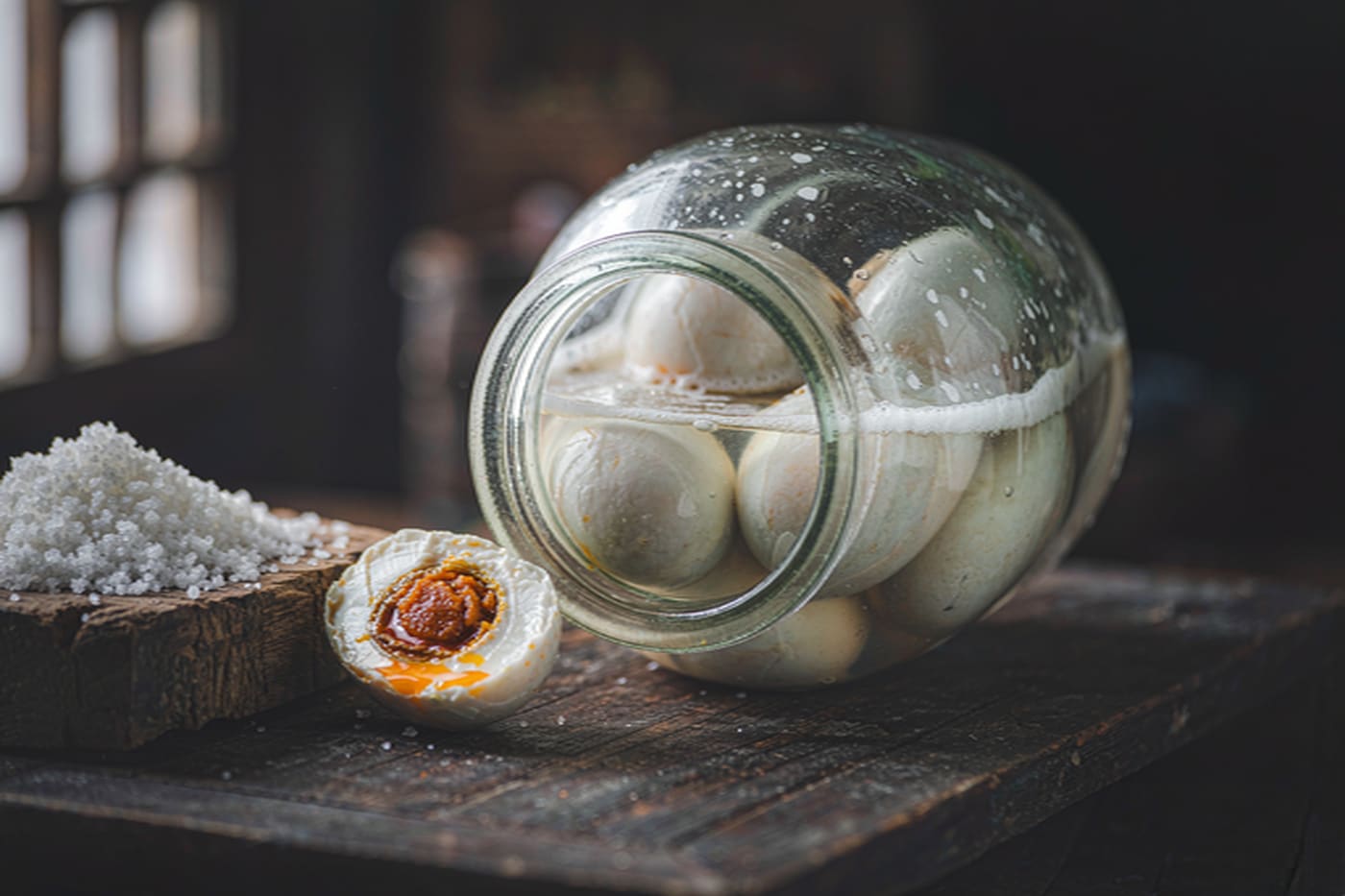
Salted duck eggs run $1.20 at a Chinese grocer and $3.50 at a supermarket. What to pay, how to cure, and how to cook with them.
A single salted duck egg at a Chinese grocer runs about $1.20. The same egg, when a mainstream supermarket carries it at all, is often $3.00 to $3.50, sold singly in a plastic clamshell near the tofu. That gap is the whole story of this ingredient: cheap and ordinary in a Chinese pantry, marked up and slightly mysterious everywhere else.
What are salted duck eggs, exactly?
A salted duck egg is a duck egg held in a salt cure until the white turns thin and salty and the yolk firms into a dense, orange-red paste that beads oil when steamed. Duck eggs are larger and richer than chicken eggs, with a bigger yolk-to-white ratio, which is why the cure produces something a chicken egg cannot quite match. The salt pulls water out of the egg; the yolk tightens and the white turns almost translucent. You buy them either raw in a vacuum pack or pre-cooked, and the cooked ones are what most weeknight cooks reach for. The flavor is savory and faintly gamy, closer to a cured cheese than to a boiled egg. It is food, a technique, and a habit, not a tonic.
A useful reference point: a good cured yolk should be about 30 to 35 percent of the egg's weight. If you crack one and the yolk looks thin and pale, the cure was short or the salt weak, and the flavor will be flat.
How much do they actually cost?
Prices vary by region and by the week, but the pattern holds: a Chinese or Asian grocer sells salted duck eggs far cheaper than a mainstream supermarket, and usually fresher because they turn over faster. Here is what shows up in a mid-size US city, priced per egg.
| Where | Format | Typical price per egg |
|---|---|---|
| Chinese grocer | Raw, vacuum pack of 6 | $0.90–$1.30 |
| Chinese grocer | Cooked, pack of 4–6 | $1.00–$1.40 |
| Mainstream supermarket | Cooked, sold singly | $2.50–$3.50 |
| Online Asian grocery | Raw, pack of 12 | $1.10–$1.60 (plus shipping) |
The supermarket premium is real but not absurd for one egg. Where it hurts is volume: a recipe that calls for four yolks for a plate of tofu costs about $5 at the Chinese grocer and $12 to $14 at the supermarket. If you cook with them more than occasionally, buy the six-pack at the Asian grocer and keep it in the fridge. Cooked eggs freeze poorly, so buy what you will use in a month or two.
Can I cure my own, and is it cheaper?
Yes, and it is cheaper per egg, though the savings are modest and the wait is long. A dozen fresh duck eggs at a Chinese grocer run $6 to $9. A 3-pound box of coarse salt (Diamond Crystal, about $2.50) is enough for several batches. The classic dry cure: roll each egg in strong liquor (baijiu, or 80-proof vodka as a substitute), then in coarse salt, and pack them in a lidded jar for three to five weeks in a cool spot. The liquor helps the salt adhere and is traditional; skip it and the salt still works, just less evenly. A brine cure, eggs submerged in saturated salt water (about 1 part salt to 4 parts water by volume, heated to dissolve, then cooled), takes about the same time and is more forgiving of uneven coating. Weight the eggs down with a small plate so they stay submerged.
What goes wrong: eggs that float in the brine are suspect and should be discarded. A dry-cured egg with a bare patch will cure unevenly and can spoil at that spot; check the jar every few days and re-roll any bald eggs in salt. A white film or cloudy brine is normal; a pink or fuzzy growth is not, and the batch should go.
I cure a dozen at a time in a quart mason jar and mark the lid with the date. The math: about $0.75 per egg, against $1.20 bought. The real reason to cure your own is control over salt level and the pleasure of a jar in the pantry, not the savings. Cured eggs keep for months in the fridge. Some cooks pack eggs in salted damp sand or a salt-and-ash paste; both work, both are messier.
How do I use them without wrecking the dish?
Treat the white and yolk as two different ingredients. The cooked white is very salty and slightly rubbery; most cooks discard it or chop a little into congee. The yolk is the prize. Steam a cooked egg for eight minutes, peel it, and the yolk will be firm and oily at the edges. Mash it with a fork and fold it into soft tofu with a little sesame oil and scallion for a cold dish, or press it through a sieve over bitter melon before stir-frying. A single yolk crumbled into a pot of plain rice porridge adds more savor than a spoon of stock. Raw cured yolks can be separated and steamed whole as a garnish, or grated into a sauce for clams. Start with half a yolk per portion; the salt is concentrated and easy to overdo. The northern habit of pairing a salted yolk with a plain steamed bun is a good calibration: the bread is bland on purpose so the yolk can be loud.
For a first attempt, crumble one yolk into a bowl of warm congee or a plate of cold silken tofu (one 12-ounce block, about $2) and taste before salting anything else in the dish.
Where do I buy them, and what should I look for?
At a Chinese grocer, look for vacuum-sealed packs in the refrigerated case near the tofu and preserved vegetables, or shelf-stable boxes near the rice. Check the date and the pack for cracks; a leaking vacuum seal means a broken egg. Cooked eggs are usually sold in net bags or boxes and are ready to steam. At a mainstream supermarket, they are often in the refrigerated international section, usually cooked and usually overpriced. Online Asian grocers ship raw packs, but shipping can double the cost, so order with other pantry items. Once home, raw cured eggs keep in the fridge for several months; cooked ones for about a week. A faint sulfur smell when you open a pack is normal; a sharp, rotten smell is not.
One habit worth keeping: buy one pack, steam one egg, and taste it before you commit a recipe to it. Salt levels vary a lot between brands, and a yolk that is too salty will flatten a delicate dish. For a first-time American cook, the sensible purchase is a cooked six-pack at a Chinese grocer (about $6 to $8), a 12-ounce block of silken tofu, and a bottle of toasted sesame oil. Skip the raw packs until you know you like the flavor.

Keep reading
- Bamboo Shoots: Fresh, Vacuum-Packed, and Canned
- Dried Shrimp: The Pantry Seasoning That Does the Work of Anchovies
- Pickled Mustard Greens: A Practical Guide
- Types of Fermented Tofu: A Shopper's Guide to Fu Ru
Sources
Photo: Jason M. C., Han / CC BY-SA 4.0 via Wikimedia Commons · Photo: Florstein ( Telegram: WikiPhoto.Space ) / CC BY-SA 4.0 via Wikimedia Commons
Frequently asked questions
Are salted duck eggs the same as century eggs?
No. Salted duck eggs are cured in salt and stay recognizably egg-like, with a salty white and oily yolk. Century eggs are preserved in an alkaline mixture and turn dark and firm. They are different ingredients with different uses.
Can I use chicken eggs instead of duck eggs for curing?
You can, and the method is the same, but the result is smaller and less rich. Duck eggs have a larger yolk-to-white ratio, which is the point of the cure. Chicken eggs work in a pinch for a quick home cure.
How long do salted duck eggs last in the fridge?
Raw cured eggs keep for several months refrigerated in their pack or jar. Cooked or steamed eggs are best within about a week. Check for cracks and off smells before using.
About the author
Writer & Home Cook
Chinese home cook writing about seasonal food traditions from an American kitchen. Grew up in Guangdong, now cooks for a mixed family in the US.
Keep simmering
Ingredient Guides
Dried Shiitake vs Fresh: When Each One Wins
Dried shiitake tastes deeper and costs less per ounce of flavour; fresh wins on texture and speed. A guide to picking the right one.
Jack Chen · Nov 23, 2026 · 6 min read

Ingredient Guides
How to Store Fresh Ginger So It Doesn't Dry Out
Three ways fresh ginger goes wrong, the symptom of each, and the fix. A troubleshooting guide for the fridge, the counter and the freezer.
Jack Chen · Nov 22, 2026 · 7 min read
Ingredient Guides
Star Anise, Cloves and Cassia: What Each One Actually Does in a Braise
Three warm spices, three different jobs. A shopper's guide to what star anise, cloves and cassia add to a pot of red-braised pork or beef.
Jack Chen · Nov 15, 2026 · 6 min read
This article shares food culture and personal experience. It is not medical advice. See our medical disclaimer.
Leave a comment
ModeratedNo comments yet. Questions about the method, your family's version, or something I got wrong — write it here and I will read it.