Dried Tangerine Peel: The Citrus That Ages Like Leather
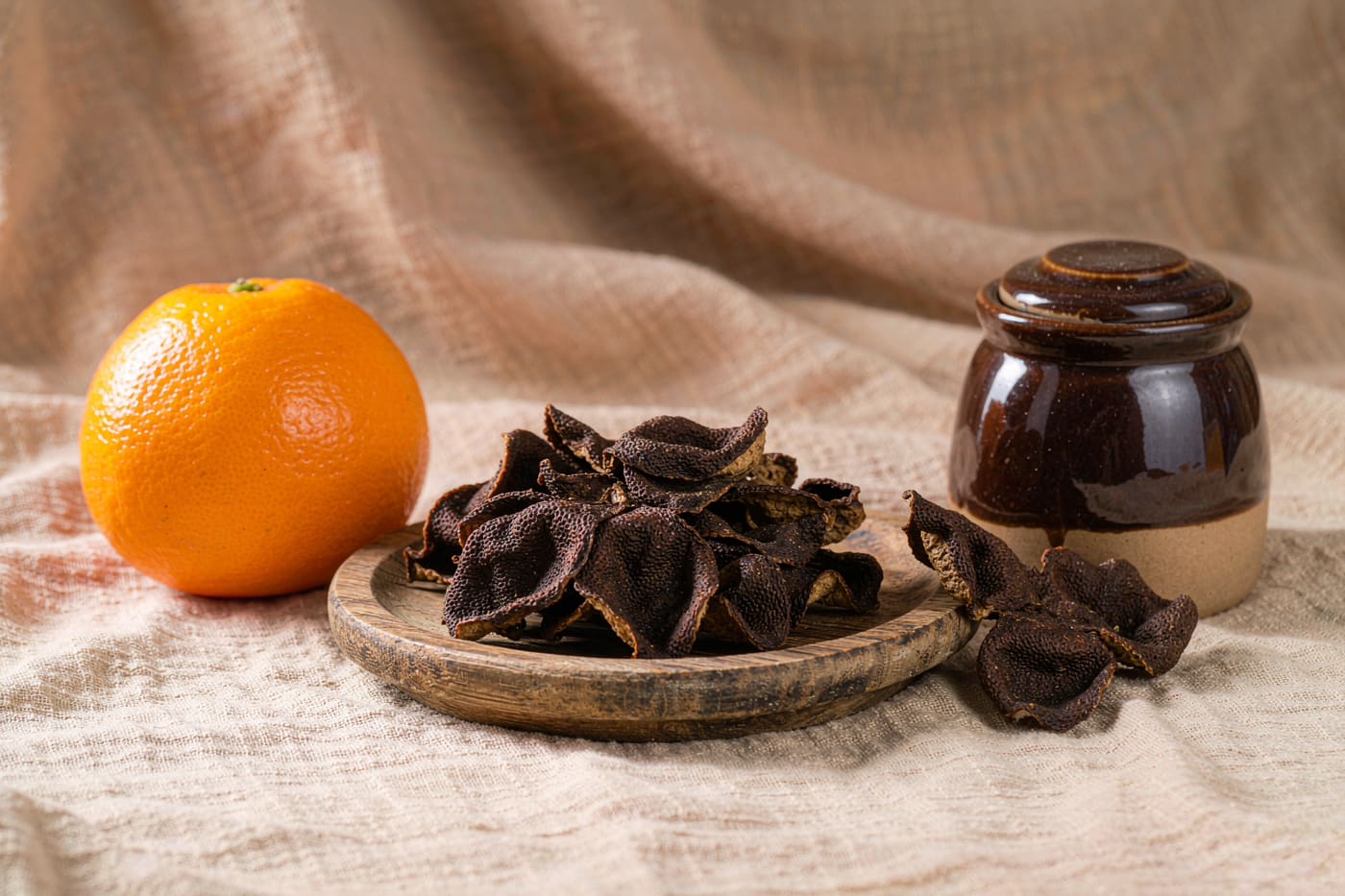
Chenpi is one of the only ingredients in a Chinese kitchen that gets more valuable with time — decades, sometimes. What it is, why old peel is prized, and how to buy and use it in an American kitchen.
In my grandmother's kitchen there was a tin — a real biscuit tin, exported from somewhere in the Commonwealth decades earlier — that held what I thought was garbage: curling, brown-orange strips of dried peel, some of them soft with age, labeled in my uncle's handwriting with years going back further than my mother's immigration paperwork.
I asked about it once. The answer was a look.
That tin held chenpi, dried tangerine peel, and in a Cantonese kitchen it is not garbage. It is one of the only ingredients in the entire room that appreciates. Fresh peel gets thrown away; ten-year-old peel gets guarded. There are shops in Hong Kong and Guangdong where aged peel sits in glass cases with price tags that make sense only if you stop thinking of it as fruit and start thinking of it as wine.
What it actually is
Chenpi starts as the peel of a mandarin variety grown around Xinhui, in Guangdong — a region close to where my family is from, which is why the tin existed at all. The peel is removed in segments, dried, and then simply... kept. Aged. Turned and re-dried through humid summers, year after year. The oils mellow, the sharpness falls away, and what remains is a flavor I struggle to translate: bitter at the edges, warm in the middle, with a dried-floral note that fresh citrus never has.
In Cantonese cooking it goes everywhere. A single piece in a braised duck pot. A sliver in red bean dessert soup. It is half of the pairing in beef with chenpi, a dim sum classic. In my family's summer melon soup, one small piece carried the entire aromatic load.
Buying it in the US, honestly
Walk into any Chinese grocery and you will find cellophane bags of dried orange peel for a few dollars. Buy it. That is the whole secret for home cooking.
The luxury market — peel aged ten, twenty, forty years, sold by the gram with certificates — is real, and it is not for you yet, any more than a first-growth Bordeaux is the right bottle for learning to drink wine. Everyday bag peel is a decade younger and ninety percent as good in a weeknight braise. What matters is not vintage but condition:
- Look for peel that is dry and aromatic. Bend a piece (if the store allows). It should snap, not bend like leather that has gone soft. A soft, leathery piece can be fine if it still smells; a moldy or scentless one is not.
- Smell is the purchase. You want bitter citrus, warm, slightly floral. If the bag smells of nothing, the years did nothing.
- Check for mold. White bloom that brushes off like powder is salt crystallization, common and fine. Fuzzy colored spots are not.
- Store it like the tin. Airtight, away from heat, and it keeps improving slowly. My American version of the biscuit tin is a mason jar, and I label the lid with the year I bought it, which my spouse finds hilarious and which is, I maintain, the entire point.
The substitution question, answered honestly
Can you use fresh orange peel? Yes, and you will sometimes have to. Here is the honest calibration: fresh peel is a bright young cousin — loud, sharp, a little one-note. Aged peel is the grandparent. In a long braise, fresh zest added early will soften into something adjacent, especially if you remove the pith (the pith is where bitterness in fresh peel turns from interesting to punishing).
What you cannot do is dry your own peel and expect chenpi. You can dry mandarin peel on a windowsill and use it in cooking — genuinely, it works — but the character that makes aged peel special comes from years, not afternoons. Start a jar this winter, forget about it, and let future-you inherit a small treasure. That is exactly how the tin in my grandmother's kitchen began, I suspect: with someone's bored afternoon and no plan at all.
Where to use your first piece
Do not start with a recipe where peel is the star. Start where it is the whisper:
- Any slow braise — beef, duck, pork belly. One piece, added with the liquid.
- Red bean or mung bean dessert soup. Non-negotiable in my family. The peel against the earthy beans is the whole dish.
- Steamed dishes — a sliver under steamed fish or over a chicken dish, where steam lifts the aroma into everything above it.
Rinse the piece, soak it in warm water for fifteen minutes until supple, and scrape the white pith if it is thick — old pith is fine, bag pith is sometimes harsh. Then let it do its quiet work. That is the entire job of this ingredient: to be the flavor you cannot name in a dish you cannot forget.
Frequently asked questions
What is dried tangerine peel (chenpi)?
Chenpi is the peel of a specific mandarin orange, dried and aged — sometimes for years or decades. It is a core aromatic in Cantonese cooking, used in braises, soups, and desserts. It tastes bitter, warm and floral, nothing like fresh orange peel.
Can I substitute fresh orange or tangerine peel?
You can, and I do it when I run out — but the flavors are cousins, not twins. Fresh peel is bright and sharp; aged peel is deep and quietly bitter. Use a strip of fresh zest with the pith removed, and add it earlier in cooking.
How much do I need to spend?
For everyday cooking, a modest pack from an Asian grocery is fine — a few dollars lasts a year. Very old, authenticated peel is a luxury market with prices to match. Unless you are collecting, do not start there.
About the author
Writer & Home Cook
Chinese home cook writing about seasonal food traditions from an American kitchen. Grew up in Guangdong, now cooks for a mixed family in the US.
Keep simmering
Ingredient Guides
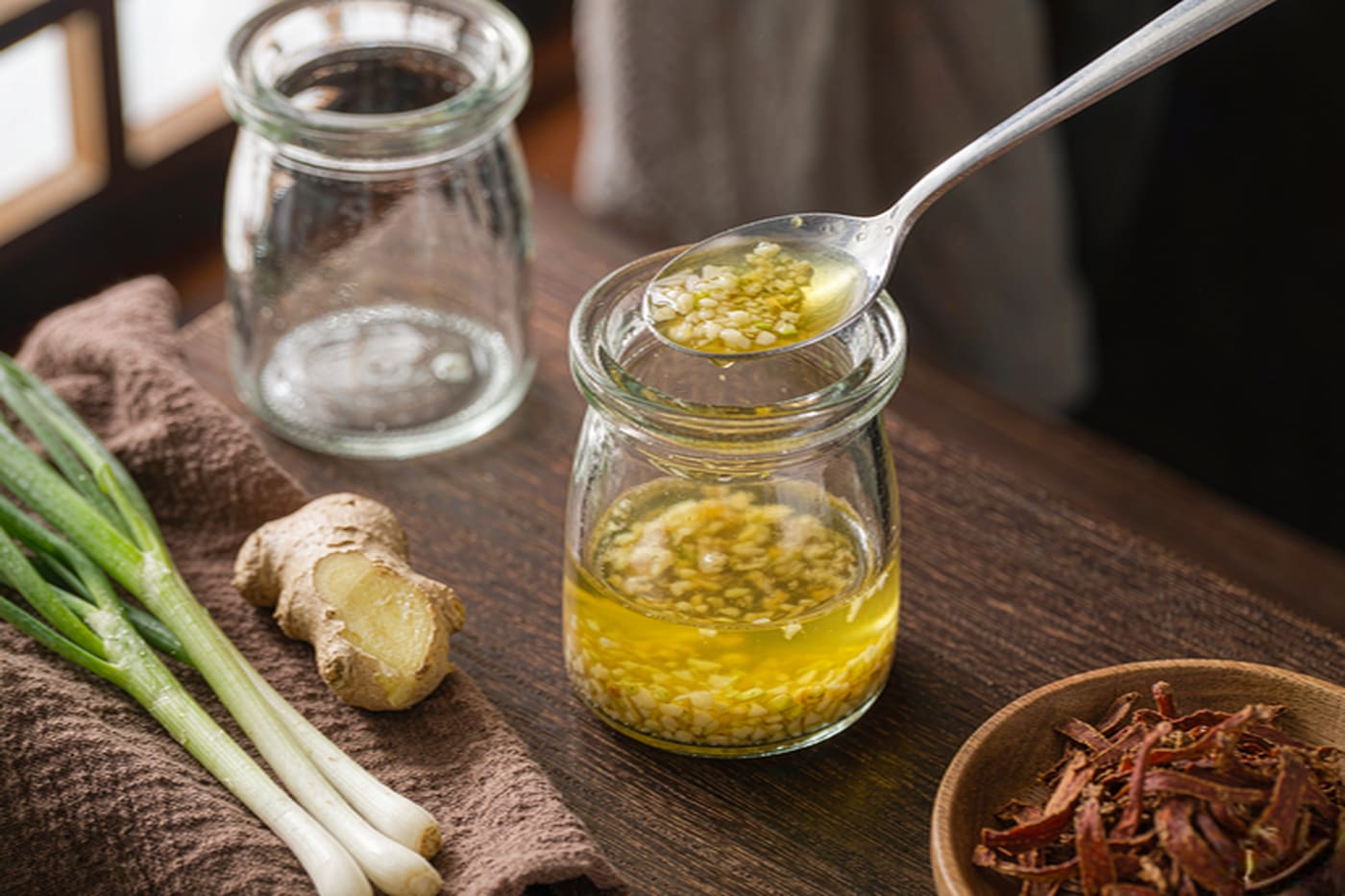
Ginger Scallion Oil: The Three-Ingredient Condiment That Runs a Cantonese Kitchen
Jiang cong you is not a recipe so much as a kitchen institution — poured over steamed fish, tossed with noodles, spooned over plain rice. The version I make weekly, and the mistakes I made for years.
Jack Chen · Oct 31, 2026 · 3 min read
Ingredient Guides
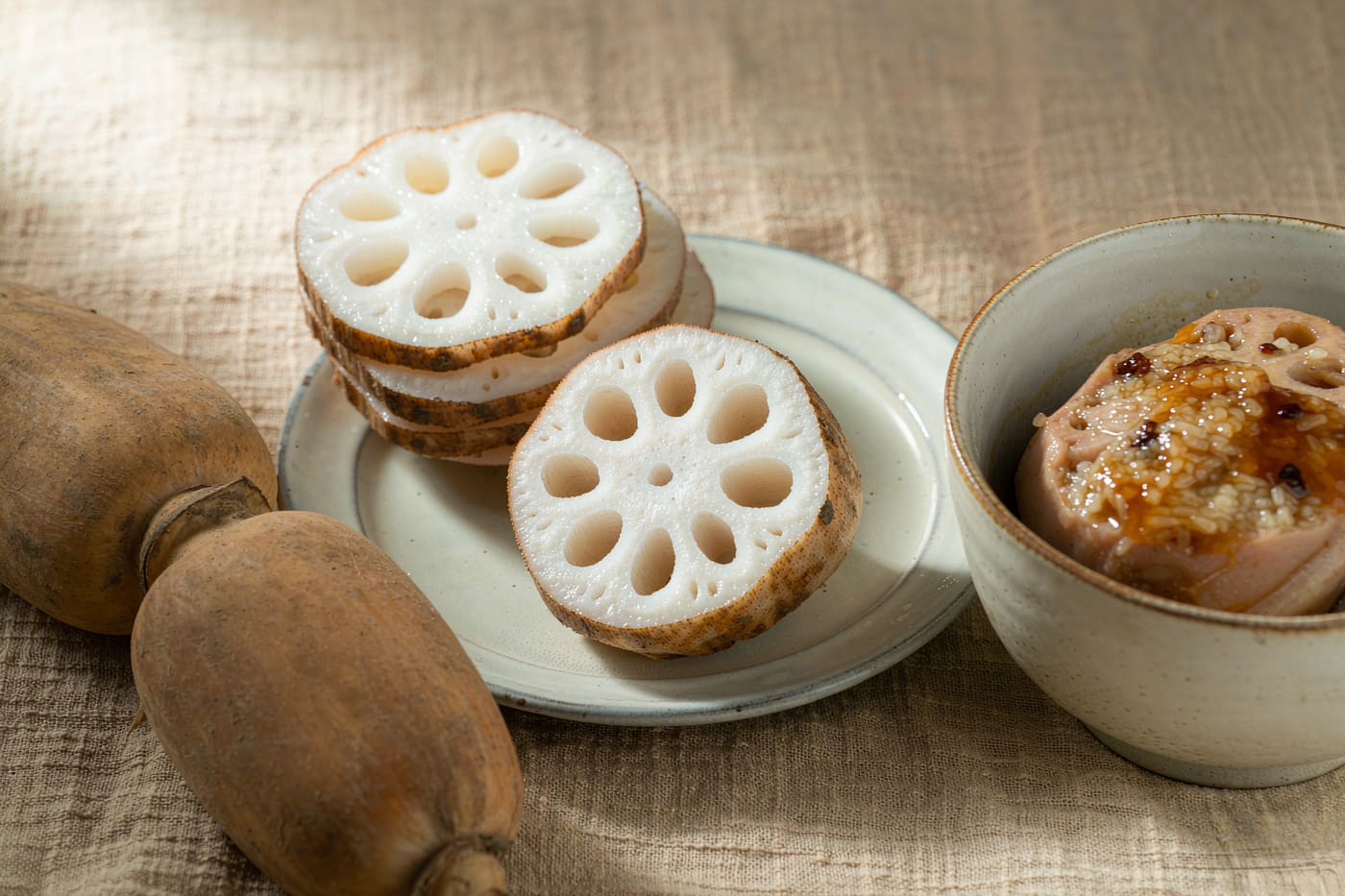
Lotus Root: The Vegetable With Holes, and the Two Ways We Cook It
It looks like a barrel of Swiss cheese and eats like a water chestnut with ambition. How to buy lotus root in an American grocery, clean it properly, and cook the two classic ways — crisp and soft.
Jack Chen · Oct 28, 2026 · 4 min read
Ingredient Guides
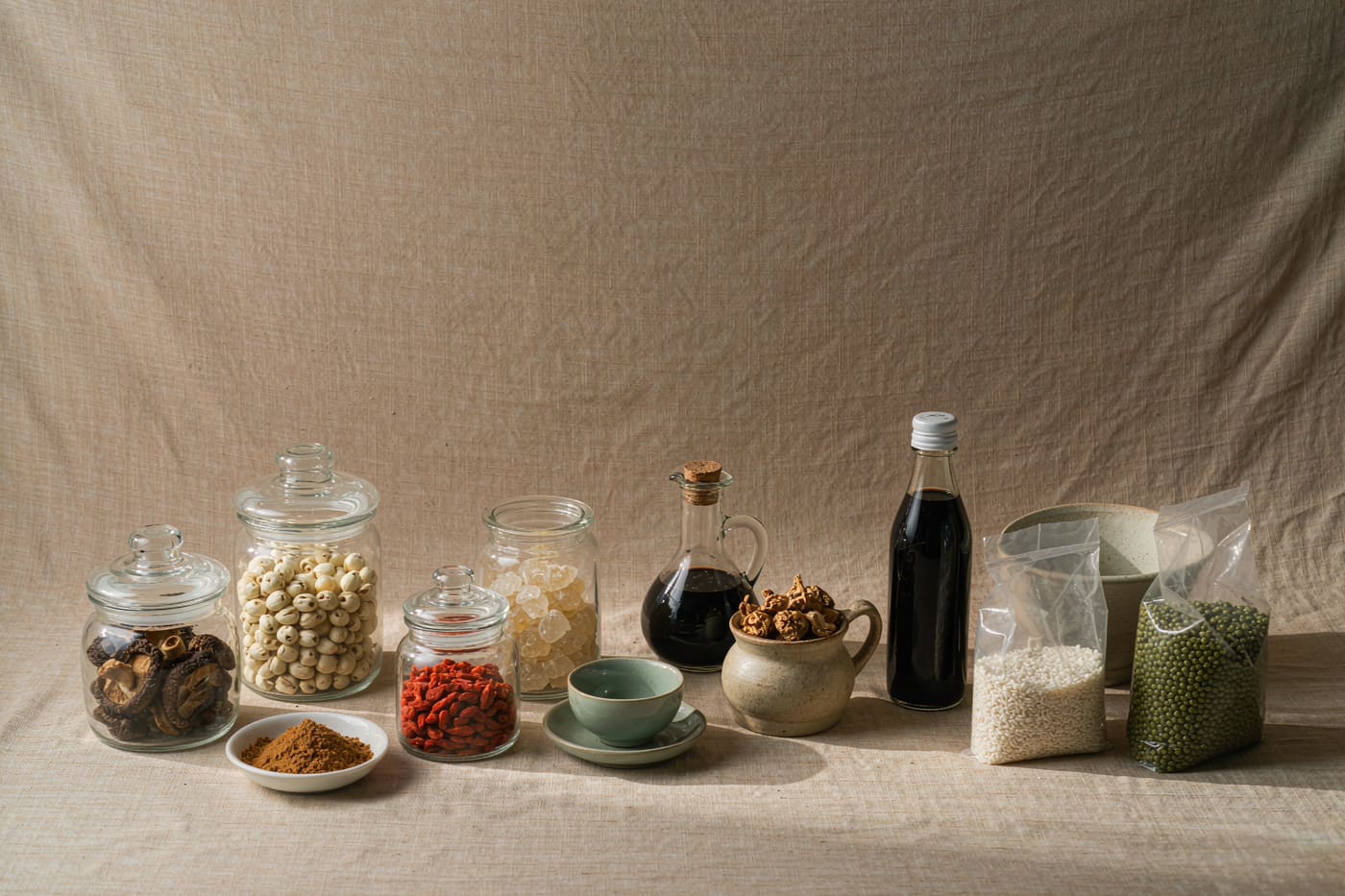
What a Chinese Pantry Actually Holds: A Shopping List for American Kitchens
Skip the novelty of a 40-ingredient haul. This is the honest list — twelve ingredients that cover 90 percent of what a Cantonese home kitchen actually reaches for, with what they do and where to find them.
Jack Chen · Oct 27, 2026 · 4 min read
This article shares food culture and personal experience. It is not medical advice. See our medical disclaimer.