Deep-Frying in a Home Kitchen Without Fear: Three Things That Go Wrong
Oil that drops, batter that slides off, a pot that boils over. Three failures in home deep-frying, what each looks like, and the exact fix.
A quart of peanut oil costs about $6 at a US supermarket, and most people burn through two of them learning that the problem was never the oil. Home deep-frying fails in three predictable ways: the oil temperature drops and stays down, the coating slides off into the pot, or the oil foams up the sides. Each has a symptom you can see within thirty seconds and a fix that costs nothing but attention.
This is the troubleshooting sheet I keep in my head for Chinese fried things: scallion pancakes, sesame balls, salt-and-pepper squid, chicken wings finished with a second pass. None of it requires a deep fryer. A 4-quart Dutch oven or a wok, a thermometer, and a spider skimmer will do.
Why does the oil temperature crash the moment food goes in?
Symptom: you heat the oil to 350°F, slide in four wings, and the thermometer drops to 290°F and climbs back at a crawl. The food comes out pale, greasy, and soft rather than crisp.
The cause is thermal mass. A pound of cold chicken pulled straight from the fridge carries a lot of heat capacity, and oil at 350°F does not have much spare energy. The fix is not a hotter starting point, which scorches the outside before the inside cooks. It is smaller batches and warmer food.
Bring the food to room temperature or close to it, pat it very dry, and fry in batches that leave the oil at least an inch of free space around each piece. For a 4-quart pot holding about 6 cups of oil, that is roughly 4 to 6 wings, or a single layer of scallion pancakes. Let the oil return to temperature between batches; that pause is the whole technique. If you own a thermometer, clip it to the pot so you can watch the number. If you do not, a 1-inch cube of bread should brown in about 60 seconds at 350°F.
Chinese cooks generally fry at two temperatures for the same dish: a lower pass, around 325°F, to cook the food through, then a second pass at 375°F to drive off surface moisture and set the crust. That second pass is why restaurant fried chicken stays crisp longer than home versions. It takes 30 to 45 seconds per batch and is worth the extra step.
Why does the coating slide off into the oil?
Symptom: you lower a battered piece in, and a pale sheet detaches, drifts to the bottom, and burns. The remaining coating is thin and patchy, and the oil turns cloudy and smells of scorched flour.
Three things cause this. Wet food is the first: a piece of fish or chicken with a film of moisture on the surface cannot hold a starch coating, because the coating bonds to dry protein, not to water. Pat everything dry with paper towels and let it sit uncovered for ten minutes.
The second is coating order. For a dry-wet-dry sequence, the standard in Chinese kitchens is cornstarch or potato starch first, then egg or a wet batter, then a dry starch again. Skipping the first dusting means the wet layer has nothing to grip. For a plain cornstarch crust, as on salt-and-pepper squid, dust the pieces in starch, toss them in a colander to shake off the excess, and fry within a minute; starch that sits on wet seafood turns to paste.
The third is batter consistency and temperature. A batter that is too thin runs off; too thick and it holds a pocket of steam that bursts. Cold batter on hot oil also helps: the temperature difference sets the coating fast. If you mix a beer batter, use it straight from the fridge and stop stirring the moment the flour disappears. Lumps are fine; overworked batter is tough.
Why does the oil foam and climb the pot?
Symptom: the oil foams up the sides within seconds of adding food, hissing hard, threatening the burner.
This one is a safety issue, so treat it as the priority. Foaming usually means one of four things: the pot is too full, the food is wet, the oil has been reused too many times, or the heat is too high for what is in the pot.
Oil should never exceed one-third of the pot's depth. In a 4-quart pot, that is about 6 cups. More than that and a foam-up has nowhere to go but the stovetop. Dry the food aggressively; a wet scallion pancake or a rinsed piece of squid carries surface water that flashes to steam and pushes oil upward. Reused oil foams sooner because it holds dissolved food particles and moisture; strain it through a fine sieve or coffee filter after each use and retire it after three or four rounds, or when it darkens and smells stale. And keep a lid within reach, plus a box of baking soda, though the correct move for a small foam-up is to kill the heat and step back, not to add water.
A wok behaves differently from a Dutch oven here. Its sloped sides give foam room to fall back, but the wide surface loses heat faster. In a wok, fry smaller amounts and keep a steady medium-high flame rather than a roaring one.
What should I fry first, and what equipment actually matters?
Start with something forgiving and cheap: a batch of scallion pancakes cut into strips, or cubes of firm tofu dusted in cornstarch. Both tell you immediately whether your oil is at temperature, because they brown visibly and audibly. A raw scallion or a drop of batter is the traditional test, but a thermometer is more reliable and costs about $12.
The equipment list is short. A heavy pot with high sides, a clip-on thermometer, a spider skimmer or slotted spoon, a sheet pan lined with a wire rack, and paper towels. A wire rack matters more than paper towels alone, because food sitting on paper steams itself soft on the underside. Keep the finished batches in a 200°F oven if you are frying for a crowd.
Oil choice: peanut oil is the usual pick in Chinese home kitchens for its high smoke point and neutral flavour, around $6 to $9 per quart. Canola works and costs less. Do not reuse oil that has fried fish for a batch of sesame balls unless you like fish-flavoured dessert.
How do I know when a piece is actually done?
Symptom: the outside is dark and the inside is raw, or the reverse. This is a temperature problem expressed as a timing problem.
For bone-in chicken, an instant-read thermometer in the thickest part should read 165°F. For squid, 45 to 60 seconds at 375°F is enough; longer and it turns to rubber. For sesame balls, the low-and-slow rule applies: about 300°F for 8 to 10 minutes, because the glutinous rice dough needs time to cook through before the outside darkens. The general principle is that dense, wet fillings want lower oil and more time; thin, dry coatings want hotter oil and less.
If a piece is browning too fast, pull it out, let the oil come back down, and start again. Nothing is lost. The oil is the cheapest part of the meal.

Keep reading
- Congee Toppings: A Build-Your-Own Guide With Real Prices
- What to Do With Leftover Roast Duck
- Chinese Cleaver Care: Sharpening Angle and Honing
- What Keep-Warm Does to Rice After Four Hours
Sources
Photo: Jason M. C., Han / CC BY-SA 4.0 via Wikimedia Commons · Photo: Florstein ( Telegram: WikiPhoto.Space ) / CC BY-SA 4.0 via Wikimedia Commons
Frequently asked questions
Can I deep-fry in a regular saucepan?
Yes, if it is heavy-bottomed and deep enough to hold oil at one-third of its depth. A 4-quart Dutch oven is the safer choice because the high, straight sides contain foam and splatter better than a sloped saucepan.
What temperature should I fry Chinese food at?
Most items go in at 350°F to 375°F. Dense or doughy things like sesame balls want about 300°F so the inside cooks before the crust darkens. Many dishes get a second 30-to-45-second pass at 375°F to crisp the surface.
How many times can I reuse frying oil?
Three or four rounds for most home frying, strained through a fine sieve after each use. Retire it when it darkens, smells stale, or foams quickly when food goes in.
About the author
Writer & Home Cook
Chinese home cook writing about seasonal food traditions from an American kitchen. Grew up in Guangdong, now cooks for a mixed family in the US.
Keep simmering
Seasonal Recipes
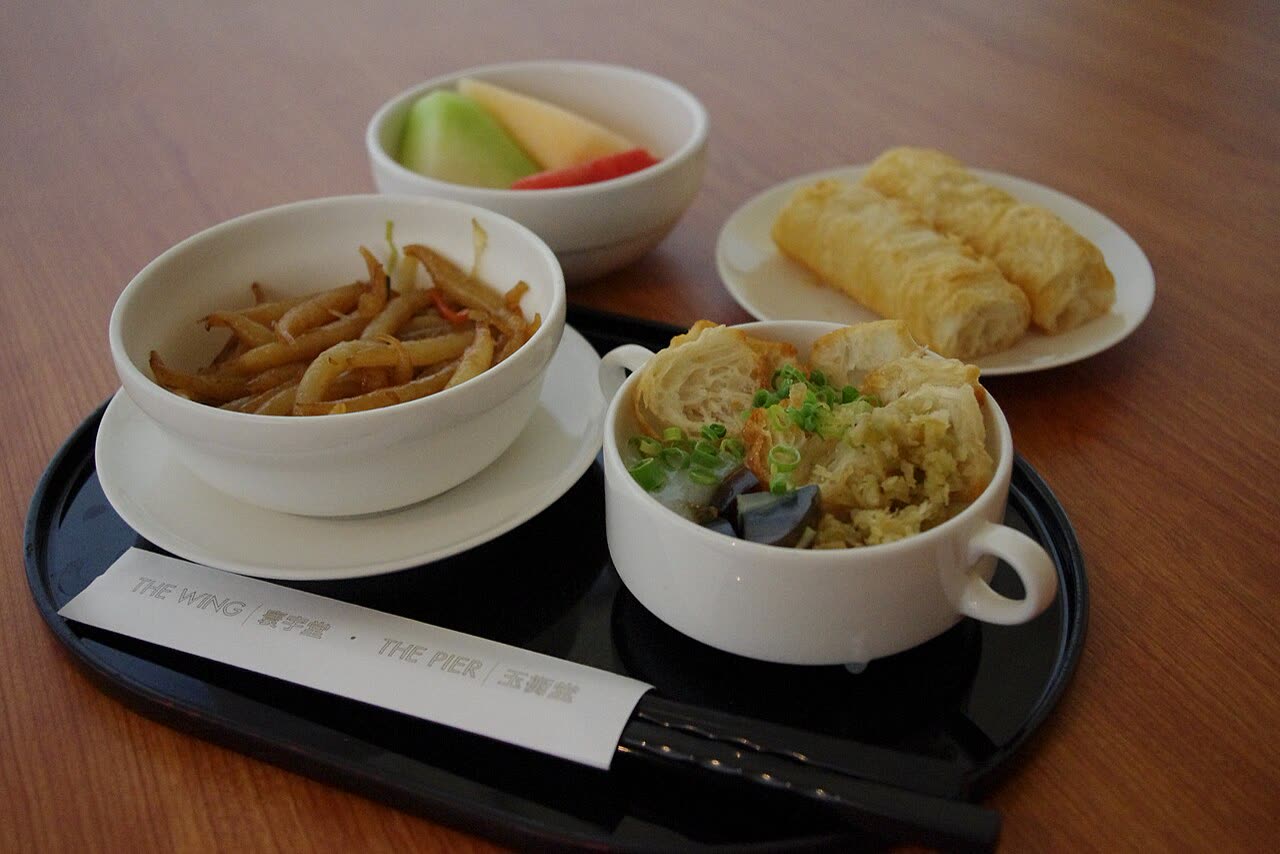
Congee Toppings: A Build-Your-Own Guide With Real Prices
A practical guide to building a congee topping bar, with real prices from a Chinese grocer compared to a US supermarket.
Jack Chen · Nov 25, 2026 · 6 min read
Seasonal Recipes
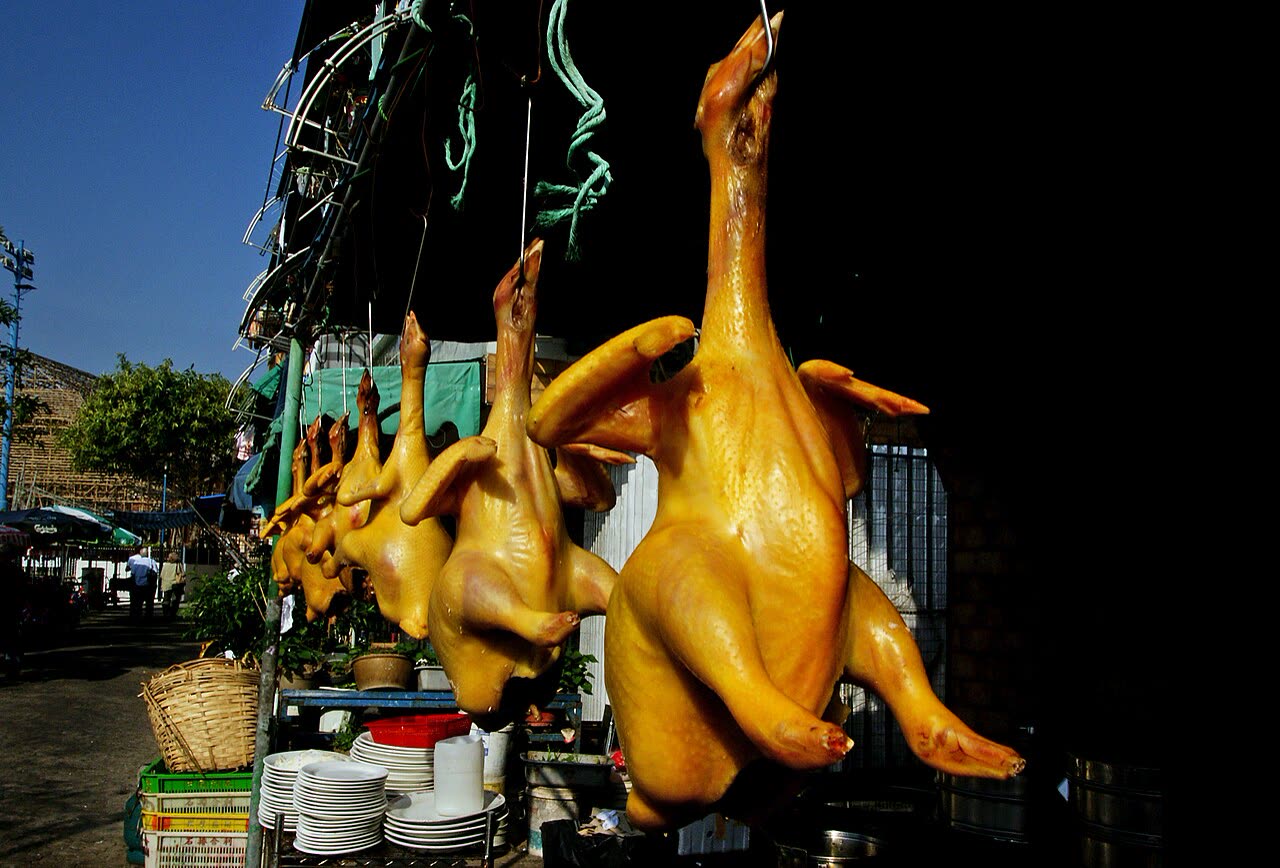
What to Do With Leftover Roast Duck
A whole Cantonese roast duck costs about $28 and feeds two. Here is how to use the rest: reheating, noodles, fried rice, and the bones.
Jack Chen · Nov 24, 2026 · 6 min read
Seasonal Recipes
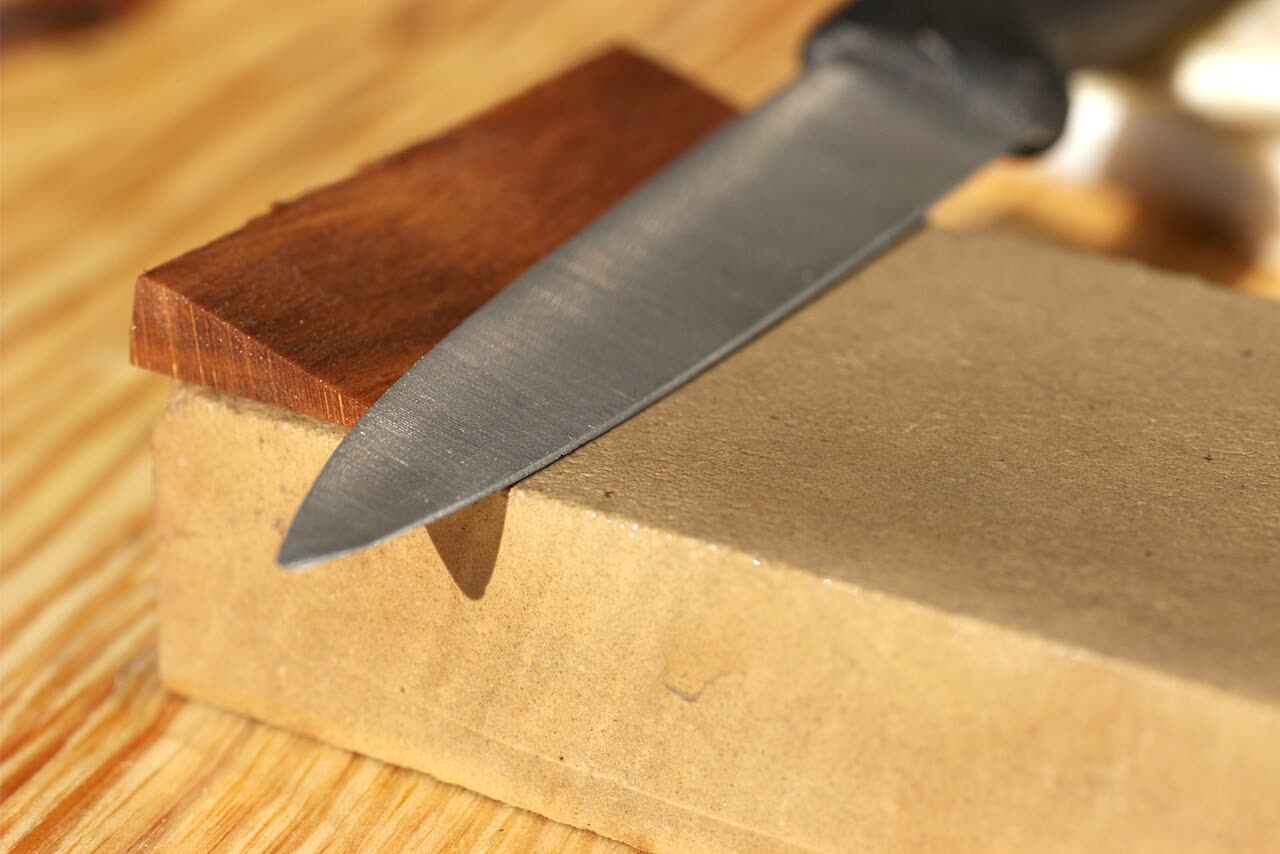
Chinese Cleaver Care: Sharpening Angle and Honing
Most Chinese cleavers are sharpened at 15 to 20 degrees per side. Here is how to find that angle, hone without wrecking it, and fix a dull edge.
Jack Chen · Nov 20, 2026 · 5 min read
This article shares food culture and personal experience. It is not medical advice. See our medical disclaimer.
Leave a comment
ModeratedNo comments yet. Questions about the method, your family's version, or something I got wrong — write it here and I will read it.