Eight-Treasure Congee: The Breakfast My Family Eats When the Frost Comes
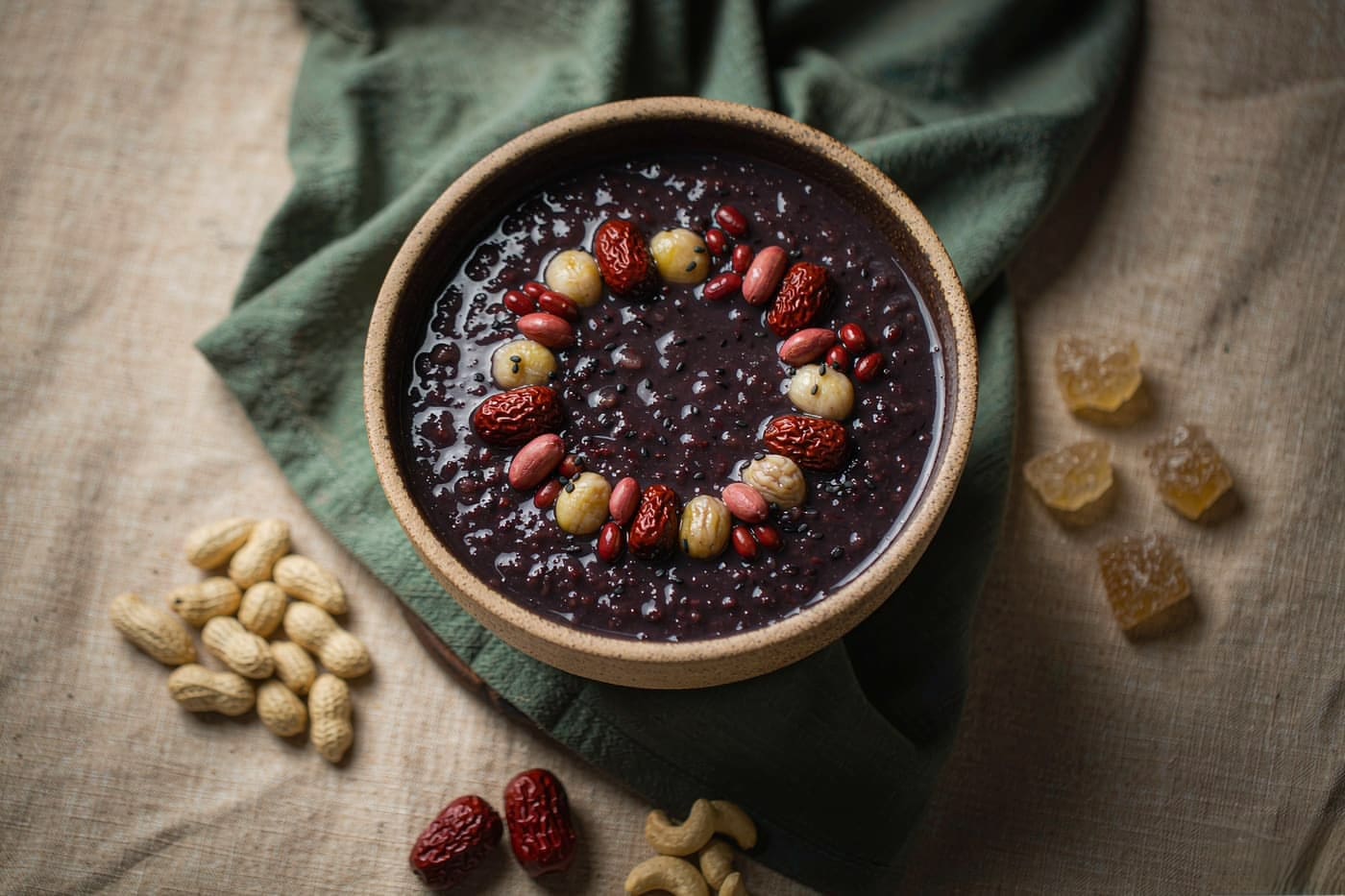
Ba bao zhou is the breakfast that marks late autumn in a Chinese kitchen. Here is how to make it with American supermarket ingredients — and why it belongs to the season, not the menu.
Somewhere between late October and the first hard frost, my mother's kitchen changed its breakfast.
Not gradually — one morning the congee was just different. Heavier, darker, sweeter in the way that chestnuts are sweet rather than the way candy is. There were beans in it that had no business being in breakfast. She called it ba bao zhou, eight-treasure congee, and she made it the way her mother made it: by putting on a bigger pot of rice than the night before, and letting everything else find its way in.
If you have only seen congee as plain rice porridge — the hospital-food version, the side-dish version — eight-treasure congee will rearrange what you think the dish can be. It is closer to a porridge-style oatmeal, if oatmeal took three hours and came with a philosophy.
What the eight treasures actually are
There is no fixed list, which is the first thing to understand. Eight is an auspicious number, and every region, every family, every grandmother has her own. The version I grew up with:
- Glutinous rice — the body of the congee
- Black glutinous rice — for color and a faint nuttiness
- Red adzuki beans — soaked overnight
- Peanuts — raw, not roasted
- Lotus seeds — the dried kind, cores removed
- Chestnuts — fresh in China, vacuum-packed here
- Dried longan or red dates (jujubes) — the sweetness
- Rock sugar — added at the end, quietly
Count them and you will notice families cheat. Mine does. Nine treasures some years, seven in lean ones. The point was never the number; it was that the pot collected things.
The American pantry translation
Here is the version I make now, in a regular dutch oven, with ingredients from a standard supermarket run plus one Asian grocery trip.
Serves 6. Soak the beans and rice the night before.
- 1 cup jasmine rice
- 1/2 cup black glutinous rice (Whole Foods sells it as forbidden rice)
- 1/2 cup adzuki beans, soaked overnight (or substitute black beans — different, but honest)
- 1/2 cup raw peanuts
- 6 Medjool dates, pitted and quartered — this is the honest swap for red dates; Medjools are sweeter and softer, so add them later than you would jujubes
- 1/2 cup vacuum-packed chestnuts, torn in half
- 1/4 cup dried longan, if you have an Asian grocery nearby (skip it otherwise; do not substitute raisins — I tried, and I owe my family an apology)
- Rock sugar or regular sugar to taste, about 3 tablespoons
- A pinch of salt. Always. Sweet congee without salt tastes like a slogan.
Simmer everything except the dates and sugar in 10 cups of water for about 90 minutes, stirring here and there, until the grains burst and the whole pot turns lavender-grey. Add the dates for the last 20 minutes, sugar at the end. It should be thick enough that a spoon leaves a canyon.
Why this is a cold-month breakfast, in my family's telling
I will give you the honest, non-mystical answer: late autumn was when the harvest was in. Beans, nuts, chestnuts, new rice — the pot was a ledger of what the season had produced. Cooking it all together was thrift and celebration at once. In the north, temples and households made enormous pots of it for neighbors; the tradition got big enough that the twelfth lunar month now has a day named after it.
The seasonal logic is also just physical. A pot of plain congee warms you and leaves you hungry by ten. This version has protein, fat and fiber from the beans and nuts, so it holds you until lunch. That is the entire "food therapy" of it, and my mother would roll her eyes at anyone who needs it explained more mystically than that.
The part nobody tells you
Eight-treasure congee is better on the second day, after a night in the fridge, reheated with a splash of water. The grains break down further and the flavors stop being eight separate things. So do what my family does: make the full pot on a Sunday, eat it twice, and let the second bowl be the reward for having made the first.
And freeze the leftovers in flat portions. In my childhood kitchen there was always one more container of it in the freezer than my mother admitted to.
Frequently asked questions
What is eight-treasure congee?
It is a slow-simmered rice porridge made with eight (or more) additions — beans, nuts and dried fruits — traditionally eaten around the twelfth lunar month, with regional versions cooked all through late autumn and winter in Chinese homes.
Where can I buy black glutinous rice in the US?
Whole Foods carries it as "forbidden rice", and any Asian grocery will have it labeled black glutinous rice or black sticky rice. If you cannot find it, more jasmine rice plus an extra handful of oats works fine.
Can I make this in a rice cooker?
Yes. Use the porridge setting if yours has one; otherwise run two normal cycles. The texture will be slightly thinner than stovetop, but it is a fair weeknight trade.
About the author
Writer & Home Cook
Chinese home cook writing about seasonal food traditions from an American kitchen. Grew up in Guangdong, now cooks for a mixed family in the US.
Keep simmering
Seasonal Recipes
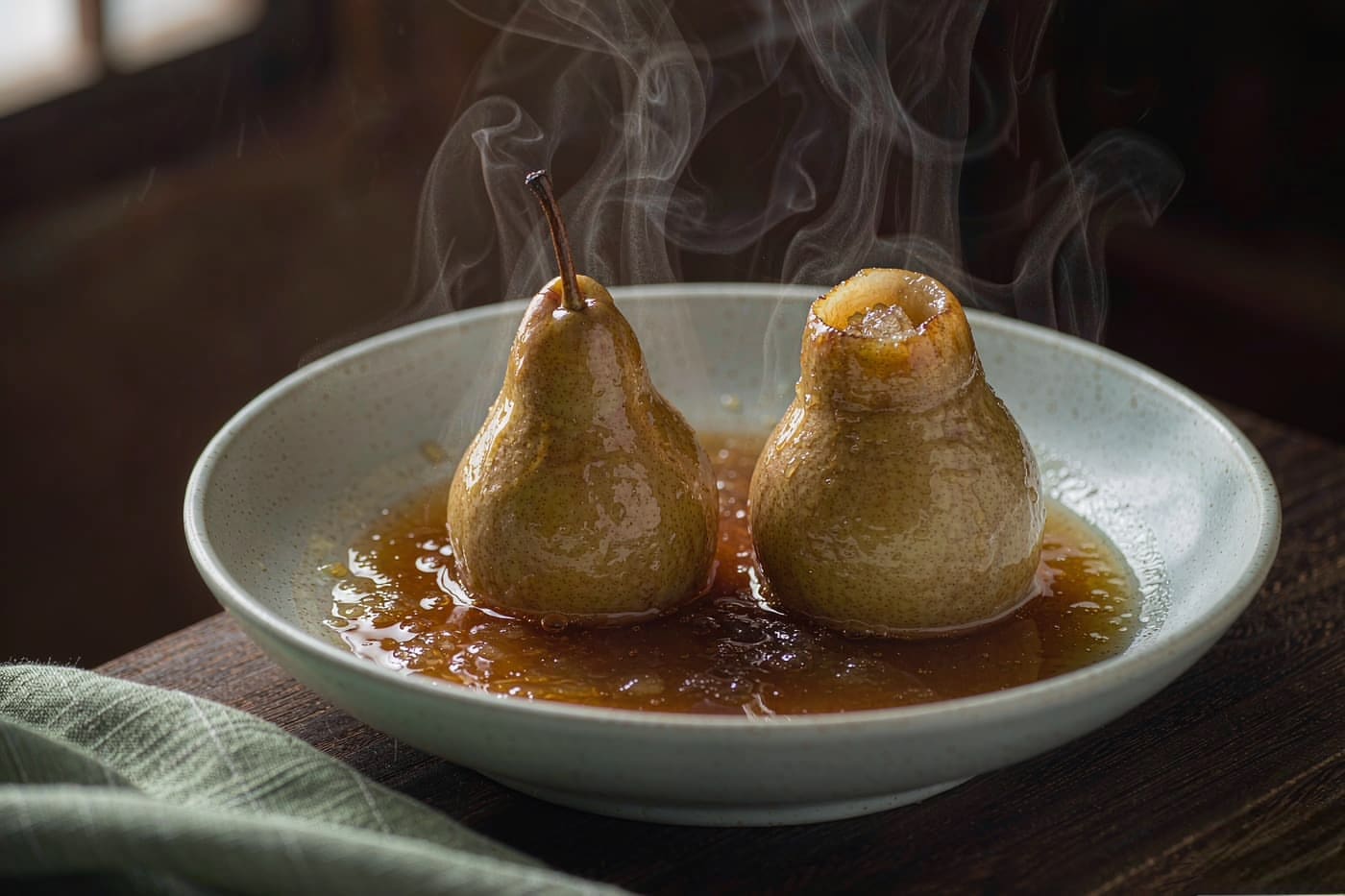
Why Chinese Kitchens Steam a Whole Pear With Rock Sugar
Chuanbei steamed pear shows up in Chinese homes every dry autumn. Here is what the dish actually is, what it is not, and how to make a small, honest version of it.
Jack Chen · Nov 2, 2026 · 4 min read
Seasonal Recipes
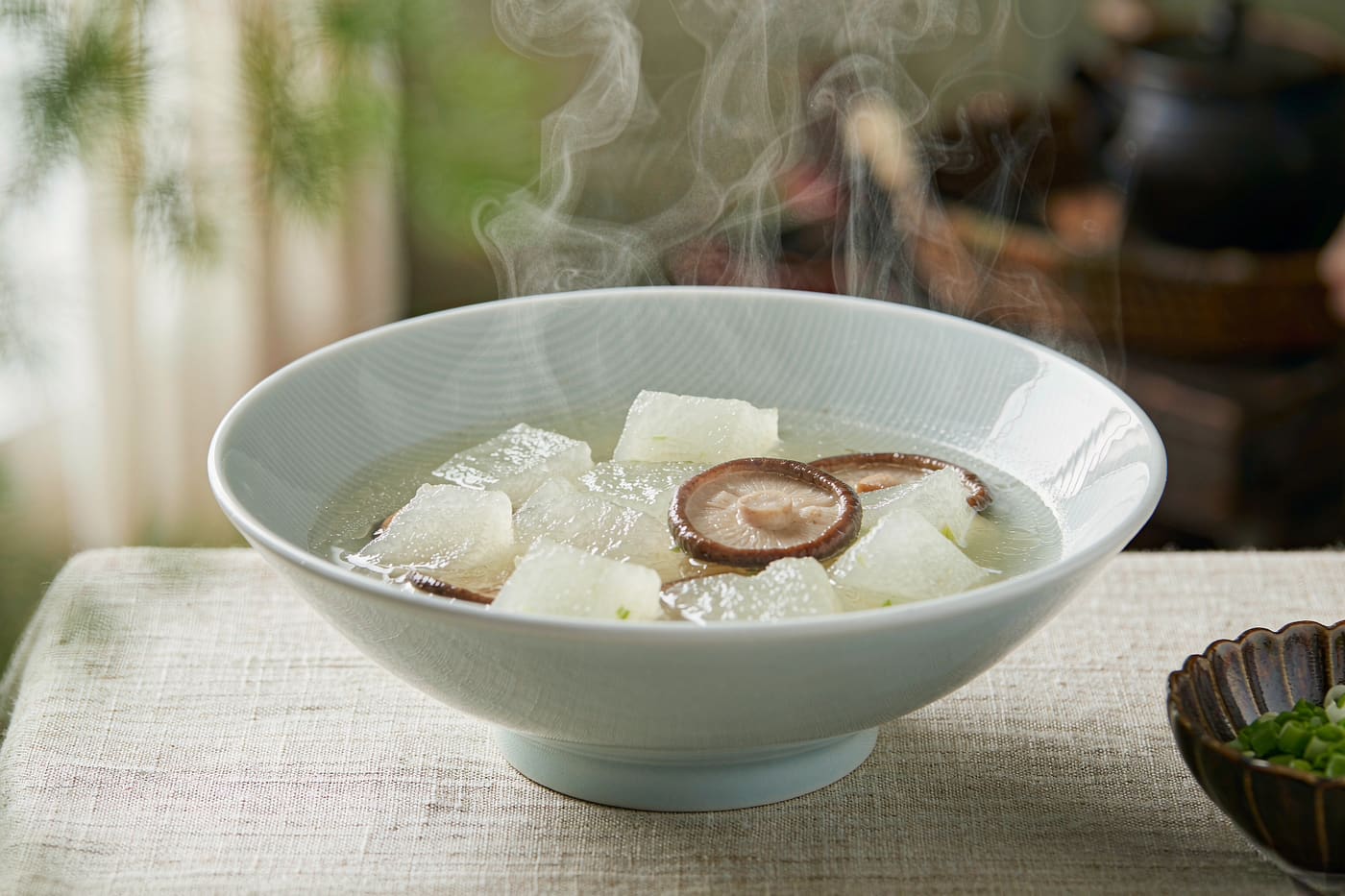
Winter Melon Soup: The Lightest Pot in a Cantonese Kitchen
When the summer heat peaks, Cantonese kitchens swing the other way — to a soup so light it is almost a suggestion. How to make it with American market melons, and why the lightest dish takes the most restraint.
Jack Chen · Nov 2, 2026 · 4 min read
This article shares food culture and personal experience. It is not medical advice. See our medical disclaimer.